7 Reasons to Consider a Home Gym

If you think of picking up better health habits and don't like crowded gyms, consider setting a home gym catered to your needs.

5 Top Picks for Christmas Holiday Like a Fairytale

If you imagine Christmas holiday this year being like a fairytale, you should consider visiting these hidden gems!

7 Fashion Accessories To Lift Up Your Style Quotient

Get heads up on the trendiest as well as classic fashion accessories that would elevate your style to another level.

Sensibo

Showing posts with label NSF. Show all posts

Einstein’s Gravitational Waves Detected: A Breakthrough Discovery

Description :

The discovery of Einstein’s gravitational waves reported during a blockbuster announcement in a news conference on February 11, 2016 at Washington DC, is making waves all over the world. What’s the big fuzz about it though and why should we care? This article explores the question by taking a more in-depth look into the phenomenon.

Einstein’s Gravitational Waves Detected: A Breakthrough Discovery

The scientific community are still overwhelmed by the news of the breakthrough discovery of gravitational waves in the form of faint ripples of gravity, reverberating invisibly through the fabric of space-time from the collision of two black holes. 

Laser Interferometer Gravitational-Wave Observatory (LIGO), designed to open the field of gravitational-wave astrophysics supported by Caltech and MIT, captured this groundbreaking moment in history reportedly on September 14, 2015. Nevertheless, what does the phenomenon entail in reality and why is it so important to us? We will try to demystify the latter in the next few paragraphs. 

What Are Gravitational Waves? 

The term gravitational waves was originally introduced by Einstein back in 1915 in establishing his theory of general relativity. The latter concept suggests that mass distorts both space and time similar to how a heavy bowling ball distorts a trampoline. 

When an object accelerates, it creates ripples in space-time, in the same way a boat causes ripples in a pond. These ripples that allude space-time are called gravitational waves. Due to the fact that they are extremely weak signals, it is difficult to detect them. Therefore, although there's convincing indirect evidence that gravitational waves exist, a direct detection had proven elusive, until now. 

Missions like LIGO and LISA are dedicated to detect these waves by observing small changes in the distances between objects at set distances. The most optimum opportunity to detect gravitational waves comes from detecting the collision of two black holes or pulsars into each other.


The Discovery

“We have detected gravitational waves. We did it,” Prof David Reitze, executive director of LIGO, told journalists. LIGO, uses the world’s most sophisticated detector, utilizing laser interferometry, which in simple terms means firing lasers into long, L-shaped tunnels; the waves disturb the light to detect the collision of black holes when they merged. A merger occurs when two black holes start to spiral towards each other and radiate energy as gravitational waves. 

Scientists listened the characteristic sound of these waves, namely a chirp, for 20 thousandths of a second as the two giant black holes, one about 36 times the mass of the Sun, the other slightly smaller at 29 solar masses, circled around each other.

The signal detected, allowed them to calculate how stars perish: the two holes had begun by circling each other 30 times a second. Before the final collision and a dark violent merger had occurred at the end of the 20 millisecond snatch of data captured, the two had accelerated to 250 times a second!

The research findings from this study, undertaken by the LIGO Collaboration, have been published in the journal Physical Review Letters.

Einstein’s Gravitational Waves Detected: A Breakthrough Discovery

Signals of Gravitational Waves, As Einstein Predicted detected by the twin LIGO observatories at Livingston, Louisiana, and Hanford, Washington. Image Credit: Caltech/MIT/LIGO Lab

Why It Matters

The significance of detection of gravitational waves is attributed in the following key issues:

1. The discovery of gravitational waves opens a new window to research of the universe since it provides with insights on its existence and a potential paradigm shift on how we detect and study cosmic phenomena, in particular those that do not radiate in the electromagnetic spectrum.

2. The findings of this research confirm Einstein’s prediction of gravitational waves as part of his Theory of General Relativity and regenerate the interest in exploring the theory in depth. 

3. Re-enforces the study on the use of gravitational telescopes which allows to hear phenomena at the same time as light-based telescopes see them.

4. Since gravitational waves were detected from the energy emitted from the collision of two black holes, it is now confirmed that black holes really do exist and that mergers between two black holes proceed as predicted.

Einstein’s Gravitational Waves Detected: A Breakthrough Discovery


Image by THE OFFICIAL ANDREASCY: Fast Facts about Gravitational Waves

In sum, the detection of gravitational waves opens the field to completely new investigation suggesting that some exciting days lay ahead for scientists. Stephen Hawking suggests that "gravitational waves could revolutionize astronomy".

Conclusion

Through this discovery we are one step closer to solving more of the mysteries of the universe following 380,000 years after it is thought to have been generated. And possibly the biggest mystery of it all: the 'Big Bang' singularity.

SOMETHING RELEVANT: Dreaming About the Future of Space Tourism

Have something to share about this story? Kindly let us know on Twitter (use #officialandreascy in tweet).

Science Nation - Printable Robots Designed to be Consumer-friendly, Inexpensive


Description : 

Hello guys. Today we'll present to you an interesting project funded by the National Science Foundation's (NSF) Expeditions in Computing Program. This project envisions a future in which 3-D robotic systems can be produced and designed using 2-D desktop technology fabrication methods. If this feat is achieved, it would be possible for the average person to design, customize and print a specialized robot in a matter of hours. 

Currently, it takes years and many resources to produce, program and design a functioning robot. This project would completely automate the process, from sketches on-demand, anywhere, and with the skill of a team of professional engineers, leading to potential transformations in advanced manufacturing. 


"This research revolutionizes the design and manufacturing of robots, with a profound potential impact on society," says Ralph Wachter, a program director in the NSF Directorate for Computer and Information Science and Engineering. "It would remove barriers to manufacturing robots, making it possible for average citizens to customize and manufacture their own robots to meet their needs. This opens the door to great possibilities."


"This research envisions a whole new way of thinking about the design and manufacturing of robots, and could have a profound impact on society," says MIT Professor Daniela Rus, project leader and director of the Computer Science and Artificial Intelligence Lab (CSAIL). "We believe that it has the potential to transform manufacturing and to democratize access to robots."


The Computer Science and Artificial Intelligence Laboratory, known as CSAIL, is the largest interdepartmental laboratory at MIT and one of the world's most important centers of computer science and information technology research. The lab has played a major role in the technology revolution of the past 50 years. Currently, CSAIL is focused on conducting groundbreaking research in artificial intelligence, computer systems, and the theory of computation, while also tackling pressing societal challenges such as education, health care, manufacturing and transportation.


"Our goal is to develop technology that enables anyone to manufacture their own customized robot. This is truly a game changer," adds engineering professor Vijay Kumar, who is leading the team from the University of Pennsylvania. "It could allow for the rapid design and manufacture of customized goods, and change the way we teach science and technology in high schools."

Check out the video!


Related articles: 

3D Printing Technology - Make things by printing them : How it works

High Tech & Custom Designed 3D Printed Prosthetics

You like this topic? Then kindly share it with your friends and show your support for our cause!

Do not miss some of the latest trending tech news and tweets and of course our Magazine and Newspaper that gets updated daily with Tech & Science News, Big Stories and other Exclusives around the world. Subscribe on our RSS feed for future updates to your inbox.

*by andreascy*

FDA Approves Argus II - First Bionic Eye


Description : 

The ability to give sight to a blind person via a bionic eye depends on the circumstances surrounding the loss of sight. 


A visual prosthesis, often referred to as a bionic eye, is an experimental visual device intended to restore functional vision in those suffering from partial or total blindness. 


They are usually modeled on the cochlear implant or bionic ear devices, a type of neural prosthesis in use since the mid 1980s.


Argus II, manufactured by Second Sight Medical Products Inc. is the only such device to have received marketing approval by the United States FDA on 14 February 2013, as the first Artificial Retina technology. 


Argus II is the first approved prosthesis to restore limited vision to those blinded by retinitis pigmentosa. The prosthetic technology was developed at Second Sight, USC, UCSC, CalTech, and other research labs, with support from three major US government funding agencies (National Eye Institute, Department of Energy, and National Science Foundation - NSF).


The Argus II is manufactured by, and will be distributed by, Second Sight Medical Products of Sylmar, California later this year. Check out the video!


You like this topic? You could bring forward your opinions and suggestions and kindly share it with your friends and social circles. Drop us a message below and do not hesitate to contact us if you want to get in touch with the people at The *Official AndreasCY*. 

*by andreascy*

Science Nation - When to Buy a Ticket


Description :
We've all been there. You've got a weekend trip coming up, just far enough away that you would like to fly, but when you check the rates - the prices make your eyes pop. And then you see a much cheaper rate for a city on the other side of the country. What's going on? 


With help from the National Science Foundation (NSF), economist Andrew Sweeting at Duke University is researching markets for perishable goods, which includes tickets because they have to be used by a certain date. Sweeting wants to gain a broader understanding of the general economic forces at play in perishable goods markets. 


For example, why do sports tickets drop in price the closer you get to a sporting event, while airline tickets tend to go up closer to the date of departure?


*by andreascy*

Science Nation - Human Migration : How Lice Can Shed Light on the Past

Description :
Paleo-anthropologists beleive Homo sapiens evolved in Africa 100 - 200 thousands of years ago, and eventually moved out of Africa to populate the globe. 


But, how can researchers trace the specifics of the human migration? With the support from the National Science Foundation (NSF), Florida Museum of Natural History Mammalogist, David Reed, has undertaken a novel approach.


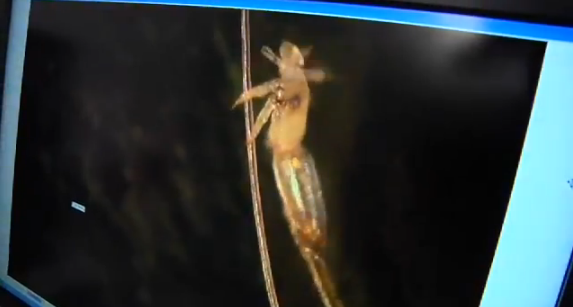
Reed studies the genetic diversity and evolution of the human parasite that hitched a ride the whole way : lice. He gathers samples from around the world. 


Over the years, the lice evolved in parallel with their human hosts, but actually even faster, meaning studying the differences between lice from different geographic regions can actually provide insights into how and when human populations migrated into those areas.


Check also other interesting topics from NSF :

National Science Foundation (NSF) Studies Granular Materials

Science Nation : Mapping the genomes of crocodiles and alligators

NSF Robotic Sharks

Science Nation : Science for a Sustainable future

Science Nation : This Breathalyzer Reveals Signs of Disease

Science Nation : New Software Matches More Kidney Donations Faster

Science Nation : New 3D Structures Assemble with Remarkable Precision

Science Nation : Electric Fish Charges up Research on Animal Behavior

*by andreascy*

National Science Foundation (NSF) Studies Granular Materials

Description :

Granular materials - like sand, rice, or powdered pharmaceuticals - are everywhere, yet their behavior is poorly understood. 


In some ways behaving like liquids, in other ways behaving like solids, such materials have unique properties and pose unique questions to answer. 


From clogged coal hoppers to powdered-snow avalanches, scientists and engineers are gaining new perspective on the fundamental nature of grains. In the video below, see some of the latest research into the behavior of granular materials.


Learn more on :

http://www.nsf.gov

http://web.physics.ucsb.edu/~complex/research/granular.html

http://www.physics.ohio-state.edu/~reu/99reu/final_reports/paper_knappman.pdf

*by andreascy*

Science Nation : Science for a Sustainable Future

Description :

Princeton University physical chemist Emily Carter is using fundamental scientific principles to create computer simulation tools that will help predict the behavior of different materials including renewable fuels. 


The research, which is supported by the National Science Foundation (NSF), has a broad range of applications including, improving thermal barrier coatings for jet engines, developing new materials for lightweight vehicles to improve fuel efficiency and creating novel materials for use in non-fossil fuel sustainable energy production.


*by andreascy*

Science Nation : Mapping the genomes of crocodiles and alligators

Description :

David Ray an evolutionary biologist at Mississippi State University (MSU) never turns his back on his research, and with good reason! 


Ray and his team study alligators, crocodiles, and bats, among other creatures. 


With support from the National Science Foundation (NSF), this multidisciplinary team from several universities is mapping crocodile and alligator genomes.


Reptiles resembling these have existed for around 80 million years and they are among the first reptiles to have their DNA sequenced. 


The research could expand our knowledge well beyond crocodilians to other reptiles, birds, and even dinosaurs. 


When they're not fishing for 'crocs' and 'gators,' Ray's team might be tracking down bats for their research on transposable elements or so-called 'jumping genes.' 


These genes can copy themselves and literally jump around in a DNA sequence. Better understanding of them could lead to improved genetic therapies.


Read more on :

http://www.nsf.gov/news/special_reports/science_nation/index.jsp

*by andreascy*

🦾 Stay Motivated

👩🏻‍🚀 Artemis II Crew: From Friends to Family

▶️ Just Press Play

We all have days like this

[image or embed]

— Chris Paxton (@cpaxton.bsky.social) April 17, 2026 at 1:51 PM

⭐ Leading ShipYard's Leaderboard

🚩 Milestone Unlocked!

🏅 Win-Win