For many years now, we’ve been seeing a gradual, but important shift in the way that people are educated. Gone are the days of notepads, pens and paper notes. Today, students are creating the content on their tablets, they are sending it across intranets, and they are engaging with the class, 24/7 through social media. This is referred to as asynchronous learning.
Far from being the distraction they were originally intended to be, though, digital devices are helping to re-shape the traditional dynamics of education as we know it — they are actually amplifying it.
So, what latest trends and changes can we expect to make a compelling difference to the market in the years to come?
Smart Tech
One of the most obvious innovations we have seen in recent years comes from the rather wonderful Smart technology industry. For example, one tool we might see used in academic study soon is IBM’s Watson device. Watson offers a high-end education tool that addresses and improves the way that people study. This is going to be very important for the long-term growth of the industry, as Watson is known to change the way that people collate data from masses of unmanaged data using artificial intelligence and sophisticated means of analysis.
This is very useful for making sure that the next generations can use technology to find answers that they would have otherwise never received. Even in more limited education functions, new AI toys could be used to manage the growth of younger children and make them more aware of certain interactions.
From making children more aware of their actions and the way they portray themselves, to full on educational aids, smart tech will ensure that the next generation always has a helping hand waiting for them.
The IoT and IoE
A significant element of the web is going to be the Internet of Things. We’re already changing the way we all link together and operate as one today, and the IoT will ensure that this continues. For example, the IoT will enable the rapid growth of virtual classroom learning. IoT will ultimately be a defining factor in shaping the future of the industry. Device interaction will improve and before long it will be easy to take the information garnered in the classroom right to our PCs back at home. The future of learning will involve possessing the means to transmit data as freely and as accurately as possible across the whole group.
Education will benefit from an added layer of depth to the IoT, in which people will be able to make the most of a learning system that brings together various aspects of their day-to-day lives.
More recently, another somewhat synonymous to IoT concept, introduced by CISCO is the Internet of Everything, defined as "the intelligent connection of people, process, data and things." This philosophy can inform a globalized, expanded notion of internet connections beyond machines. The latter can be meaningful for developing tools such as Educational Management Systems (EMS), which refer to managing the massive data of school records and other administrative functions across the globe, perhaps in a unified way.
VR and AR
Virtual reality and Augmented Reality took a very important step in 2018, with the mainstream release of many headsets by the likes of Sony and HTC leading the way, as well as more research-driven industry applications. Indeed, another option — the Google Cardboard— is expected to deliver exciting new ways of learning. It’s going to change the way that students investigate future careers, which is vital to shaping dreams.
For instance, a profession might sound amazing, but the reality could be very different. VR will re-shape how we evaluate the suitability of a student to take up such a profession. with simulations to estimate the performance of the person under a specific role. It will also help students to determine how suitable they are just by trying it out. Was it everything they thought it was going to be?
Such possibilities are explored in pilot studies and research experiments across the world. This type of VR and AR applications, will help students to avoid making the wrong choice early in life and failing to come back from it. Many students wind up in major debt, just trying to get into a career path that, when they “make it” resembles the opposite of what they had intended in the first place.
3D Printing
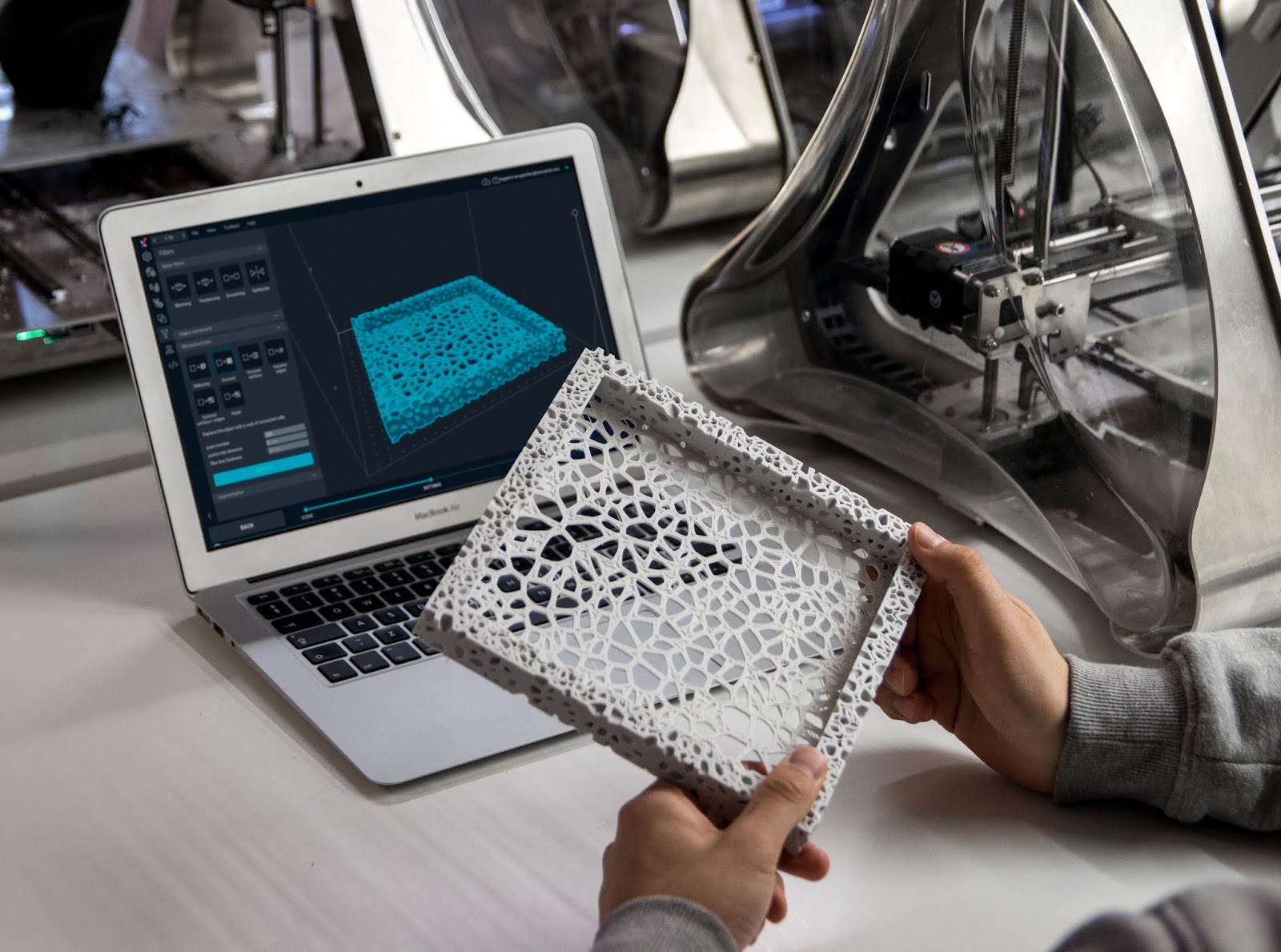
Another major element of education that is likely to change heavily in the near future is the power of 3D Printing. As one of the most powerful industries out there at the moment, it’s beginning to become a very popular way to learn for kids. Nowadays, children can get their hands on the kind of objects and instruments that previously they could only look at in books and dream of holding for real.
From the crown of a king, to the layout of a medieval weapon (blunted, obviously!) children could get a much more authentic appreciation of the world that they read about on the pages of book. This is dangerous, though, as it prevents children from appreciating the true gravity of what they are reading about. The day that 3D printing stops being so prohibitively expensive, will be a good day as it should help people to finally become involved in the industry, thus empowering and educating the next generation.
In Summary...
Whilst understanding the various challenges that the Internet and similar devices present to the education industry, the trends are already here. People are becoming more appreciative of the integration of technology into various forms of education, as most believe it will quickly help to make people more comfortable with technology, as well as working and living in a multimodal and digitally mediated society.
All of the above technological outputs, have been working their way into education for some time — it’s just a matter of time before they are more systematically implemented in classrooms worldwide. Each will play their part in determining a new dawn for education, which can only be a good thing, ensuring that future generations, receive the best and most relevant learning possible.
One of the most poignant discussions in the museum world, has been on issues of inclusion and access. Prolific museum figures like Nina Simon presenting in the recent Museum Next Conference in London, shared the vision behind OFBYFOR ALL, a new global initiative to help civic and cultural organisations become OF, BY, and FOR their communities. However, what is it that can help take the next step in terms of inclusion and learning within and out of museum grounds?
This article draws on a doctoral research study to investigate museum’s democratic potential, through transformative approaches to pedagogy aimed at meaningful cultural participation.
The ‘meaningful’, stands for a degree of competence in reading, interpreting and constructing meaning from the existing multiple forms of language (Stapp, 1984: 112; Mitchell, 2007: 3). ‘Participation’ involves an ability to negotiate the complex dialogic relationship that exists between the written word, the spoken word, images, objects, time and space (Mathewson-Mitchell, 2007: 3).
Consideration of issues of access in relation to the significant literacy requirements of museums, suggests that increasing focus on the explicit teaching of museum-based literacies, could be the way through which to expand museum visiting opportunities for the less 'conventional' audience.
It is actually proposed that museum-based literacies could act as the means to the development of cultural competence in museum environments. This evolution in theory and practice of, and about museums, has been notably part of radical changes in the museum world since the 1970s, mostly known as new museology.
Museums as Agents of Change
The development of a “new museology” (Mayrand, 1985: 201), is a concept used to describe the focus on the potential of museums as a positive social force. Golding (2009) suggests the museums should act as frontiers, places where learning and identity are produced and developed for all, while new ‘bridges’ are raised between non-dominant communities and their own histories (Philip, 1992 in Golding 2009).
It became profound that if museums accept their educational role, “they must also accept their social responsibility to work towards supporting a participatory democratic society” (Hein, 2005: 50). We need to “take advantage of the current context, as ‘opening new educational and social possibilities’ (Cope and Kalantzis, 2000: 18), to promote democratic education and human needs...” (Early, 2007: 67).
Changing Times, Changing Literacy
Ever since the 1960s, the nature of literacy practice and needs is changing; Hall (1989) suggests this is thought of as a consequence of New Times. New Times is an era of internalization, characterised by the breaking down of borders between local and global contexts resulting from rapid change in communicative practices (Gee, 2000: 183; Luke and Elkins, 1998).
One common element that has changed is that literacy has become inherently plural; thus researchers have problematized the very notion of literacy as a discrete set of skills. Luke and Freebody (2000) provide one of the more recent and useful definitions of literacy:
"Literacy is the flexible and sustainable mastery of a repertoire of practices with the texts of traditional and new communications technologies via spoken, print, and multimedia".
(Luke and Freebody, 2000: 9)
In such a perspective of literacy, the literate person is one who develops capacity to respond to emerging and communicative needs, a literate person who is a sophisticated user of texts. The individual engages with literacy practices as a decoder of text, as a maker of meanings, as a purposeful user of information and as a text analyst who employs critical thinking skills in the literate work (Luke and Freebody, 2000; Liddicoat, 2007: 20).
Figure 1: Evolution of the concept of literacy over fifty decades
Although acknowledging contemporary, 21st century demands of ‘literacy’ and education, this definition does not incorporate the social context of literacy. Literacy is, as Gee (1996: 22) has aptly described, “a socially contested term”. To this respect, literacy is a social practice rather than merely a means to an end.
Such a consideration draws on the paradigm of New Literacy Studies (NLS) and recognises literacy as a set of socially and culturally constituted practices enacted across and within social and institutional spaces. It acknowledges literacy as a social and historical construction that evolves dynamically (Giampapa, 2010: 4; Potvin, 2009; Garcia, Bartlett and Kleifgen, 2006).
Literacy is seen as a social responsibility including a critical or transformative emphasis in which literacy is a tool to understanding social structure in which we live so we can transform it in meaningful ways (Gee, 1996: 58; Street, 1995). The social perspective of literacy, implies more than superficial contacts with print; it icorporates an understanding of how to manipulate words and concepts through complex daily social interactions in an accepted manner (Giampapa, 2010; Potvin, 2009; Reid, 1998; Kern, 2000) through cultural apprenticeship (Rogoff, 1990).
The ‘New’ in Literacies: Multiliteracies
Following the NLS paradigm, ‘multiliteracies’ have emerged. The term “Multiliteracies” immediately shifts us from the dominant written print text to acknowledge the complexities of practices, modes, technologies and languages with which literate people need to engage in the contemporary world.
The “New London Group” (a team of ten academics including James Gee and Allan Luke) came together in 1996 concerned about how literacy pedagogy might address the rapid change in literacy due to globalisation, technology and increasing cultural and social diversity. They employed the term ‘multiliteracies’ to address these issues (The New London Group, 1996).
Since then, The Ontario Ministry of Education has come up with a number of literacy initiatives, some of which are characterized by a critical and social view of literacy, where literacy is conceived of as "the ability to use language and images in rich and varied forms to read, write, listen, speak, view, represent, and think critically about ideas" (Expert Panel on Literacy Report, 2004: 5).
Figure 2: Multiliteracies and their design elements (Adapted from The New London Group, 2000)
Luke and Luke (2001: 92-94) echo this idea, and argue that new technologies have facilitated the emergence of new kinds of artefacts, such as digital storytelling, requiring new levels of engagement and development of higher and different mental faculties (i.e. new multiliteracies). Luke (2000) also talks about the critical multiliteracies - being able to understand, debate, and act upon the material, political, and social consequences of technological change.
An alternative view of literacy calls for a reconceptualization of literacy as reading and writing the world (Freire, 1970). This conceptualization foregrounds critical thinking in both teachers and students, and looks beyond functional literacy (reading and writing skills), to the knowledge and power relations in literacy discourses.
Agnello (2001) refers to this approach as postmodern literacy, and argues that through this approach “reading and writing become enhanced methods for exploring the democratic self and its formation through ideological exposure to knowledge and power relations formulated by educational policy texts. Through such exploration, literacy becomes a tool for self-, student, and social advocacy rather than commodity to determine whether one measures up satisfactorily on test scores” (Agnello, 2001: 24-25).
Museum Learning as a Multiliteracy Practice
Museum-based literacies or museum literacy, refers to the competence in drawing upon the museum, its space and collections using certain skills and practices. In 1984, Carol B. Stapp observed that “museum literacy” was then a newly emerging phrase that articulated the older idea of a philosophy of museum accessibility.
Museum literacy goes beyond ‘reading’ objects; which may be understood as visual literacy; it requires a deeper level of process and understanding of the multiple and interacting languages and modes of communication found in the museum.
By broadening the view of museum literacy, it is acknowledged that the language that is involved in the museum is diverse and incorporates multimodal literacies including: linguistic, visual, audio, gestural, spatial patterns, technological and print-based (see for instance, Cope and Kalantzis, 2000: 160,203; Giroux, 1992; Hooper-Greenhill, 1999).
Figure 3: The multimodal literacies in museum-based pedagogy (Savva, 2016)
This view of museum learning redefines the goals and strategies of educators and the museum curricula. The idea of education in museums is seen as exploratory, broad, experiential, complex and multi-layered; museum strategies are now audience driven (Russo et al., 2007, Hein, 1998; Falk and Dierking, 2000).
To this discussion fits the incorporation of museum learning into the multiliteracies concept; this is facilitated by the realization that a display of material culture conveys messages about the people who created them and the times in which they were used (Pearce, 2003).
The act of creating an exhibit is parallel to the act of producing knowledge. Exhibits are not simply displays, but systems of signs that express messages about culture. Museums and their exhibits reflect the ideology of those who create them.
In the same vein that “There is no such thing as ‘reading’ or ‘writing,’ only reading or writing something . . .” (Gee, 1999: 93), the same would hold true for creating exhibits. There is no such thing as displaying an artifact without displaying something about that artefact. Also, the interpretation of messages is similar to the deciphering of text, using the signs, symbols, objects, etc., of a museum exhibit as part of the process of creating meaning (Roberts, 1997).
Griffin (1999: 8) identifies the unique learning opportunities offered by museums as: opportunities to closely examine objects or specimens; opportunities for comparison that allow trends and patterns to be deciphered; natural learning processes that incorporate the sharing and communication of ideas and the raising of questions; and opportunities to develop perceptual skills that teach how to gather information from objects and experiences.
Because museum exhibits make meaning through multiple media, multiple modes, and multiple symbol systems, the literacy practice of museum visiting is a multiliteracy.
An interesting project exploring the latter, is the ‘Museum Literacy Project’ in 2008-2010, involving nine different museums, administrations and training institutions based in five European countries, supported by the EU programme Lifelong Learning - Grundtvig Learning Partnerships, 2008. The project focus was on museums and audiences with low schooling level, and how museum literacy can be reached and maximize the museum experience for these audience.
Dimensions of a Pedagogy of Multiliteracies for Museum Learning - The Research Framework
Taking into consideration the unique characteristics of the museum environment, I undertook an empirically-based doctoral study involving the design, enactment and evaluation of the Living Museum Partnership (LMP), a museum-school partnership that unfolded in 13 weeks for the construction of a student-generated virtual museum to support environmental education curriculum (Savva, 2016).
Specific focus was on developing virtual learning environments and applying augmented reality to enhance culturally and linguistically diverse students' repertoires of literacy practices. This design-based research, draws from the field of New Literacy Studies, the proposed Museum Multiliteracies Practice (MMP) framework derived from the multiliteracies pedagogy of the New London Group, the Learning by Design Model adapted from Cope and Kalantzis and Schwartz’s museum based pedagogy.
Figure 4: The pedagogies interacting in the Museum Multiliteracies Practice framework (Savva, 2016)
It is proposed that museum educators and learning professionals undertake an approach for teaching and learning in the museum setting which incorporates multiliteracies pedagogy. Identification of museum literacies requires thorough examination into the interaction of modes that are evident, the incorporation of multiliteracies implicated, the various sign systems that are employed, and the unique nature of the museum learning environment (Mathewson-Mitchell, 2007: 7-8).
The focus should be not only on literacies as communication (meaning for others, as supports for social interaction). My doctoral research for instance also emphasized on literacies as a form of representation (or meanings for ourselves, as supports for thinking).
Cope and Kalatzis (1996, refined 2000, 2009) elaborate on the potentials of a ‘Pedagogy of Multiliteracies’ in fulfilling these aspirations. Two important ideas brought in a multiliteracies pedagogy are Learning by Design and Multimodality.
Learning by Design, is building into curriculum the idea that not every learner will bring the same lifeworld experiences and interests to learning, as well as acknowledging that every learner is not on the same page at the same time; pedagogies of learning are re-configured to construct learning as “a dialogue of difference” (Cope and Kalantzis, 2005: 31). The idea of Multimodality discusses learners’ movement between written, oral, visual, audio, tactile, gestural and spatial modes of meaning-making (Cope and Kalantzis 2005, 2009).
On this basis, the New London Group (1996) has proposed a multiliteracies pedagogy consisting of situated practice, overt instruction, critical framing, and transformed practice.
•Situated practice includes learners’ prior and present experiences in a community of learners (composed of experts and novices).
•Overt instruction involves the teacher’s or expert’s interventions to scaffold (Bruner, 1983) or support learning and increase the learner’s consciousness about learning. Scaffolding is a metaphorical concept that refers to the visible or audible assistance that a more expert member of a culture can give to an apprentice (Bruner, 1983, 1986). You might also note Vygotsky’s Zone of Proximal Development (ZPD), that relates to Bruner’s notion of the scaffold here.
•Critical framing refers to learners interpreting the historical, cultural, political and ideological contexts of learning.
•Transformed practice includes implementing new understandings through reflective practice in other contexts.
Figure 5: The Multiliteracies Model and Learning by Design (Adapted from Kalantzis and Cope, 2000)
Also identified within the Learning by Design Model are four knowledge processes (See Figure 5 above). The knowledge processes identified are:
(a) Experiencing the known and the new
(b) Conceptualising by naming concepts and theorising
(c) Analysing functions and interests
(d) Applying appropriately and creatively.
Findings and Implications for Museum Learning Practice
Stapp (1984) had argued that schools do not address the knowledge, skills and attitudes for museum literacy. Recent observations of the characteristic use of museums by school-based teachers suggest that a relatively passive, idealist approach to museum experiences, as identified by Stapp, has continued, with teachers lacking confidence and competence in the museum setting (Mathewson-Mitchell, 2006).
Based on the findings of my doctoral research, it is suggested that addressing museum-based multiliteracies leads to effective museum-school partnerships and meaningful museum learning practice. Research data suggested that students’ repertoires of literacy were enhanced as they engaged in the learning process as active designers and multimodal learners (Savva, 2016). It was found that students gained opportunities to:
Figure 6: Findings of Museum Multiliteracies Practice research (Savva, 2016)
It is proposed that any museum education programme or museum-school partnership or collaboration pays attention to the following key principles:
1. Teaching children, especially digital natives of our time, to be literate in any setting is not just a set of skills that can be transferred. Rather, education needs to enable them to participate in social situations using the required literacy practices.
2. Museum visiting is seen as multiliteracy practice; as such it requires specific museum-based literacies that are rarely identified or explicitly taught by museums or schools.
Conclusion
Ultimately, this brief review and presentation of the proposed empirically based, research framework for museum learning practice, forms a pathway to follow for inclusive cultural participation at any level and age. The London New Group’s (1996) ideas further developed by Cope and Kalatzis (2000; 2005; 2006) for a Pedagogy of Multiliteracies, could inform the development of the specific literacy requirements of museums, in a way that could lead to full museum literacy and a transformative cultural engagement and participation for diverse audiences.
The hoverboard has grown in popularity because it's easy and fun to use. You can ride one to get to where you're going faster than you could by walking, and since it's smaller than a bike, it's convenient for those who want to try to take it out on city streets.
The board gets its name because the wheels on most of the boards are slightly under the edges, giving the appearance of the person floating above the ground. Most boards have two wheels, but there are also solo wheels. You can find hoverboards online and in many retail stores. When you start searching for boards, you'll find a number of designs depending on exactly what you want to stand on while you're moving from one place to another as some do offer more space for the feet. Most boards have a small motor that is connected to each wheel. This allows you to move each foot by itself instead of traveling with both feet in place, similar to a skateboard.
CNN has named the IO Hawk hoverboard "one of the coolest pieces of technology." Other companies have jumped on board with the craze and developed their own styles. You've probably seen the boards on awards shows and demonstrated in retail stores. They are popular in other countries besides the United States. Several musicians and actors have been seen using hoverboards. They have been used in music videos and movies in the past several years.
Choosing the Best Board
There are a few things that you can do to discover the best board for your body and skill level. Among the best on the market are the Segway miniPRO and the Jetson V6. Taller wheels on the Segway allow for traveling over a variety of terrains, where a standard hoverboard usually has wheels that are closer to the ground that keep you on sidewalks and streets. There are sensors on the board that will slow you down if you're going over terrain that is hilly or that could cause injuries. A steering bar that comes to the knees on the miniPRO allows for easy control of the board. One of the features of the Jetson is that it's stable and has a wide base. The board also has an app that goes along with it so that you can see various details of the product and your usage.
Shane Chen is known for patenting the design of the hoverboard. The design of the boards is essentially the same no matter what brand you get. There are pressure pads on the boards that have two wheels, activating the motor that is associated with the coordinating wheel. There are also speed sensors that activate the board as well. When you look at each board that is on the market, the thing that will set them apart is how they feel while riding and the experience of the rider. Two boards that are the exact same might not deliver the same ride for two people because one is more experienced than the other. When looking for a board, you want to find one that has the best sensitivity for your feet. You should feel comfortable while riding the board instead of feeling as though you might fall off, which does take some practice. The research group at Reviews.com recently took on the challenge to find the best boards available. Their methods used to find the best boards can also be used if you are looking for something for yourself.
Back in 2015 there were reports of hoverboards exploding or catching on fire. One of the first things that the group did was to eliminate the boards that gave any indication of exploding or that had the potential to explode, which is something that you want to look for when selecting your own product. The board that you choose should be certified and put through a detailed electrical test to determine if it could explode. Although there is nothing that will guarantee 100 percent safety, these tests should put you at a high safety percentage while riding.
After choosing a few boards to try, you want to ride each one inside the home or inside a building, such as your office building at work. You want to use safety gear at all times if possible, especially when first starting out. Figure out the proper way to get onto the board and how to get off. You might need some kind of secure device beside you the first few times you get on and off, but once you're able to mount and dismount with ease, it's like riding a bike. Most people will be a little off-balance while they ride for the first few times. It takes practice to get to a point where you can ride a hoverboard like a professional. It's possible that there will be a crash or two, but it's important to learn from the mistakes that you make so that you know how to ride the next time.
One of the things that you need to look for if you plan to ride your hoverboard for long periods of time is the battery life. Some boards just don't have a battery life that lasts longer than a few hours while others will last half a day or longer. The Segway miniPRO is a board that has the longest battery life out of several that the research group tried.
When you look at the hoverboards in front of you, you might notice that they look almost exactly the same except for the brand name. There could be differences in the pattern on the outside of the board or the type of tread on the wheels as most boards have the wheels on the outside area of the board. Some boards have the same robotic voice that tells you what to do or that offers tips on how to use the device. They will likely have the same kind of app to use. Hoverboards are similar in appearance because most of the companies that make them are in China. When the boards are made, they are picked up by outside companies, and a new name is put on each one.
Another aspect to consider when you're getting a hoverboard is the price. Most are in the $500 to $700 range for a sufficient board that will do everything that you want and has the appearance that you desire. However, Don’t buy cheap, uncertified boards. Though many online merchants list boards that look like our top picks at dirt-cheap prices, we advise caution. These boards are often uncertified knockoffs that haven’t undergone safety tests. While the exterior of the board may appear similar, the lithium-ion (Li-ion) batteries are sometimes replaced by cheap, dangerous counterfeits that may catch fire.
Once you have mastered using the hoverboard inside, it's time to see if you can ride it outdoors. Stay on a flat surface to start with so that you're not navigating hills and slippery areas. You should also try to find a place that doesn't have many people or cars until you feel better about being on the board. A park is a good place to go or an empty parking lot. After you have mastered flat surfaces outside, you can move on to the terrain that you might encounter during the day, such as sidewalks that have rough patches or even grassy surfaces to see how well the tires would do on a surface that isn't paved.
When you're choosing the best hoverboard, you want to find one that handles a variety of road situations. You want to get a board that can stop quickly and easily. Some boards are better suited for riding indoors, so you need to look at the features and specifications of the boards that are available to see which ones are meant for riding outside. A true off-road board will usually have larger tires with thicker tread on them and feel a bit more comfortable while you're riding compared to a board that is only meant for riding inside.
The best board that is recommended for general commuting is the Segway miniPRO. It can be used inside or outside and is a better option if you plan to use it on a daily basis. The tires are filled with enough air to absorb the shock that you put the board through while riding. There are wide foot pads that make the board comfortable to be on for a few hours at a time. This is a hoverboard that does well with going up hills and going over surfaces that are cracked or that are littered with small pieces of debris. It does have quite a bit of speed to it as well. The Segway has a few features that other boards don't offer. You can set the lock mode in place so that an alarm will sound if anyone other than the person who operates the app is on the board. You are required to use an app with this board, but it does mean an added bit of security. There are speakers built into the board.
The Jetson V6 offers several details that make it among the best on the market. It's lightweight and offers a smooth experience for even the novice rider. Wide fenders on the sides of the board allow for easy maneuvering whether you're inside or outside. The larger fenders also provide a bit more stability and security while you're riding. Turning while on the board seems almost automatic and is smooth. It does do best on flat surfaces instead of surfaces that are rougher. The frame is made of plastic, which makes it easy to pick up and carry with you wherever you want to go during the day.
If you plan on being outside on the grass, then you want a board that has larger wheels so that you have more support. Read all of the description and reviews online and any information that comes with the board so that you're operating the device properly and safely. Look at the weight limits of the board as some are designed for younger or lighter riders. However, most boards will support the weight of an average man. Children shouldn't ride hoverboards if they are under 12 years old, and if they are under this age, they need to be monitored at all times and wear the proper safety equipment while riding.
Also, be aware of where you live because hoverboards are illegal in some areas. They have been banned at college campuses, malls, airports, and certain roads in several states and countries. Know local laws before riding in public.
Safety Tips
There are a few safety tips that you want to remember while you're riding. Any device that has wheels has the potential of causing an accident of some kind. Even if you use the board properly, there's always a risk. This is why you need to wear everything from a helmet to knee pads so that the body is protected. Watch your surroundings so that you can clearly see if there is anyone walking behind you or near you or if there are any cars in the area if you're on the street or in a park. You also want to wear a shoe that has grip.
When you mount the board for the first time, check to see that it has a self-balancing setting. This will help to keep the board still while you're putting your feet on the pads. The panels on the sides of the board should be level, and you want the wheels to gently respond to any type of pressure that they are given. Use your dominant foot to get on the board before putting the other foot in place.
Really appreciate your long-standing support! Big thanks! 💓
(DISCLOSURE: This page contains affiliate links. If you purchase a product through one of them, I will receive a commission (at no additional cost to you). I only ever endorse products that I have personally used and benefitted from personally. Thank you for your support!)
While the giant, hydra-headed monster known as business moves slowly, the actual work of business happens fast, extremely fast. Just ask BlackBerry: a company that ruled the smartphone roost in the beginning. They thought they had a long time to sit on their lead. They never saw Apple coming. The iPhone struck so fast that even once it got here, they didn’t really see it. Now, they’re dead.
BlackBerry (known at the time as RIM) could have used a bit of help with technology that could have saved them in a pinch. And they are not the only cautionary tale from which we can learn. From the outside, business moves at a glacial pace. From the inside, it moves at the speed of light.
While most businesses will never have to face what RIM did, there comes a time when every business is confronted with a situation that might have left them paralyzed were it not for recent technological developments. Here is a handful that just might help your business in a pinch:
A Custom Event App
Doing a corporate event the old-fashioned way is just flushing money down the old-fashioned corporate toilet. If you find yourself responsible for making event arrangements, you probably know how important it is to have a branded, custom-made app. What you may not realize is how few people inside your company could actually pull that off.
You will find companies like Cvent exist to make custom app development possible for those businesses without the internal resources to manage it for themselves. There are lots of moving parts to getting the most out of your corporate event. For starters, an event app gives you higher engagement from the participants, and better analytics to track the effectiveness of your corporate spend.
Corporate events are some of the best corporate dollars you can spend, but only if you do it right. Doing it right means providing what most companies can’t: a custom app for a more immersive and productive experience. You don’t want to wait until the last minute to commission your app. But it is great to know that it is there for the save when you need it.
Relocating
The same tech that helps consumers move on short notice can be leveraged for companies when they have to relocate. When moving a business, a thousand things can go wrong. There are small things like finding the packing supplies you need at a reasonable price, to the big things like having to find a different moving company at the last minute.
Setting up the office at the new location is also a part of the moving adventure. There will be special cables that are lost or damaged. You won’t be able to start your servers without them. And you can’t get them from your local retailer. How many days can you afford to go without restarting your server?
Between local search on mobile, and 24/7/365 online retailers that can get you any conceivable part the next business day, businesses are saved on a daily basis.
Document Markup and Signing Apps
The fax machine was really great at one thing: Receiving a document that you could fill out, sign, and send back. The last thing you wanted to do was depend on mail and parcel services to move documents from one place to the other. If you didn’t have access to a fax on both ends of the deal, you would likely lose the deal. That is probably the main impetus for courier services.
Today, neither fax nor couriers are necessary for those tasks. We can just use sign and markup apps to scan documents, fill them out, include a real signature, and send them on their way. It takes longer to sign a document than it does to send it anywhere in the world.
Sometimes moving at the speed of business means crawling at a snails pace. And other times, it means zipping along at light speed. When it’s the latter, don’t get left behind. Use custom event apps, apps to help with relocation, and document signing apps. The next time your small business is in a pinch, just remember, there’s an app for that.
You have heard the debate over silver. One side says buy silver as a hedge against inflation and a protection of your assets in the event of a financial crash. The other side says that silver has no real value because it is just a metal that sits around collecting dust – i.e., you cannot use it to buy a loaf of bread. So which side is right? Is it smart to buy silver or not?
Every successful investor knows that the foundation of success is diversification. In other words, you do not put all your investment eggs in one basket. If you do, you are risking losing everything. Diversification reduces risk by putting your money in multiple vehicles that are likely to react differently to market forces.
The question of whether to add silver to your portfolio or not is based partly on the idea of diversification. But not just diversification as a means of protection. Diversification can also be a means of growth as well. That growth potential is why you should buy silver.
Find a Good Ratio
Before explaining how diversification can produce growth, talking about finding a good ratio is appropriate. The ratio of silver to the rest of your investments is a question a lot of inexperienced metal buyers struggle with. The general rule is to base silver on the amount of money you have in bonds and annuities. The ratio is 10 to 1. Every dollar in silver should be offset by $10 in bonds and annuities.
What if you do not have bonds or annuities? What if you only have stock holdings? The 10 to 1 ratio still works, but you will have to find something that makes you comfortable. The thing to understand is that your silver holdings should be a significantly smaller allocation that provides security over quick returns.
Moving on to growth, do not be fooled by the current illusion that investment in silver is short-term only. That thinking is based on the annual cycle gold and silver tend to follow. That cycle dictates that silver peaks in April, falls between May and June, stabilizes in July, and begins to pick up again in December. The cycle has little to do with long-term silver holdings.
Using Silver to Fund Growth
Silver and other precious metals are commonly promoted as a hedge against inflation. That is absolutely true. But that brings us back to the argument that you cannot use silver to buy a loaf of bread. To have any real value, you have to buy silver at a lower price and then sell at a higher price so that you have cash to purchase what you need. Therein lies the secret of using silver to produce growth.
Right now, we are seeing a concerted effort by central banks to devalue currency. Why? Because they are trying to spur positive inflation. Remember that inflation can be both good and bad. It is bad when income does not keep pace; it is good when it encourages economic activity by giving businesses more cash to work with.
There are three reasons central banks devalue currency as a way of producing good inflation. The first is to boost the value of exports. When a nation's currency falls, the cost of its exports to foreign markets also falls, making them more attractive to consumers. This increases demand, which then spurs growth at home.
The second reason is to reduce trade deficits. Increased exports occur alongside decreased imports when currency is devalued. Trade deficits begin to shrink in line with the balance of payments as a result. Once again, this encourages economic growth in the country where currency is being devalued.
Finally, currency is devalued in order to reduce the amount of interest nations pay on the money they borrow. This has less of an effect on stimulating the economy, but it does help some.
The point of all this is to say that if you buy silver at the same time currency is being devalued you are essentially getting in at the low point. The value of silver will only climb as currency goes lower and good inflation takes hold. Bear in mind that this is no short-term strategy. It takes several quarters of persistent currency devaluation to realize growth potential from precious metals like silver.
Selling Your Silver
Assuming you buy silver now to take advantage of currency devaluation, when and how do you sell it? That depends on how long you want to hold on to your investment. One way to look at it is to play silver and gold together. Their growth rates tend to rise and fall inversely.
You could buy silver now and then let it ride to the end of the year. Silver should peak somewhere between December and April of next year, at which point you could sell just enough to cover your profits while leaving the original amount in your portfolio. Take that profit and purchase gold instead. Ride the gold until the difference between the metals peaks, then take the profits from gold and put them back into silver as the difference corrects.
The point of all the information provided here is to suggest that 2017 might be different compared to what silver has shown us the last couple of years. There are a number of strong signs that indicate silver is not going to sharply decline as it normally does. There is a reason companies like J.P. Morgan are aggressively increasing their silver holdings.
Silver could be on the verge of a big run-up thanks to global currency devaluation, improving European and American economies, and all the optimism displayed since the election of President Trump. There is no guarantee that silver will boom in 2017, but it is not likely to bust either.
Silver should be part of your portfolio because it affords growth opportunities. If you don't have any, there is no better time to buy silver than right now.
When Snapchat first burst onto the scene in 2012, it attracted millennials and Gen Z-ers in droves. But brands (for the most part) stayed away - they were still trying to harness the power of Facebook, Twitter, and Instagram. And millennials and Gen Z-ers loved having a network all to themselves, a space where they could communicate with their friends all day without any brand interruptions. This peaceful paradise didn’t last too long, however, as brands quickly took notice of Snapchat’s impressive user stats. Younger generations were living and breathing snaps, and brands wanted in. Now with a daily video view rate of 10 billion daily views, brands are experimenting with various storytelling and ad formats to serve always-on content to their growing audiences.
Today, Snapchat is a publicly traded company with an IPO boosted by the network’s ability to secure consistent user engagement. And brands boast features tailor made for brands, including Discover Stories and custom filters and geotags to promote specific events. As of 2016, advertisers were coughing up a minimum of $100,000 to run ads on the platform; a cost well worth the advantage of connecting with two generations aging up and gaining spending power.
In addition to paid promotion, brands are also investing more in their organic content on the brand. Through regular behind-the-scenes stories and influencer takeovers, the platform is giving brands the opportunity to share more relaxed and playful content with audiences. However, some features and storytelling strategies are proving to be more valuable than others. Here are a few lessons you can learn from some of the most successful campaigns and brands on Snapchat.
The Good
Real-Time Marketing: Netflix (Gilmore Girls)
To garner even more excitement for the Gilmore Girls Netflix revival ahead of its November 2016 release, the Netflix team enacted a massive offline-meets online Snapchat campaign. Netflix took over 200 cafes and effectively turned them into Luke’s Diner, the Gilmore Girls casts’ main hangout on the show. Each cafe distributed cups with a Snapchat QR code that gave customers access to a custom Luke’s Diner filter on the app. The one day stunt was a massive success as the branded filter was viewed over 880,00 times.
GE: Storytelling
Since 2014, General Electric (GE) has been a brand that has used Snapchat’s storytelling capabilities to the fullest extent. From launching geo-targeted travel filters over the holidays to all-star story appearances from Buzz Aldrin, GE uses Snapchat to educate and entertain their followers about the wonders of science. In 2016, the company even livestreamed a 1,200 foot descent into a volcano on the platform. The channel is not devoted to selling GE products, but rather, its primary intent is to teach audiences interesting lessons - lessons that often entice to audiences to visit GE’s social profiles for more explorations. GE continues to push the boundaries of creative education and video storytelling by utilizing all of Snapchat’s features.
Taco Bell: Sponsored Filters
To celebrate Cinco De Mayo in 2016, Taco Bell launched a giant Taco filter. While the images of people’s heads as tacos were frightening, the filter’s stats were anything but scary. The viral filter racked up 224 million impressions for Snapchat throughout the one-day only marketing campaign. Taco Bell has always been on the cutting edge of Snapchat because it never took itself too seriously on the platform; their ongoing platform success stems from a willingness to get content creative and take risks. It’s content is filled with hand-drawn illustrations and playful copy. And as the Giant Taco filter proved, funny and playful content on Snapchat can generate big brand results.
The Bad
Discover
Snapchat Discover has had a difficult time resonating with the platform’s primary demographics. Perhaps it’s because the intention of Snapchat Discover, to bring news, entertainment, and pop culture coverage to the platform, is so disconnected from why people use Snapchat in the first place: to connect with people through playful fleeting stories. But Snapchat Discover is enticing for brands, because it gives them an opportunity to slip more traditional ads between publishers’ content. Some argue that the wave of publishers is diluting the app, as the more publishers that get added, the less spontaneous Snapchat feels. Since Discover’s 2016 redesign, publishers have seen a 28% drop off after the first story. However, a decrease in engagement has stopped partners from signing up.
While time will only tell if the Discover section becomes less disruptive for Snapchat users, one thing is for certain today: there are other, effective ways to engage with audiences on the network.
What's the Conclusion?
In the coming years Snapchat will only become more valuable to brands. Snapchat is quickly attracting older audiences, which means that the platform’s diversity should attract brands across verticals. The brands that can constantly utilize Snapchat’s features to their fullest extent and experiment with ongoing storytelling angles will be the ones best positioned to transform on-platform engagement into off-platform results.
Investors are always looking for that next big thing to put their money into. The medical field is rife with such opportunities, thanks to ongoing advancements that are making it possible for us to treat all sorts of things that were previously out of reach. If you are an orthopedist, aesthetic practitioner or GP, you might want to consider your own local investment in the emerging area of stem cell therapy.
Take 'local investment' to mean investing in your own practice. Put the time and effort into PRP and stem cell training by attending courses that will teach you how PRP and stem cell therapies work and the procedures necessary to implement them. Apex Biologix, a company located in Murray, Utah, is one example of a competent trading provider you could work with. They have already assisted more than 200 clinics in establishing regenerative medicine services.
Worldwide Market Expected to Boom
There would certainly be nothing wrong with investing in a company directly involved in the manufacture and sale of regenerative medicine products. In fact, such investments would be rather wise. Recent numbers suggest the global market for regenerative medicine will reach nearly $39 billion by 2021. The expected rate of growth should be just under 24%.
Those numbers are pretty impressive by any standard. But here's what you need to know as a doctor: a significant portion of that $39 billion will not be realized through investments in the industry's corporate players. Rather, it will be spent by patients looking for regenerative medicine for wound care, orthopedic treatments, and aesthetic medicine. You can get your share of the action by undergoing training and then adding regenerative medicine to your own practice.
Investing in the Future of Medicine
An analysis of the regenerative medicine market suggests that investment is being driven by an expectation that the future of things such as PRP and stem cell therapy looks good. When investors spot something in which they see a lot of potential, they are not afraid to put their money behind it. And wherever the markets go, reality often follows.
With that said, the strong investment in regenerative medicine suggests that anticipated growth will become a reality. Institutional investors will put money into the companies producing products and therapies, companies like Apex Biologix will invest their resources in training doctors and supplying them with equipment, and patients will invest in the actual procedures that will help them live healthier lives.
How to Get Trained
Doctors looking to invest in regenerative medicine can take a series of training courses depending on the kinds of services they want to offer. Continuing with Apex Biologix as the example, they offer training courses for both PRP and stem cell therapy. Their courses cover aesthetic medicine, orthopedics, and marketing regenerative medicine services to clients.
Their longest training course is a two-day affair held at various locations around the country. That two-day course centers around stem cell therapy for orthopedic applications. Apex Biologix also offers a one-day training course in PRP therapy for aesthetic medicine. Both courses include additional training for marketing regenerative medicine procedures.
Conclusion
As much as we don't like to talk about it, medicine is a business that requires a certain level of revenue to keep the lights on and the doors open. It is clear that institutional investors are rather optimistic about the future of regenerative medicine, so much so that they are willing to put their money behind it. Doctors can invest in their own practices by receiving training and then adding regenerative medicine to what they currently offer patients.
How to Dress for Success Wondering what is the appropriate business outfit for success? Here are some tips on how to dress and look professional. Weekly Promotion