7 Reasons to Consider a Home Gym

If you think of picking up better health habits and don't like crowded gyms, consider setting a home gym catered to your needs.

5 Top Picks for Christmas Holiday Like a Fairytale

If you imagine Christmas holiday this year being like a fairytale, you should consider visiting these hidden gems!

7 Fashion Accessories To Lift Up Your Style Quotient

Get heads up on the trendiest as well as classic fashion accessories that would elevate your style to another level.

Sensibo

Showing posts with label IBM. Show all posts

How Educational Technology is Reshaping Education: Latest Trends

Description : 

For many years now, we’ve been seeing a gradual, but important shift in the way that people are educated. Gone are the days of notepads, pens and paper notes. Today, students are creating the content on their tablets, they are sending it across intranets, and they are engaging with the class, 24/7 through social media. This is referred to as asynchronous learning.

How Educational Technology is Reshaping Education: Latest Trends

Far from being the distraction they were originally intended to be, though, digital devices are helping to re-shape the traditional dynamics of education as we know it — they are actually amplifying it.

So, what latest trends and changes can we expect to make a compelling difference to the market in the years to come?

Smart Tech

One of the most obvious innovations we have seen in recent years comes from the rather wonderful Smart technology industry. For example, one tool we might see used in academic study soon is IBM’s Watson device. Watson offers a high-end education tool that addresses and improves the way that people study. This is going to be very important for the long-term growth of the industry, as Watson is known to change the way that people collate data from masses of unmanaged data using artificial intelligence and sophisticated means of analysis.

How Educational Technology is Reshaping Education: Latest Trends

This is very useful for making sure that the next generations can use technology to find answers that they would have otherwise never received. Even in more limited education functions, new AI toys could be used to manage the growth of younger children and make them more aware of certain interactions.

From making children more aware of their actions and the way they portray themselves, to full on educational aids, smart tech will ensure that the next generation always has a helping hand waiting for them.

The IoT and IoE

A significant element of the web is going to be the Internet of Things. We’re already changing the way we all link together and operate as one today, and the IoT will ensure that this continues. For example, the IoT will enable the rapid growth of virtual classroom learning. IoT will ultimately be a defining factor in shaping the future of the industry. Device interaction will improve and before long it will be easy to take the information garnered in the classroom right to our PCs back at home. The future of learning will involve possessing the means to transmit data as freely and as accurately as possible across the whole group.

How Educational Technology is Reshaping Education: Latest Trends

Education will benefit from an added layer of depth to the IoT, in which people will be able to make the most of a learning system that brings together various aspects of their day-to-day lives. 

More recently, another somewhat synonymous to IoT concept, introduced by CISCO is the Internet of Everything, defined as "the intelligent connection of people, process, data and things." This philosophy can inform a globalized, expanded notion of internet connections beyond machines. The latter can be meaningful for developing tools such as Educational Management Systems (EMS), which refer to managing the massive data of school records and other administrative functions across the globe, perhaps in a unified way.

VR and AR

Virtual reality and Augmented Reality took a very important step in 2018, with the mainstream release of many headsets by the likes of Sony and HTC leading the way, as well as more research-driven industry applications. Indeed, another option — the Google Cardboard — is expected to deliver exciting new ways of learning. It’s going to change the way that students investigate future careers, which is vital to shaping dreams.

How Educational Technology is Reshaping Education: Latest Trends

For instance, a profession might sound amazing, but the reality could be very different. VR will re-shape how we evaluate the suitability of a student to take up such a profession. with simulations to estimate the performance of the person under a specific role. It will also help students to determine how suitable they are just by trying it out. Was it everything they thought it was going to be? 

Such possibilities are explored in pilot studies and research experiments across the world. This type of VR and AR applications, will help students to avoid making the wrong choice early in life and failing to come back from it. Many students wind up in major debt, just trying to get into a career path that, when they “make it” resembles the opposite of what they had intended in the first place.

3D Printing

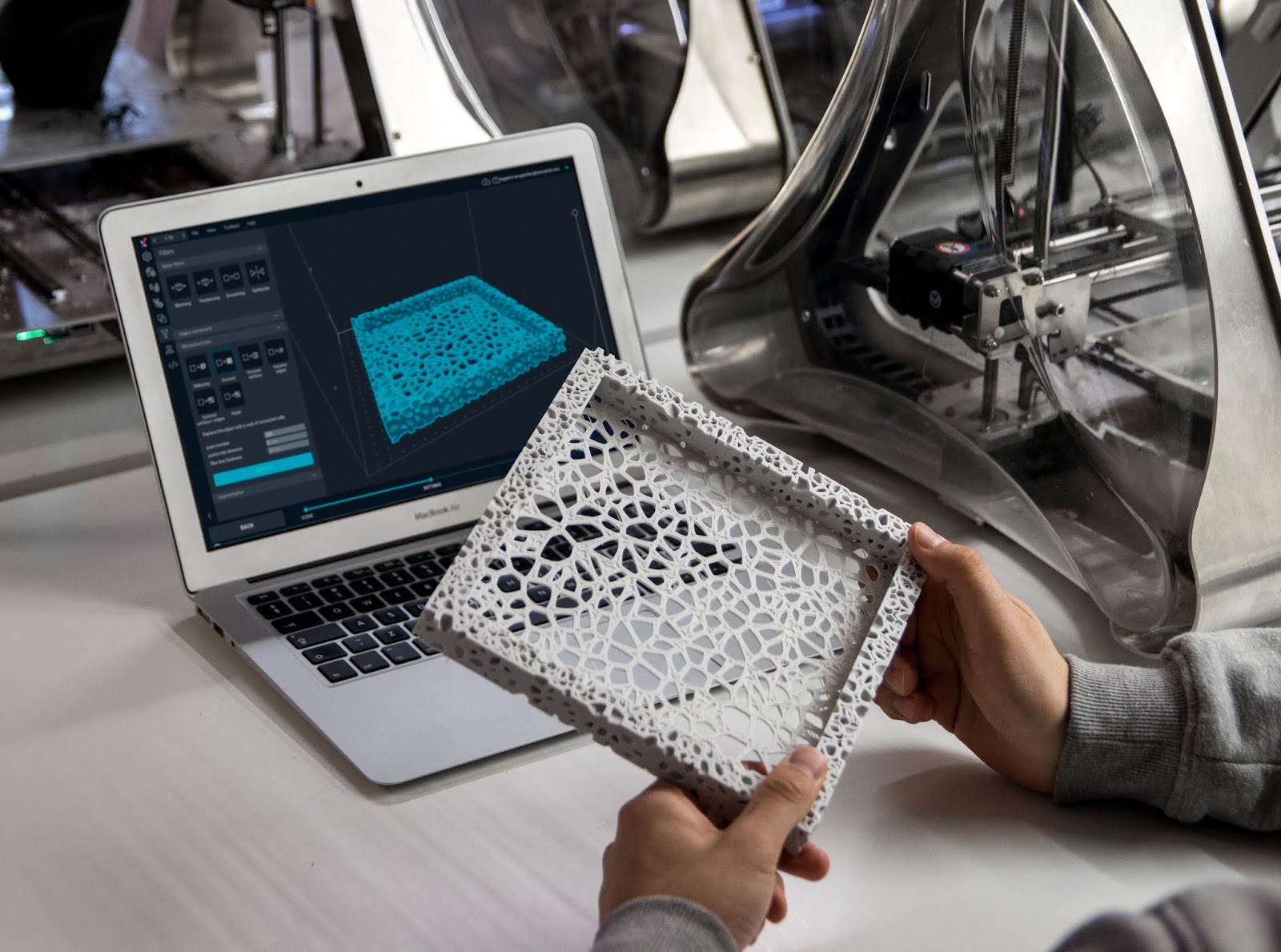
Another major element of education that is likely to change heavily in the near future is the power of 3D Printing. As one of the most powerful industries out there at the moment, it’s beginning to become a very popular way to learn for kids. Nowadays, children can get their hands on the kind of objects and instruments that previously they could only look at in books and dream of holding for real.
How Educational Technology is Reshaping Education: Latest Trends

From the crown of a king, to the layout of a medieval weapon (blunted, obviously!) children could get a much more authentic appreciation of the world that they read about on the pages of book. This is dangerous, though, as it prevents children from appreciating the true gravity of what they are reading about. The day that 3D printing stops being so prohibitively expensive, will be a good day as it should help people to finally become involved in the industry, thus empowering and educating the next generation.

In Summary...

Whilst understanding the various challenges that the Internet and similar devices present to the education industry, the trends are already here. People are becoming more appreciative of the integration of technology into various forms of education, as most believe it will quickly help to make people more comfortable with technology, as well as working and living in a multimodal and digitally mediated society.

All of the above technological outputs, have been working their way into education for some time — it’s just a matter of time before they are more systematically implemented in classrooms worldwide. Each will play their part in determining a new dawn for education, which can only be a good thing, ensuring that future generations, receive the best and most relevant learning possible.

*by andreascy*

Game-Changing Reasons Why Parents Can Say Yes to Video Games

Description :

The iPad just recently celebrated its fourth birthday. In this relatively short amount of time, the tablet evolved from a mobile computer into an e-Reader, small business tool — and yes, babysitter. Kids and toddlers completely enthralled by playing video games on the iPad isn't a cultural or parenting rarity these days. 

Game-Changing Reasons Why Parents Can Say Yes to Video Games

Generally, observing young children tuned out to the world, whether at home or in public, provokes negative feelings that range from parental concern to outside judgment. Do gadgets and video games impede adolescent development? Can consuming digital media and gaming instead strengthen the brain and improve cognitive functioning? How much is too much?

Healthy Moderation

NPR also questioned the effects of digital media on children and asked: "Is that iPad help or harm?" Dr. Dimitri Chistakis — father, pediatrician and professor — approaches the contentious subject matter with neutrality. Christakis explains that pediatric research on how touchscreen devices affect children is limited because tablet technology is so new. Based on a compelling theoretical framework, Christakis still recommends that "judicious use of these touchscreen technologies is fine and may even be beneficial." Interactive play can foster essential learning and brain development, he adds. Parents and children can also engage in "joint attention" and play an online game together. Just as a parent would read a book with a child, a parent can play an online puzzle or word game with their little one as well.

Proof in the Numbers

I believe gaming is good for you. The following points highlight how gaming can change gamers for the better. 

 Kids who played Tetris for 30 minutes a day for three months had a thicker cortex compared to non-players. The cortex is the most highly developed part of the human brain that perceives, produces and understands language. Information processing, as well as critical thinking and reasoning, occur in the cortex. 

 Video games can improve early literacy, including letter recognition and story comprehension, for children ages 4 and 5. 

 More than 100 Fortune 500 companies (e.g. IBM and Cisco) use some form of gaming for employee training. 

Boosted Brainpower

Can playing video games really strengthen the mind and increase mental health? Cognitive neuroscientist Sandra Bond Chapman, Ph.D., tells Psychology Today that brain games in particular aren't harmful, but downtime from technology, even for just 30 minutes, produces better brain health. Also, enforce household regulations that help kids reduce digital multitasking. Constantly shifting attentions and responding to every single notification interrupts brain functioning. Multitasking overloads, fatigues and stresses the brain, which decreases mental efficiency. Overusing electronics impedes deep cognitive thinking. Therefore, make it your responsibility to monitor and manage technology use.

The upsides? According to scientists from Queen Mary University of London and University College London, various video games can help train the brain for increased agility and improve strategic thinking, reports ScienceDaily.com. The study was based on subjects who played the strategy game "StarCraft" and life simulation game "The Sims." Data pulled from the subjects' psychological tests showed those who played "StarCraft," as opposed to "The Sims," performed cognitive flexibility tasks more quickly and accurately. Dr. Brian Glass of Queen Mary's School of Biological and Chemical Sciences explains that strategy games improve the brain's "ability to think on the fly and learn from past mistakes." Cognitive flexibility also promotes creative problem solving and out-of-the-box thinking. Rest assured, with balance and management, you can feel confident that allowing your child to play games on the iPad isn't detrimental.


Dear Friends and Fans, have a great week and remember: "Advertising makes the promise BUT it is your people who deliver it!". 

Keep visiting us! We have a better way! 😉

*by andreascy*

Feeling Unproductive at Work? A Video Game May Be the Best Solution

Description :

What if your company looked at the workflow coming in as an obstacle to be conquered rather than a task to be completed? The next paradigm shift in the business world may be turning the tedium of everyday work into a game or challenge that everyone is eager to participate in. 

Feeling Unproductive at Work? A Video Game May Be the Best Solution

The success of the corporate gaming craze has already begun to hit home, with Business News reporting that gamification can increase productivity by some 40%. How can you take advantage of games in order to generate better employee work efforts at the office?

Gaming as a Means of Testing

Taking on a new employee represents a major investment for the employer due to the time and resources needed to get them trained and up to speed on a new system. While there are few jobs out there that require you to fight one-on-one in a deathmatch or take down waves of attacking trolls, companies have figured out how to use video games as diagnostics and training tools for their new employees. 

CNN reports that institutions ranging from the Navy to IBM to NASA use video games to create simulations that require a participant to solve a problem or complete a diagnostic. How could your company benefit from combining testing and training with games? For starters, employees would be far more eager to show up for a workshop where they may be mentally challenged, or one where they can conquer their co-worker. When bringing in new employees, you could ensure better retention of company policies during training by keeping the content lively and engaging when presented in the form of a video game.

From One to the Other

Multi-tasking is one of the most valuable skills any worker can bring to a company, but not everyone can quickly go from one task to the next. A study by Psychology Today indicates that strategy games can help. When gamers make different choices commanding workers, powerful units, and economies, their brain improves at jumping from task to task. It's not just strategy games either. Mazes, memory games, and matching puzzles are very stimulating. 

Hidden object games from iWin, for example, require a gamer to look over different areas and use different clue-finding techniques to solve a visual puzzle. With a few games under their belt, employees can better make a decision when the best solution isn't immediately clear. This pays off when it comes to productivity for any company that has multiple deadlines per employee or per project. With gamification like strategy or hidden object games, employees can manage deadlines that conflict across time or space better than they could before, potentially resulting in projects that come in on time or ahead of schedule.

Snap Decisions

Fortune favors the bold, said Alexander the Great. It's a maxim that applies perfectly to the corporate world, even two thousand years later. Employees who have responsibility for making decisions can become more efficient at their job by—you guessed it—plugging into a console or PC in order to duke it out with their gun of choice. A first-person shooter title like Call of Duty has the potential to help a person make decisions at a faster pace due to the influence of having to pump the opposition full of lead before they return the favor. There's no compromise in the quality of these decisions, either. 

You don't have to worry that the first FPS-influenced conclusion you come to will be any worse than one you could mull over if you had more time to consider the various options. Employees need to make a bevy of snap decisions each day, ranging from the options that a marketing team uses to promote a product to a sales member who has to identify the best customers out there. With faster decisions comes less time wasted on second-guessing and scrutiny.

SEE ALSO: Game-Changing Reasons Why Parents Can Say Yes to Video Games

Liked this post? Let us know your story and your thoughts in the comments below. Please share and help spread the information with your friends and other social circles.

*by andreascy*

Financial Services Solutions from IBM and Intel Xeon E5 Processor

Description :

NYC Public Library : Dave Weber (IBM) discusses IBM solutions for the financial services industry including innovations around improved throughput, low latency, and increased memory capacity.


 IBM and Intel have worked together to improve Reliability and Scalability (RAS) within the x86 architectures. 


*by andreascy*

Researchers on IBM make 12-atom magnetic memory bit


Description :

"The computer you are working on stores 1 bit of data in about 1 million atoms. With atomic- scale magnetic memory, 12 is the new million".

Researchers have successfully stored a single data bit in only 12 atoms. Currently it takes about a million atoms to store a bit on a modern hard-disk, the researchers from IBM say. They believe this is the world's smallest magnetic memory bit. 

According to the researchers, the technique opens up the possibility of producing much denser forms of magnetic computer memory than today's hard disk drives and solid state memory chips. 


"Roughly every two years hard drives become denser," research lead author Sebastian Loth told the BBC. "The obvious question to ask is how long can we keep going. And the fundamental physical limit is the world of atoms. 

"The approach that we used is to jump to the very end, check if we can store information in one atom, and if not one atom, how many do we need?" he said. 

Below 12 atoms the researchers found that the bits randomly lost information, owing to quantum effects. A bit can have a value of 0 or 1 and is the most basic form of information in computation. 


"We kept building larger structures until we emerged out of the quantum mechanical into the classical data storage regime and we reached this limit at 12 atoms." The groups of atoms, which were kept at very low temperatures, were arranged using a scanning tunnelling microscope. Researchers were subsequently able to form a byte made of eight of the 12-atom bits. 

Central to the research has been the use of materials with different magnetic properties. The magnetic fields of bits made from conventional ferromagnetic materials can affect neighbouring bits if they are packed too closely together. 

"In conventional magnetic data storage the information is stored in ferromagnetic material," said Dr Loth, who is now based at the Center for Free-Electron Laser Science in Germany. 


"That adds up to a big magnetic field that can interfere with neighbours. That's a big problem for further miniaturisation." 

Other scientists thought that was an interesting result. 

"Current magnetic memory architectures are fundamentally limited in how small they can go," Dr Will Branford, of Imperial College London, told the BBC. 

"This work shows that in principle data can be stored much more densely using antiferromagnetic bits." 


But the move from the lab to the production may be some time away. 

"Even though I as a scientist would totally dig having a scanning tunnelling microscope in every household, I agree it's a very experimental tool," Dr Loth said. 

Dr Loth believes that by increasing the number of atoms to between 150 to 200 the bits can be made stable at room temperature. That opens up the possibility of more practical applications. 

"This is now a technological challenge to find out about new manufacturing techniques," he said. On the video below, Almaden physicist Andreas Heinrich explains the industry - wide need to examine the future of storage at the atomic scale and how he and his teammates started with 1 atom and a scanning tunneling microscope and eventually succeeded in storing one bit of magnetic information reliably in 12 atoms.


If you liked our article feel free to comment below and discover even more interesting topics from IBM.

*by andreascy*

PCI Express 4.0 16Gb/s per Lane

Description :
Even though PCI Express 3.0 is still several months away, PCI Express 4.0 is already in the works and some basic specifications of the interconnection technologies are already known. The maximum bandwidth of the fourth generation of PCIe interconnect will be 16GT/s per lane. There will also be a number of new features implemented.


"The initial report we got yesterday is a PCI Express 4.0 is feasible - we have to work out the details, but it is feasible," said Al Yanes, president of the PCI SIG, reports EETimes
The group, which leads the development, includes AMD, Hewlett-Packard, IBM and Intel. It is reported that the companies are already conducting simulations using chip, channel, packet and socket data. Currently they reportedly expect to achieve speed of at least whopping 16GT/s per lane (which means 256Gb/s [32GB/s] bandwidth for PCI Express x16 slots). The target speed spec is projected to be delivered by the end of 2011. 
PCI Express 4.0 will continue to use copper wires, which is logical, given the fact that changing technology process for making graphics cards, mainboards and other devices is hardly economically feasible. Still, it will likely require new kind of manufacturing process and new materials while still maintaining backwards compatibility. That is a big shift for the PCIe community which has not previously required major changes of board makers, according to EETimes. 
PCIe 4.0 will probably be limited to distances of about 8 to 12 inches compared to 20 inches for PCI Express 3.0. It is noteworthy, though, that it took PCIe 3.0 four years to get developed with 8Gb/s speed. 
"We think we can eke out one more turn of the crank out of copper, so we are not looking at optics yet," said Ramin Neshanti, chairman of the PCI SIG's serial communications working chair. 

*by andreascy*


IBM First Racetrack Memory Chip Prototype using CMOS


Description : 

Thanks to cloud computing and the rise of “Big Data,” the world is crying out for faster, cheaper, and more durable ways of storing data. IBM’s answer: If you wanna hold on to all these bits, send them flying.

IBM is cooking up a new type of memory chip that sends bits whizzing along tiny wires, dubbed racetracks. The technology has leaped into the realm of the realistically possible with Big Blue’s announcement today that it can make racetrack memory using standard chipmaking processes. 


IBM researchers have been working out the physics of the technology for years, and the company can now make racetrack memory in CMOS, just like today’s processors and memory chips. IBM is demonstrating a prototype racetrack chip at the IEEE 2011 International Electron Devices Meeting in Washington, D.C. this week.

The technology promises to improve storage capacity of disk drives and the speed of memory chips. You might call it flash memory on steroids. Also, racetrack memory can be rewritten many more times than today’s flash memory. The technology, or something like it, is likely to make solid-state drives the workhorses of data-center storage rather than just premium, high-performance alternatives to hard disk drives.

Racetrack memory works by storing oppositely oriented magnetic regions in microscopic wires. Oriented one way, a bit represents a 1. Oriented the other way, it represents a 0. The magnetic regions speed along the wires, which can be arranged vertically to fit more bits in a given area. The high speed of racetrack memory holds the promise of memory chips that are faster than today’s DRAM chips.

IBM’s prototype CMOS racetrack memory chip has only 256 cells. Racetrack memory chips will have to have many more and smaller wires than those in the prototype to be practical, but just building racetrack memory in chip form is a big step forward for the technology.

Racetrack memory isn’t the only game in town. IBM, Micron Technologies, and Samsung are among the companies working on phase-change memory. This PRAM stores data by switching microscopic regions of a memory chip between crystalline and glass-like states, which have different levels of electrical resistance.

Samsung is demonstrating an 8-gigabit phase-change memory device at the Electron Devices meeting. In June, IBM Research demonstrated the ability to store multiple bits in each cell in a phase-change memory device. The technology is more durable than today’s flash chips: Big Blue is aiming for memory that can withstand being rewritten 10 million times versus 30,000 times for today’s flash chips. IBM is also aiming for memory that is 100 times faster than flash.

Another promising candidate for replacing disk drives and memory chips with one technology is resistive RAM. RRAM stores data by changing the electrical resistance of the material in a memory cell. Low resistance represents “0” and high resistance “1”. In contrast, today’s flash memory stores dates as electrical charges. The absence of a charge represents a 0 and the presence of a charge a 1.

HP and Samsung are among the major players developing RRAM. In July, Samsung researchers developed a prototype RRAM chip that is as fast as DRAM and can withstand being rewritten a trillion times. HP is aiming to develop memory that is 10 times faster and 10 times more power efficient than flash and can hold twice the capacity of today’s flash chips.
Separately, IBM and Micron are demonstrating a jointly developed three-dimensional memory chip at the Electron Devices meeting.

The device is made by stacking memory chips and connecting the layers through vertical channels or “vias”. The technology promises to increase the density of memory storage in a given area by expanding capacity upward rather than outward, like skyscrapers versus suburban sprawl. Getting the most out of every square foot is of keen interest to data center operators. IBM will make the three-dimensional components and Micron will produce the finished memory devices.

All in all, it looks like we have more than one promising horse to bet on in the race to satisfy our insatiable appetite for storing data. 

*by andreascy*

🦾 Stay Motivated

👩🏻‍🚀 Artemis II Crew: From Friends to Family

▶️ Just Press Play

We all have days like this

[image or embed]

— Chris Paxton (@cpaxton.bsky.social) April 17, 2026 at 1:51 PM

⭐ Leading ShipYard's Leaderboard

🚩 Milestone Unlocked!

🏅 Win-Win