7 Reasons to Consider a Home Gym

If you think of picking up better health habits and don't like crowded gyms, consider setting a home gym catered to your needs.

5 Top Picks for Christmas Holiday Like a Fairytale

If you imagine Christmas holiday this year being like a fairytale, you should consider visiting these hidden gems!

7 Fashion Accessories To Lift Up Your Style Quotient

Get heads up on the trendiest as well as classic fashion accessories that would elevate your style to another level.

Sensibo

Showing posts with label Chips. Show all posts

The Best Graphics Cards of 2013

Description :

What's the golden rule of building a gaming rig? You don't skimp on the GPU. Processors, RAM, hard drives and accessories can all be sacrificed without sabotaging the experience, but the graphics card is the heart of any gaming PC

The Best Graphics Cards of 2013

It doesn't matter if it's a $500 budget machine or a $3,000 powerhouse.

Finding a balance between quality and price is tough. AMD and Nvidia are the two big manufacturers regarding chipsets (Radeon and GeForce), but several third-party companies assemble the actual video cards and add the memory.

Gigabyte GV-N670OC-2GD

Chipset: GeForce GTX 670

Memory: 2GB

Price: $285 on Newegg

This is the perfect card for the budget builder. The 670 is a middle-road chip from Nvidia capable of handling high settings from fan favorites like Skyrim and some GTA IV resolution mods. It's new anti-aliasing mode helps eliminate most of the jagged edges during gameplay without sacrificing frame rate, and you can game on three monitors from a single card (4-way SLI is optional if you want to go crazy).

On top of that, Gigabyte houses 2GB of video RAM on the card, which is standard, and keeps it all cool with three massive fans — all for less than $300.

EVGA 03G-P4-2784-KR

Chipset: GeForce GTX 780

Memory: 3GB

Price: $520 on Amazon

So the GTX 670 doesn't quite wet your whistle. We get it. You want to run that new Battlefield 4 download on ultra-high settings while gaming on several monitors. But at the same time, you're not made of money. The 780 is one of Nvidia's top chipsets and, while the price seems high at $520, it's actually modest in comparison to others (don't worry, we'll get to those).

The extra gigabyte of memory makes a difference too, as games like BF4 list 3GB as the recommended dosage for video memory. Any gaming PC equipped with an i7 and 16GB of RAM should have a card like this.

Sapphire Vapor-X

Chipset: Radeon HD 7970

Memory: 3GB

Price: $385 on Newegg

Nvidia and AMD are a bit like Ford and Chevrolet. Each have loyalists who swear by the product's superiority, but in the end it's really two versions of the same beast. The Radeon HD 7970 is the chipset from AMD that's comparable to a GTX 770 from Nvidia. Both chips can manage high to ultra-high settings on modern games and handle all the shadowing, smoothing and anti-aliasing a game can challenge.

The 3GB of memory is on par with any mid- to high-end card, and the Radeon is capable of 4K resolution if you can actually afford one of the displays.

EVGA 06-P4-2791-KR

Chipset: GeForce GTX Titan

Memory: 6GB

Price: $1,010 on SuperBiiz

Alright, no more child's play. You want the biggest, baddest video card on the market and you don't care what it costs. Nvidia has you covered. The GTX Titan is, by leaps and bounds, the sexiest chipset in gaming graphics. It packs every feature under the sun and is backed with 6GB of memory that could likely handle two games at once. This card doesn't run ultra-high settings on just today's games, but will run top-notch without skipping a frame for any 2014 game as well. It's a clean grand to buy, but this card is a Ferrari among Mustangs.

SEE ALSO: Game-Changing Reasons Why Parents Can Say Yes to Video Games

Be sure to leave your thoughts – feedback is highly appreciated. Oh and SUBSCRIBE! ;)

*by andreascy*

Record Breaking Wi-Fi

Description :

Researchers from the Fraunhofer Instiute at the Karlsruhe Institute of Technology have set a new Wi-Fi speed record of 40GB per second - by creating new hardware and using higher radio frequencies. 

Record Breaking Wi-Fi

The Dawning of a New Day

Essentially these researchers are now able to transmit 10 high-definition feature films per second, over a 0.6 mile distance. Their technology could fill a 4TB drive in under 100 seconds (1 min 40 seconds) when running at full speed (well, in theory it could, but currently no SSD or HDD could hope to keep up with it).

This development is excellent news for any gamer or movie addict as entire episodes or games could be downloaded within seconds, as opposed to hours - once it becomes commercially available. The motivation behind the project is to help Germany catch up to its neighbours as it is currently behind in terms of fibre network adoption.

In fact, the research, which was sponsored by the German Federal Ministry of Education and Research to the tune of €2 million, was conducted to find an alternative to fibre optic cable. It seems that the researchers, at least, believe that they’ve succeeded with project leader, Professor Ingmar Kallfass, reporting that; “We have managed to develop a radio link based on active electronic circuits, which enables similarly high data rates as in fiber-optic systems, therefore allowing seamless integration of the radio link”.

Why it Works

Mashable’s Jesse Emspak explains that what makes this high-speed Wi-Fi possible is a combination of ‘better hardware’ and the use of higher radio frequencies. The “better hardware” is what researchers are calling their transmitter and receiver chips which are quite compact; measuring 4 x 1.5mm2 . Kallfass and his team believe that the set of chips could be integrated into compact ICs.

The second component is the use of higher radio frequencies - 240 gigahertz in this instance. Most Wi-Fi networks operate at either 2.4 or 5GHz and higher frequencies can experience atmospheric interference. It would seem, however, that 240 GHz is not affected and, as such massive amounts of data can be sent over this wavelength. Emspak explains that; “The high frequencies are necessary for moving lots of data - the number of bits that can travel over the airwaves is inversely proportional to the wavelength. The shorter the wavelength, the more data that can go in a given time”.

The technology has already been tested over a distance of one kilometer (linking two skyscrapers) and certainly seems to be quite robust when it comes to bad weather.

Possible Applications

Apart from faster download speeds in central areas, another application for the tech could be use in rural areas where it is too difficult to lay down fibre optic cables; as these transmissions will be able to go much further than a current Wi-Fi router could manage. Should this prove to be the case it would mean a breakthrough for people working between buildings or in the countryside.

At present the technology has not been made available commercially but, once it is it looks set to change the way many people around the world use their computers. Just think of the possibilities; email hosting services could be accessed from more locations, videos could be downloaded in the blink of an eye and people in areas that were traditionally isolated could soon have internet access. It truly is the dawning of a new day. 


Keep pushing up higher! 💪

*by andreascy*

David C. Brock: The Chemical History of Electronics

Description :

The rise of semiconductor electronics is one of the most important developments in recent history. The manufacture of semiconductor devices relies fundamentally on chemical processes, equipment, and specially produced materials. 

David C. Brock: The Chemical History of Electronics

David C. Brock is a senior research fellow with CHF's Center for Contemporary History and Policy. As a historian of science and technology, he specializes in the history of semiconductor science, technology, and industry; the history of instrumentation; and oral history. He is the author of Understanding Moore's Law: Four Decades of Innovation and, with Christophe Lécuyer, Makers of the Microchip: A Documentary History of Fairchild Semiconductor (Acquired by Onsemi).

In this history of chemistry webisode, David Brock talks about the history of how the microprocessors that power iPads, iPhones and other digital devices came about. An excellent presentation! 


RELATED TOPIC: From Sand to Silicon : The making of Intel microprocessors

You could bring forward your opinions and suggestions and let us know what you think. If you like this post then it's about time to get our content. If you enjoy our news then feel free also to subscribe on our RSS feed and check out some of the latest Trending News and Tweets tailored for you.

*by andreascy*

TED - Leah Buechley: How to "Sketch" With Electronics

Description :

Designing electronics is generally cumbersome and expensive -- or was, until Leah Buechley and her team at MIT developed tools to treat electronics just like paper and pen. Leah Buechley is an MIT electronics designer who mixes high and low tech to create smart and playful results. Electronics aren't just for experts and engineers. 

TED - Leah Buechley: How to "Sketch" with Electronics

Kids and amateurs should be able to play, too, which is why Leah Buechley designs little paper-based electronics for "sketching" and interactive electronic fashion for tinkering. Buechley designs and creates electronic textiles, or e-textiles, like this jacket that can signal which way you're turning on your bike

TED - Leah Buechley: How to "Sketch" with Electronics

In this talk from TEDYouth 2011, Buechley shows some of her charming designs, like a paper piano you can sketch and then play. The method has to do with being able to draw circuits by hand, on demand, and being able to customize and re-think circuits without having to start a whole new chip and waste material. 


Great talk and cool concept! I love when technology, electronics and art collide, really got my imagination going. Discover even more from TED.

*by andreascy*

Atmel SAM4L Microcontrollers : Redefining Low Power


Description : 

How much better would your designs be if power consumption was no longer a concern? Find out today with the SAM4L family of ARM® Cortex™-M4 processor-based microcontrollers (MCUs), which consume just one-third the power of currently available solutions. 


SAM4L MCUs redefine the power benchmark, delivering the lowest power in both active (90µA/MHz) and sleep modes (1.5µA with full random access memory (RAM) retention and 700nA in back-up mode). 


They are the most efficient MCUs available today, achieving up to 28 CoreMark™/mA using the IAR Embedded Workbench, version 6.40. In SAM4L MCUs, you also get the industry's shortest wake-up time at 1.5µs from deep-sleep mode. Just what you need for portable and battery-powered consumer, industrial and medical applications.

Bringing Atmel picoPower Technology to the ARM Platform :

The SAM4L family integrates Atmel's proprietary picoPower® technology, which is used in hundreds of millions of Atmel® AVR® MCUs in the market today. This patented picoPower ultra-low power technology ensures that devices are developed from the ground up - from transistor design to clocking options - to consume as little power as possible.


Fast wakeup and innovative power-saving features such as multiple regulators reduce the overall consumption even further. In addition, Atmel's SleepWalking technology allows the peripherals to make intelligent decisions and wake up the system upon qualifying events at the peripheral level. It's all about system intelligence and conserving energy. Simply put, the SAM4L MCU is your choice if you're looking for long battery life, without sacrificing performance.


Read the SAM4L Datasheet and check also other interesting topics from Atmel.

*by andreascy*

Microchip Technology : Get ready to see a new world of 8-bit PIC MCUs


Description : 

PIC microcontrollers are finding their way into new applications like Smartphones, Audio Accessories, Video Gaming Peripherals and Advanced Medical Devices. 


Microchip provides solutions for the entire performance range of 8-bit microcontrollers, with easy-to-use development tools, complete technical documentation and post design-in support through a global sales and distribution network.


PIC16F1512/13 MCUs (28-Pin Flash Microcontrollers with XLP Technology) combine eXtreme low-power technology and high digital & analog peripheral integration for use in a wide variety of applications. Check the short presentation below by Primo Castro (Product Marketing Manager at Microchip) and learn about the details on this Data Sheet. 


If you like this article you can discover more about MCUs and DSCs and Microchip Technology.

*by andreascy*

3 Creative Raspberry Pi Projects

Description : 

A Raspberry Pi is a single-board computer i.e. it has a processor, R.A.M, I/O and other features that a computer is required to have on a single circuit board. It does not have a long term memory of its own so instead it uses a SD card for that purpose. 

3 Creative Raspberry Pi Projects

The Raspberry Pi is extensively used in portable appliances. Moreover, since it is programmable and can control devices, it can be moulded in to some very exciting gadgets. Herein you will find some creative examples of using a raspberry pi in some cool projects.

1. Control Things Around The Home With Remote Control Raspberry Pi

What is better than controlling all the appliances in the house without getting up from your comfortable sofa? Just imagine how annoying it is to wake up in the morning and realise you left the lights and the fan on, or when someone asks you to turn off the water pump in the lawn while you are watching an intense major league baseball match. That hurts big-time! 

3 Creative Raspberry Pi Projects

Here is the solution to all such ‘getting up and do work’ problems. Thanks to the miniaturized computer, and a simple combo of hardware cum software, you can sit back and relax all day long with your remote control, cleverly avoiding trivial work stuff. For this project items needed are :

       - Raspberry pi

      - Programmable remote control

      - Remote control switches

      - Lego pieces (to make your Raspberry Pi look cool) 

2. Remote Control Raspberry Pi Boat Another interesting idea is a remote control boat 

There’s no need to mention how much fun you can have with a project of this type playing with it in a local pond or swimming pool.This might be considered a project for the big kids, but the reality is that engineers are working on a drone water vessel called FishPi to sail on the Atlantic Ocean and collect data. So it may not be long before there is a prototype model for this project. 

3 Creative Raspberry Pi Projects

 How a motor can be controlled by a Raspberry Pi? For this purpose a USB controlled motor driver is necessary and it needs to be configured to the projects needs. Other than the controller, two small DC motors are needed; one for the propeller and the other for controlling the direction of the propeller. The wattage of motors depends on how large the vessel is going to be. You can command the direction of the boat using a low-profile Wi-Fi dongle but the key component is of course the Raspberry Pi. 

 3. Physical Gmail Notifier 

Now there’s no need to be in front of the PC to know that a new email has arrived. Get notified about the newly received mail through the physical email notifier. All this cool gadget needs is :

       - An LED

       - A GPIO(General Purpose Input/Output) module 

       - Internet enabled raspberry pi 

       - Software required : Python 

Configure GPIO with one Gmail account using Python, with GPIO-pin status as true if email is received, else status should be false. Connect GPIO output pins with terminals of LED. The LED will glow if a new inbox message has been received. 

3 Creative Raspberry Pi Projects

 Of course some intricate electronic components are involved in each of these projects but as they say, “Well begun is half done” and projects begin with ideas. It doesn’t end here…you too can think of some creative ideas and with some effort you can achieve something great. Just a little brain storming is needed and you’re off! 

We managed to get a Raspberry Pi computer on its first release in February from Premier Farnell Element 14. This has kicked off an avid obsession into exploring its capabilities and the creativity of others in the Raspberry Pi community.

*by andreascy*
Hyperspectral Imaging at Imec


Description :

Imec is working on a hyperspectral imaging module that enables fast, compact, and low-cost hyperspectral imaging. 


The target applications are machine vision, security, and medical devices. A hyperspectral camera forms a spectral fingerprint of objects. It does so by capturing light in many small wavelength bands.


Such a spectral fingerprint contains detailed information about the object, e.g. about the materials contained in it, or about its state. 


Hyperspectral cameras were first used in geology studies, e.g. to detect oil deposits. 


Today's setups for hyperspectral analysis are bulky, complex, and expensive machines for use in laboratories. But many "in the field" applications would profit from a lightweight, compact and robust camera. 


Think of cameras to inspect crops, or machines to sort food. And a microsized camera would enable a whole new class of applications. Imagine, for example, that you would have a small pen to check your skin for melanoma. 


Read also :

Beat Intel, Get your 14nm Process Development Kit Now

If you like our topic then kindly share it with your friends. Subscribe on our feeds and let us know what you think. Don't miss some of the latest news including our Tech Magazine and Newspaper and our Trending Tweets.

*by andreascy*

Microchip Technology MCP3911 (High Accuracy Energy Measurement)


Description :

The MCP3911 is a 2.7V to 3.6V dual channel Analog Front End (AFE) containing two synchronous sampling Delta-Sigma Analog-to-Digital Converters (ADC), two PGAs, phase delay compensation block, internal voltage reference, modulator output block, and highspeed 20 MHz SPI compatible serial interface. 


The MCP3911 is capable of interfacing a large variety of voltage and current sensors including shunts, current transformers, Rogowski coils and Hall effect sensors.


The video below presents a brief introduction to the MCP3911 Analog Front-End and reviews the MCP3911 ADC Evaluation Board for 16-bit MCUs for high accuracy energy measurement and data acquisition applications.


Learn more at Microchip. Please share this article with your social circles and show your support. If you want to get future updates to your email inbox or feed reader then kindly subscribe on our RSS feed and Newsletter. Do not miss also our trending news and tweets for today!

*by andreascy*

Bringing 100Mbps Ethernet to the Future Car

Description : 

With the ever increasing amount of electronics in vehicles, and the demanding nature of high-end and emerging applications, there is a great need for high-speed communications protocols. 

Bringing 100Mbps Ethernet to the Future Car

Emerging as front-runners for more wide-spread use are: 

- FlexRay 

- MOST 

- Ethernet

The Strategy Analytics Automotive Electronics Service (AES) report, "Automotive High Speed Networks," predicts that Ethernet will see both the fastest growth and the largest volume by 2020. The key breakthrough has been the BroadR-Reach physical layer, from Broadcom, now licensed to other semiconductor vendors, such as NXP. This allows Ethernet at 100 Mbit/s to be transmitted over low-cost, unshielded twisted pair cables.

“Ethernet has gained significant momentum because it meets the requirement for higher-bandwidth bus networks which many feel cannot be met by existing protocols, such as CAN,” stated Ian Riches, Director, Global Automotive Practice.

“FlexRay will continue to find its niche and see volumes grow, but MOST node volumes are likely to start to tail off as we head toward 2020,” added Mark Fitzgerald, Associate Director in the Strategy Analytics Global Automotive Practice.

Bringing 100Mbps Ethernet to the Future Car
100 Mbps symmetrical operation using standard Ethernet PHY components (Fig 1)

The OPEN Alliance (One-Pair Ether-Net) Special Interest Group has released their standard for in-vehicle Ethernet over a single twisted pair (Fig. 1). The OPEN Alliance includes two automotive companies, BMW and Hyundai USA, plus three semiconductor companies including Broadcom, Freescale and NXP. BMW will have the first vehicle based on BroadR-Reach technology in 2013.

OPEN fills a gap between CAN, Local Interconnect Network (LIN) and FlexRay that are using automotive control and Media Oriented Systems Transport (MOST), a high-end multimedia network. MOST uses fiber optics and runs at speeds up to 150 Mbits/s. It is a standard 10/100 Mbits/s Ethernet but it uses only a single, unshielded twisted pair cable comparable to that already used by FlexRay. Better yet, it is possible to deliver power over the same two wires like Power-over-Ethernet (POE)

Bringing 100Mbps Ethernet to the Future Car
Twister pair Ethernet (Fig 2)

This is definitely a game changing approach because it is suitable for a range of applications throughout the car (Fig. 2) from On-Board Diagnostics (OBD) to Advanced Driver Assistance (ADAS) applications (Fig. 3).

Bringing 100Mbps Ethernet to the Future Car
Lower cost of digital camera deployment for advanced driver assist (Fig 3)

The standard defines new PHYs that connect to standard Ethernet MACs. This means that existing microcontrollers with an Ethernet Media Access Controller (MAC) with a Media Independent Interface (MII) can be mated to an OPEN PHY. There are no special drivers or protocols to incorporate. The system works equally well with any standard Ethernet device including those using protocols like IEEE 1588 clock synchronization. 

The standard supports the standard Ethernet audio/video bridging (AVB), 802.1BA. It also address temperature and EMC details that are critical to automotive applications. OPEN will be suitable for use anywhere on the car from the engine compartment to doors. Hardware can be qualified for Automotive Electronics Council (AEC) AEC-Q100. 

Cable length is limited to 47m. A typical automobile would need no more than a 30m limit but this allows the technology to be used in larger vehicles. The technology can work with significantly longer cables up to about 500m.

Bringing 100Mbps Ethernet to the Future Car
Automotive Networking and Consumer Connectivity Applications (Fig 4)

OPEN Ethernet mirrors standard Ethernet that is essentially a switch-based interconnect. This is key because bandwidth is less of an issue assuming a single application can be handled by a link. It is even possible to combine multiple links to provide higher bandwidth but this would be less likely given the drive to use a single cable to reduce costs.

In theory, the new Ethernet approach can reduce connectivity costs by up to 80% and reduces cabling weight by up to 30% compared to a conventional Ethernet LVDS interconnect. OPEN Ethernet can use connectors like those approved for FlexRay. This is important because, at least initially, automotive vendors are likely to use their own approved connectors and cabling.

Still, standard cables and connectors could be useful. For example, a four camera ADAS application would be less expensive if the cameras were a standard component. There is already a standardization effort for automotive cameras. All it would need to incorporate would be a standard OPEN connector. But that is for the future.

Right now the semiconductor participants are delivering chips to handle the new standard. Broadcom's BroadR-Reach family includes a set of PHYs and switches. There are three switches with a mix of built-in PHYs. These include the 7 port BCM89500 with 4 OPEN PHYs, the 7 port BCM89501 with 5 PHYs, and the 4 port BCM89200 with 2 PHYs. The ports without PHYs can be connected to devices or external PHYs. The BCM89810 is a standalone BroadR-Reach 10/100 PHY. This is the PHY that would be used with microcontrollers. In the future, this kind of PHY might be incorporated directly into a microcontroller.

Bringing 100Mbps Ethernet to the Future Car
OBD data can be emissions-based or nonemissions-based (Fig 5)

Also part of the mix is Broadcom's BCM89610 10/100/1000 PHY. This is a conventional Ethernet PHY optimized for automotive use. A single BCM89610 could provide a link to an external diagnostic system. The chip has the same EMC resistance as the other BroadR-Reach.

The OPEN Alliance and its members are targeting automotive applications but the technology is ideal for a host of other application areas from robotics to home security systems. Ethernet is already in demand in these applications and a two-wire solution with power easily beats existing technology in cost.

Ethernet has had a long and fruitful life becoming the dominant interconnect for a very wide range of applications. It could now become the dominant interconnect for automotive applications as well.

Check also "Ethernet for Automotive Applications"  by Dr Robert Bruckmeier (General Manager Central Control Units, BMW Group), Freescale Technology Forum.

READ ALSO: Metro Ethernet - Its Uses And Benefits

Got something to say? Post it below. Have an uber-super-awesomelicious week ahead! 😃💛

*by andreascy*

Science Nation - This Breathalyzer Reveals Signs of Disease

Description :

Hello THE OFFICIAL ANDREASCY lovers. I hope you are doing well! This invention could give new meaning to the term "bad breath!" 

Science Nation - This Breathalyzer Reveals Signs of Disease

It's the Single Breath Disease Diagnostics Breathalyzer, and when you blow into it, you get tested for a biomarker - a sign of disease. 

For as amazing as that sounds, the process is actually very simple thanks to ceramics nanotechnology. All it takes is a single exhale. 

With support from the National Science Foundation (NSF), Professor Perena Gouma and her team at Stony Brook University in New York developed a sensor chip that you might say is the "brain" of the breathalyzer. 

It's coated with tiny nanowires that look like microscopic spaghetti and are able to detect minute amounts of chemical compounds in the breath. 

You can't buy this in the stores just yet -- individual tests such as an acetone - detecting breathalyzer for monitoring diabetes and an ammonia-detecting breathalyzer to determine when to end a home-based hemodialysis treatment are still being evaluated clinically. 

However, researchers envision developing the technology such that a number of these tests can be performed with a single device. 

Within a couple of years you might be able to self-detect a whole range of diseases and disorders, including lung cancer, by just exhaling into a handheld breathalyzer. Have a look:


We love this kind of experiments. So promising! Discover more research topics on our Newspaper.

Thank you so much for your support! 💝💝

*by andreascy*

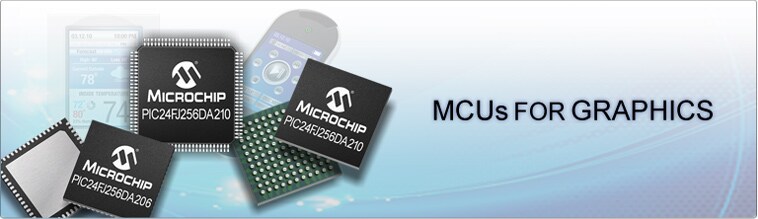
Microchip's Graphical Display Solutions


Description :

Howdy folks? Today we share with you an easy and cost-effective graphics solution from Microchip Technology


Microchip's 16-bit, PIC24 MCUs and dsPIC® Digital Signal Controllers provide designers with an easy upgrade path from 8-bit PIC® microcontrollers and a cost effective option to 32-bit MCUs. 

Graphics Library

The broad product line includes everything from eXtreme Low Power microcontrollers to high performance digital signal controllers. 


Combined with hardware and free software these 16-bit products make the design of mTouch™ Sensing, Graphics, Connectivity, Digital Power Conversion, Smart Energy and Motor Control solutions easy to implement. 


Microchip keep getting better and better. 

I've been looking for an application like this for my car display. I'd love to replace my rocker switch panel with a touch screen display. What about you?

*by andreascy* 

Microchip's Super Flash Serial Flash Memory Solution

Description :

Microchip SuperFlash® NOR Flash memory offers the fastest program and erase performance in the industry! Enable high performance products while lowering your total cost of ownership. 


What is SuperFlash?
SuperFlash is an innovative, highly reliable and versatile type of NOR Flash memory invented by Silicon Storage Technology (SST). SuperFlash memory is much more flexible and reliable than competing non-volatile memories. 


This technology utilizes a split-gate cell architecture which uses a robust thick-oxide process that requires fewer mask steps resulting in a lower-cost nonvolatile memory solution with excellent data retention and higher reliability.


You can learn more about Microchip's Super Flash Memory on this PDF


*by andreascy*

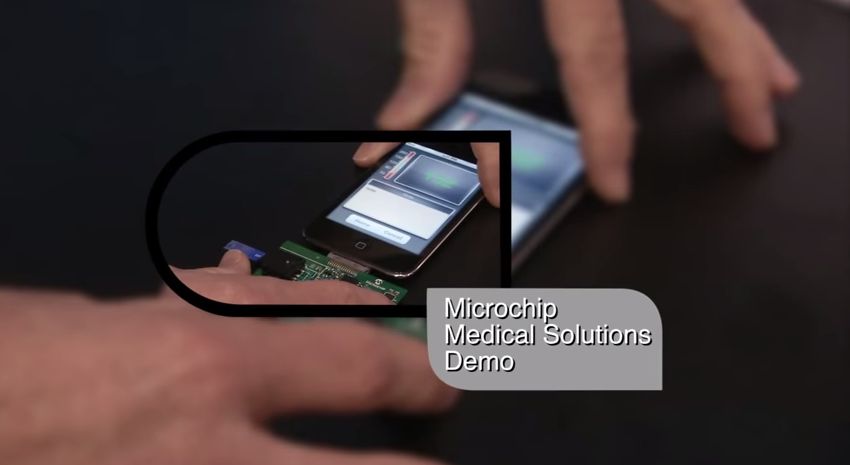
Microchip Medical Solutions Demo

Description :

Hey guys! I wanted to reach out and say “hello” on behalf of the team at The *Official AndreasCY* and share a quick update: 

Here is a video that features a number of medical and fitness demos, as well as some innovative new products from Microchip customers. 


Memories, interface chips, microcontrollers, analog and software all used in medical products at home, hospitals, wearable devices and more.


Follow us on Google+ and Twitter to get all the latest tech stuff & updates, and much more. Looking forward to your nice comments below.

*by andreascy*

dsPIC® DSC Digital Power Solutions


Description :

dsPIC digital signal controller digitally controls different power supply topologies. 


On display at Microchip's Design West booth were several of Microchip's digital power reference designs, including the solar micro inverter, LLC resonant converter, quarter brick DC/DC and LED development board. 


More on the video below :


You liked our post? Then kindly share it with your friends and show your support. Subscribe on our RSS feed and stay tuned for more!

*by andreascy*

Microchip dsPIC® DSC Motor Control Solutions

Description :

Microchip's advanced motor control solutions in action at ESC! A dsPIC digital signal controller controls a BLDC motor, an AC induction motor, and a stepper motor using high performance motor control techniques. 


More on the video below :


*by andreascy*

🦾 Stay Motivated

👩🏻‍🚀 Artemis II Crew: From Friends to Family

▶️ Just Press Play

We all have days like this

[image or embed]

— Chris Paxton (@cpaxton.bsky.social) April 17, 2026 at 1:51 PM

⭐ Leading ShipYard's Leaderboard

🚩 Milestone Unlocked!

🏅 Win-Win