
Marketing & Design

Marketing Design Tips and Trends For Success

With website design impacting 94% of first impressions, discover key web design tips and modern visual trends to keep visitors engaged.

Read Full Story →
Cybersecurity

Mobile App Security Threats To Plan For

Learn how hackers target mobile apps and how multifactor authentication, encryption, and code obfuscation protect user data.

Read Full Story →
Health & Fitness

7 Reasons to Consider a Home Gym

If you think of picking up better health habits and don't like crowded gyms, consider setting a home gym catered to your needs.

Read Full Story →
✦ Prime Full-Width Placement • 1450×150 Starting at €99/mo
Buy Ad Space Here

Put your brand, SaaS, or product front-and-center above our daily news feed on THE OFFICIAL ANDREASCY.

Showing posts with label TED. Show all posts

TED Talk : Privacy Issues - Your Phone Company is Watching


Description : 

A lot of people these days don't really understand importance of the terms "privacy", "self-determination", "individual freedom". Private information has become the newest commodity; privacy as we know it is a thing understood by past generations and obscured by new generations. Any activity that touches a form of computer technology gives this information away, either openly (Facebook, for example) or privately or covertly. Wonder where we are headed? 


What kind of data is your cell phone company collecting? German Green politician Malte Spitz wasn't too worried when he asked his cell phone operator in Germany (Deutsche Telekom) to share information gathered (and kept) about him and his activity. Multiple unanswered requests and a lawsuit later, Spitz received 35,830 lines of code -- a detailed, nearly minute-by-minute account of half a year of his life. The results astonished him. His personal story highlights an issue that affects everyone who uses electronic devices.

Over the course of six months, they had tracked his geographical location and what he was doing with his phone more than 35,000 times. Working with the German newspaper Die Zeit, an infographic was created that shows Spitz's activity across an interactive timeline, combined DT's geolocation data with information relating to his life as a politician, such as Twitter feeds, blog entries and website. By pushing the play button, viewers can set off on a detail-rich trip through six months of his life. And more, because he keeps asking the telecom company for his most recent data. 

I like how he mentions that this is a tool for oppressive goverments to control the mass movements of consciousness within its borders...but where did this tool of oppression originate? and how did these goverments get this stuff in the first place? Oh yes..from us!


I'll confess I'm really not very well informed on this topic. I think the real issue here is not the phone companies keeping this information, it's the possibility of them passing/selling it on to other parties. Lots of companies/institutions/individuals have access to our sensitive and private data (banks, hospitals, schools etc) but i guess there are strict legal structures in place to control the ways in which this data can be distributed or passed on. The problem is that most people, myself included, don't really know to what extent this is true for the telecom companies or internet providers we use every day.

As great as it is to know about this, let's admit, how many of us are truly prepared to give up their mobile phone? Should tech companies really have the right to collect, store and sell such detailed and personal information about their users and customers? And if companies do have the right to do these things, then what's left that remains private? Can we really be sure that the power that comes with having such information will never be abused, as Mr. Spitz suggests it could be in countries like China and Iran?

It is amassing how many people are ready to give up their private information thinking that it is not important and forgetting that THE CONTROL begins with the knowledge. THE BIG BROTHER needs you to think that IGNORANCE IS STRENGTH (George Orwell, 1984), but let’s not forget that: “Those who would give up Essential Liberty to purchase a little Temporary Safety, deserve neither and will lose both.” Benjamin Franklin.


For what purpose is this data being collected? Well, data retention has two sides, might be used to spy on people but it can also be used as evidence in serious crimes. If it were there for something like police investigation i would be ok with it (anyways its being deleted after 6 months) but it is being collected by someone like the government to be kept for an unlimited time that would be quite disturbing. I think this needs to be investigated further before real judgement should be made.

His indignation is quaint - but I am proud of him for pointing this out. If the general public really knew what the NSA - MOSSAD - KGB - and all the other superpower intelligence and national security services are ALREADY doing in terms of compiling and sifting data about the citizenry - they would be shocked and there would be a national outrage. But alas - people don't realize what is going on - and/or don't care all that much - as they don't know what is really happening behind the scenes.

I find it amusing that (a) people don't know and (b) people think their government stops monitoring them whenever the law is altered to make it illegal. Information is power, there are too many people who'd like to keep that power to themselves, and many of them are good enough at it that even the official law is meaningless to them. Fortunately in the western world, most governments don't utilize surveillance data individually, that would just give the trick away. But they are listening.


The scariest thing is that 99.9% percent of the people I know - and this includes lawyers, police officers, politicians, civil servants in the telecom area - either do not care or even know about the MASSIVE data collection & storage that has being going on. The security infrastructure that is being built and run by PRIVATE companies, under the guise of "providing public services" is far more disturbing than anything past dictators dreamed of. We're living the dreams of intelligence officers :)

I read an article about a year ago in a Wired magazine describing how a professor and his students used a similar network mapping program to narrow down the location of Bin Laden using contact and importance to a group of people. The network "hubs" are those strategic people that disseminate and receive information to and from others. You could clearly see this in the speakers presentation. The implications are staggeringly scaring. It take "Big Picture" thinkers to see all of the potential.

I think that last question may be the great mystery of our time -- do we have it? Do we want it? Do we need it? And i think we also need to wonder whether those worst-case sci-fi visions have an active role in shaping how the technology eventually evolves.


Let's not believe that anything is impossible anymore. There is a huge need for everybody to realize that the weaponry and surveillance method of the 21st century have reached levels way beyond our imagination. It's always the same pattern : First, people call you paranoid, then theres a disclosure 10-40 years later but the crimes can't be punished anymore...Or can they? 

*by andreascy* 

TED - Leah Buechley: How to "Sketch" With Electronics

Description :

Designing electronics is generally cumbersome and expensive -- or was, until Leah Buechley and her team at MIT developed tools to treat electronics just like paper and pen. Leah Buechley is an MIT electronics designer who mixes high and low tech to create smart and playful results. Electronics aren't just for experts and engineers. 

TED - Leah Buechley: How to "Sketch" with Electronics

Kids and amateurs should be able to play, too, which is why Leah Buechley designs little paper-based electronics for "sketching" and interactive electronic fashion for tinkering. Buechley designs and creates electronic textiles, or e-textiles, like this jacket that can signal which way you're turning on your bike. 

TED - Leah Buechley: How to "Sketch" with Electronics

In this talk from TEDYouth 2011, Buechley shows some of her charming designs, like a paper piano you can sketch and then play. The method has to do with being able to draw circuits by hand, on demand, and being able to customize and re-think circuits without having to start a whole new chip and waste material. 


Great talk and cool concept! I love when technology, electronics and art collide, really got my imagination going. Discover even more from TED.

*by andreascy*

TED - The Greatest Platform Worth Sharing

Description : 

No one can deny that TED.com is one of the most successful and iconic idea-sharing platforms online. Since 2006, TED Talk videos have racked up over 800 million views. And it’s no surprise these videos went viral; with names like Steve Jobs, Jane Goodall, Sergey Brin and Bill Clinton, the roster of TED speakers reads like a best-in-class review of today’s living scientists, educators and humanitarians.

TED - The Greatest Platform Worth Sharing

And now, six years after uploading its first video, TED.com is innovating online education again. A new site, https://ED.TED.com now provides a platform for teachers and students to share video lessons. Teachers can modify, or “flip”, the videos to make them more relevant to their own lessons and use the site’s test and project writing tools to measure comprehension.

The site continues to build its video lesson library by bringing user-nominated educators and animators together to create multimedia videos on everything from the mathematical genius of Archimedes to the significance of the Higgs-Boson particle discovery.

Check out the infographic below to understand how we all became TED heads and why TED.com is still one of the greatest places to learn online.

TED - The Greatest Platform Worth Sharing
Send this to someone who might need it.

RECOMMENDED TED TALK: Privacy Issues - Your Phone Company is Watching

We have faith in our fans. If you liked this article, you know what to do!

*by andreascy*

TED : Susan Solomon talks about The Promise of Research with Adult Stem Cells


Description : 

Calling them "our bodies' own repair kits," Susan Solomon advocates research using adult stem cells. We can use them to model and study disease, but she hopes for much more. 


Adult stem cells are undifferentiated cells, found throughout the body after development, that multiply by cell division to replenish dying cells and regenerate damaged tissues. Also known as somatic stem cells, they can be found in juvenile as well as adult animals and human bodies. They are pluripotent because they can morph in to any cells in our bodies.


By growing adult stem cells lines in a lab, Susan's team creates testbeds that could accelerate research into curing disease - and perhaps lead to individualized treatment, targeted not just to a particular disease but a particular person.

The above video was recorded at TEDGlobal 2012. Learn more about this topic on TED's Blog.

Feel free to discover also other interesting TED Performances and comment below what you think about our article.

*by andreascy*

TED : Robert Legato - The Art of Creating Awe

Description :

Did we really see what we thought we saw? Robert Legato creates visual illusions (effects) for movies so good they (sometimes) trump the real thing - thinking deeply both about vfx's expanding tech power and the truly new creative processes that can result. 


Legato won his first Oscar in 1998 for his work on James Cameron's Titanic, after several years in television supervising effects on two Star Trek series. 


His 2012 Oscar win for Hugo, the 3D film about an orphan boy who lives alone in a Paris train station, underscores his fascinating partnership with Martin Scorsese - doing digital effects on documentaries and new classics like The Departed.


He's worked with the big effects houses like Sony Imageworks and Digital Domain, but is now fascinated with the nimble new workflows made possible with digital tools. He designed the "virtual cinematography pipeline" that let James Cameron shoot Avatar like a feature film, not a software project. We know that fx can create new worlds - but how can these tools unlock new creativity? 


In this warm and funny talk at TED, Rob shares his vision for enhancing reality on-screen in movies like Apollo 13, Titanic and Hugo. Enjoy the video!


Discover other interesting TED Performances.

*by andreascy*

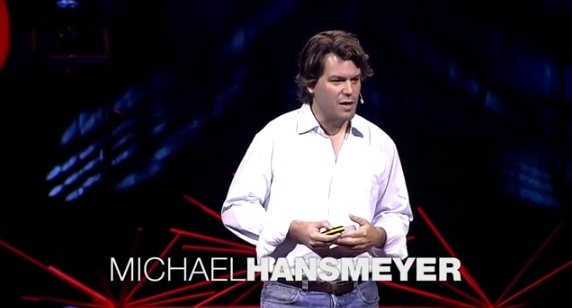
TED : Michael Hansmeyer - Building Unimaginable Shapes

Description : 

Classical architecture is defined by "orders" - ways to connect a column to a building, to articulate the joining of materials and structural forces. Colloquially, these orders are based on elemental forms : the tree trunk, the plank, the scroll, the leaf. 


Michael Hansmeyer is adding a new elemental form : the subdivision algorithm. He turns his math and programming skills to making ornate, organic, hyperdetailed columns generated from lines of code and then comped up in cross-sections of cardboard, almost as if they're being 3D printed.


His latest work with cupolas and domes is even more mesmerizing, like looking deep inside an organic form of near-unbearable complexity.


Inspired by cell division, Michael writes algorithms that design outrageously fascinating shapes and forms with millions of facets. No person could draft them by hand, but they're buildable - and they could revolutionize the way we think of architectural form. This presentation was recorded at TEDGlobal 2012.


If you liked our article feel free to comment below and discover even more TED Performances.

*by andreascy*

TED : Mina Bissell - Experiments that point to a new understanding of cancer

Description : 

For decades, researcher Mina Bissell pursued a revolutionary idea - that a cancer cell doesn't automatically become a tumor, but rather, depends on surrounding cells (its microenvironment) for cues on how to develop. 


She shares the two key experiments that proved the prevailing wisdom about cancer growth was wrong.


Check more interesting TED Performances.

*by andreascy*

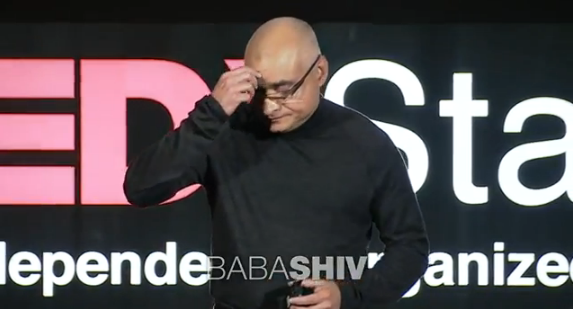
TED : Baba Shiv - Sometimes it's good to give up the driver's seat

Description :
Over the years, research has shown a counterintuitive fact about human nature : That sometimes, having too much choice makes us less happy. 


This may even be true when it comes to medical treatment. 


Baba Shiv's research expertise is in the area of neuroeconomics, with specific emphasis on the role of neural structures related to emotion and motivation in shaping decisions and experiences. His recent work examines the interplay of the brain’s "liking" and "wanting" systems and its implications for marketing, innovation, leadership and decision making. 


He shares a fascinating study that measures why choice opens the door to doubt, and suggests that ceding control - especially on life-or-death decisions - may be the best thing for us.


Check also other interesting TED Performances.

*by andreascy*

🦾 Stay Motivated

Editor’s Picks

Editor's Picks 01 / 03
Marketing Design Tips and Trends For Success
Marketing & Design

Marketing Design Tips and Trends For Success

With website design impacting 94% of first impressions, discover key web design tips and modern visual trends to keep visitors engaged.

Read Full Story →
Mobile App Security Threats To Plan For
Cybersecurity

Mobile App Security Threats To Plan For

Learn how hackers target mobile apps and how multifactor authentication, encryption, and code obfuscation protect user data.

Read Full Story →
7 Reasons to Consider a Home Gym
Health & Fitness

7 Reasons to Consider a Home Gym

If you think of picking up better health habits and don't like crowded gyms, consider setting a home gym catered to your needs.

Read Full Story →

🌀 Quantum Helium Unleashed

Ideas In Motion

Cybersecurity

Mobile App Security Threats To Plan For

Learn how hackers target mobile apps and how multifactor authentication, encryption, and code obfuscation protect user data.

Read Full Story →
Health & Fitness

7 Reasons to Consider a Home Gym

If you think of picking up better health habits and don't like crowded gyms, consider setting a home gym catered to your needs.

Read Full Story →
Marketing & Design

Marketing Design Tips and Trends For Success

With website design impacting 94% of first impressions, discover key web design tips and modern visual trends to keep visitors engaged.

Read Full Story →

▶️ Just Press Play

Beyond The Scroll

Health & Fitness

7 Reasons to Consider a Home Gym

If you think of picking up better health habits and don't like crowded gyms, consider setting a home gym catered to your needs.

Read Full Story →
Marketing & Design

Marketing Design Tips and Trends For Success

With website design impacting 94% of first impressions, discover key web design tips and modern visual trends to keep visitors engaged.

Read Full Story →
Cybersecurity

Mobile App Security Threats To Plan For

Learn how hackers target mobile apps and how multifactor authentication, encryption, and code obfuscation protect user data.

Read Full Story →

⭐ Leading ShipYard's Leaderboard

🚩 Milestone Unlocked!