For many years now, we’ve been seeing a gradual, but important shift in the way that people are educated. Gone are the days of notepads, pens and paper notes. Today, students are creating the content on their tablets, they are sending it across intranets, and they are engaging with the class, 24/7 through social media. This is referred to as asynchronous learning.
Far from being the distraction they were originally intended to be, though, digital devices are helping to re-shape the traditional dynamics of education as we know it — they are actually amplifying it.
So, what latest trends and changes can we expect to make a compelling difference to the market in the years to come?
Smart Tech
One of the most obvious innovations we have seen in recent years comes from the rather wonderful Smart technology industry. For example, one tool we might see used in academic study soon is IBM’s Watson device. Watson offers a high-end education tool that addresses and improves the way that people study. This is going to be very important for the long-term growth of the industry, as Watson is known to change the way that people collate data from masses of unmanaged data using artificial intelligence and sophisticated means of analysis.
This is very useful for making sure that the next generations can use technology to find answers that they would have otherwise never received. Even in more limited education functions, new AI toys could be used to manage the growth of younger children and make them more aware of certain interactions.
From making children more aware of their actions and the way they portray themselves, to full on educational aids, smart tech will ensure that the next generation always has a helping hand waiting for them.
The IoT and IoE
A significant element of the web is going to be the Internet of Things. We’re already changing the way we all link together and operate as one today, and the IoT will ensure that this continues. For example, the IoT will enable the rapid growth of virtual classroom learning. IoT will ultimately be a defining factor in shaping the future of the industry. Device interaction will improve and before long it will be easy to take the information garnered in the classroom right to our PCs back at home. The future of learning will involve possessing the means to transmit data as freely and as accurately as possible across the whole group.
Education will benefit from an added layer of depth to the IoT, in which people will be able to make the most of a learning system that brings together various aspects of their day-to-day lives.
More recently, another somewhat synonymous to IoT concept, introduced by CISCO is the Internet of Everything, defined as "the intelligent connection of people, process, data and things." This philosophy can inform a globalized, expanded notion of internet connections beyond machines. The latter can be meaningful for developing tools such as Educational Management Systems (EMS), which refer to managing the massive data of school records and other administrative functions across the globe, perhaps in a unified way.
VR and AR
Virtual reality and Augmented Reality took a very important step in 2018, with the mainstream release of many headsets by the likes of Sony and HTC leading the way, as well as more research-driven industry applications. Indeed, another option — the Google Cardboard— is expected to deliver exciting new ways of learning. It’s going to change the way that students investigate future careers, which is vital to shaping dreams.
For instance, a profession might sound amazing, but the reality could be very different. VR will re-shape how we evaluate the suitability of a student to take up such a profession. with simulations to estimate the performance of the person under a specific role. It will also help students to determine how suitable they are just by trying it out. Was it everything they thought it was going to be?
Such possibilities are explored in pilot studies and research experiments across the world. This type of VR and AR applications, will help students to avoid making the wrong choice early in life and failing to come back from it. Many students wind up in major debt, just trying to get into a career path that, when they “make it” resembles the opposite of what they had intended in the first place.
3D Printing
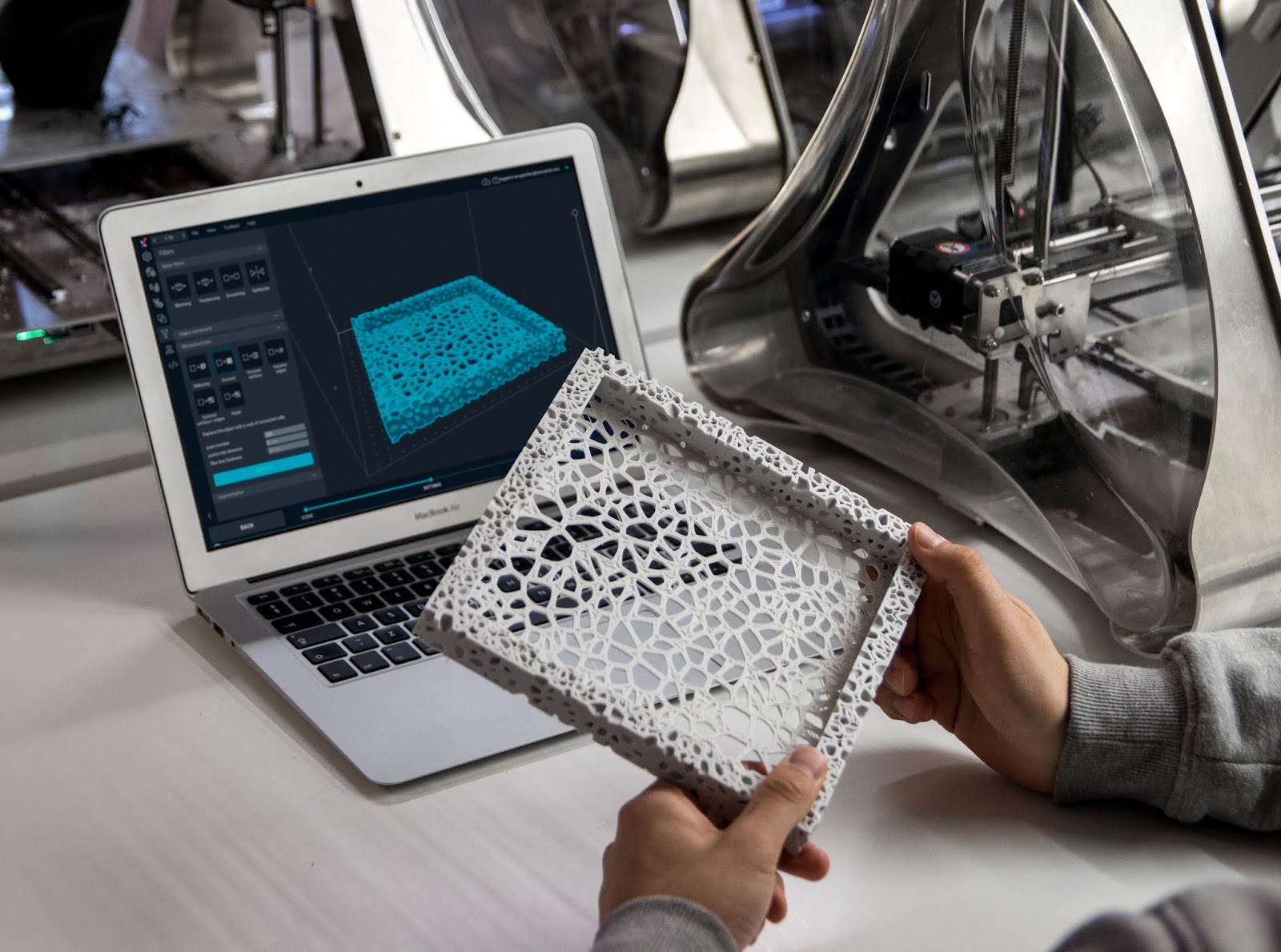
Another major element of education that is likely to change heavily in the near future is the power of 3D Printing. As one of the most powerful industries out there at the moment, it’s beginning to become a very popular way to learn for kids. Nowadays, children can get their hands on the kind of objects and instruments that previously they could only look at in books and dream of holding for real.
From the crown of a king, to the layout of a medieval weapon (blunted, obviously!) children could get a much more authentic appreciation of the world that they read about on the pages of book. This is dangerous, though, as it prevents children from appreciating the true gravity of what they are reading about. The day that 3D printing stops being so prohibitively expensive, will be a good day as it should help people to finally become involved in the industry, thus empowering and educating the next generation.
In Summary...
Whilst understanding the various challenges that the Internet and similar devices present to the education industry, the trends are already here. People are becoming more appreciative of the integration of technology into various forms of education, as most believe it will quickly help to make people more comfortable with technology, as well as working and living in a multimodal and digitally mediated society.
All of the above technological outputs, have been working their way into education for some time — it’s just a matter of time before they are more systematically implemented in classrooms worldwide. Each will play their part in determining a new dawn for education, which can only be a good thing, ensuring that future generations, receive the best and most relevant learning possible.
One of the most poignant discussions in the museum world, has been on issues of inclusion and access. Prolific museum figures like Nina Simon presenting in the recent Museum Next Conference in London, shared the vision behind OFBYFOR ALL, a new global initiative to help civic and cultural organisations become OF, BY, and FOR their communities. However, what is it that can help take the next step in terms of inclusion and learning within and out of museum grounds?
This article draws on a doctoral research study to investigate museum’s democratic potential, through transformative approaches to pedagogy aimed at meaningful cultural participation.
The ‘meaningful’, stands for a degree of competence in reading, interpreting and constructing meaning from the existing multiple forms of language (Stapp, 1984: 112; Mitchell, 2007: 3). ‘Participation’ involves an ability to negotiate the complex dialogic relationship that exists between the written word, the spoken word, images, objects, time and space (Mathewson-Mitchell, 2007: 3).
Consideration of issues of access in relation to the significant literacy requirements of museums, suggests that increasing focus on the explicit teaching of museum-based literacies, could be the way through which to expand museum visiting opportunities for the less 'conventional' audience.
It is actually proposed that museum-based literacies could act as the means to the development of cultural competence in museum environments. This evolution in theory and practice of, and about museums, has been notably part of radical changes in the museum world since the 1970s, mostly known as new museology.
Museums as Agents of Change
The development of a “new museology” (Mayrand, 1985: 201), is a concept used to describe the focus on the potential of museums as a positive social force. Golding (2009) suggests the museums should act as frontiers, places where learning and identity are produced and developed for all, while new ‘bridges’ are raised between non-dominant communities and their own histories (Philip, 1992 in Golding 2009).
It became profound that if museums accept their educational role, “they must also accept their social responsibility to work towards supporting a participatory democratic society” (Hein, 2005: 50). We need to “take advantage of the current context, as ‘opening new educational and social possibilities’ (Cope and Kalantzis, 2000: 18), to promote democratic education and human needs...” (Early, 2007: 67).
Changing Times, Changing Literacy
Ever since the 1960s, the nature of literacy practice and needs is changing; Hall (1989) suggests this is thought of as a consequence of New Times. New Times is an era of internalization, characterised by the breaking down of borders between local and global contexts resulting from rapid change in communicative practices (Gee, 2000: 183; Luke and Elkins, 1998).
One common element that has changed is that literacy has become inherently plural; thus researchers have problematized the very notion of literacy as a discrete set of skills. Luke and Freebody (2000) provide one of the more recent and useful definitions of literacy:
"Literacy is the flexible and sustainable mastery of a repertoire of practices with the texts of traditional and new communications technologies via spoken, print, and multimedia".
(Luke and Freebody, 2000: 9)
In such a perspective of literacy, the literate person is one who develops capacity to respond to emerging and communicative needs, a literate person who is a sophisticated user of texts. The individual engages with literacy practices as a decoder of text, as a maker of meanings, as a purposeful user of information and as a text analyst who employs critical thinking skills in the literate work (Luke and Freebody, 2000; Liddicoat, 2007: 20).
Figure 1: Evolution of the concept of literacy over fifty decades
Although acknowledging contemporary, 21st century demands of ‘literacy’ and education, this definition does not incorporate the social context of literacy. Literacy is, as Gee (1996: 22) has aptly described, “a socially contested term”. To this respect, literacy is a social practice rather than merely a means to an end.
Such a consideration draws on the paradigm of New Literacy Studies (NLS) and recognises literacy as a set of socially and culturally constituted practices enacted across and within social and institutional spaces. It acknowledges literacy as a social and historical construction that evolves dynamically (Giampapa, 2010: 4; Potvin, 2009; Garcia, Bartlett and Kleifgen, 2006).
Literacy is seen as a social responsibility including a critical or transformative emphasis in which literacy is a tool to understanding social structure in which we live so we can transform it in meaningful ways (Gee, 1996: 58; Street, 1995). The social perspective of literacy, implies more than superficial contacts with print; it icorporates an understanding of how to manipulate words and concepts through complex daily social interactions in an accepted manner (Giampapa, 2010; Potvin, 2009; Reid, 1998; Kern, 2000) through cultural apprenticeship (Rogoff, 1990).
The ‘New’ in Literacies: Multiliteracies
Following the NLS paradigm, ‘multiliteracies’ have emerged. The term “Multiliteracies” immediately shifts us from the dominant written print text to acknowledge the complexities of practices, modes, technologies and languages with which literate people need to engage in the contemporary world.
The “New London Group” (a team of ten academics including James Gee and Allan Luke) came together in 1996 concerned about how literacy pedagogy might address the rapid change in literacy due to globalisation, technology and increasing cultural and social diversity. They employed the term ‘multiliteracies’ to address these issues (The New London Group, 1996).
Since then, The Ontario Ministry of Education has come up with a number of literacy initiatives, some of which are characterized by a critical and social view of literacy, where literacy is conceived of as "the ability to use language and images in rich and varied forms to read, write, listen, speak, view, represent, and think critically about ideas" (Expert Panel on Literacy Report, 2004: 5).
Figure 2: Multiliteracies and their design elements (Adapted from The New London Group, 2000)
Luke and Luke (2001: 92-94) echo this idea, and argue that new technologies have facilitated the emergence of new kinds of artefacts, such as digital storytelling, requiring new levels of engagement and development of higher and different mental faculties (i.e. new multiliteracies). Luke (2000) also talks about the critical multiliteracies - being able to understand, debate, and act upon the material, political, and social consequences of technological change.
An alternative view of literacy calls for a reconceptualization of literacy as reading and writing the world (Freire, 1970). This conceptualization foregrounds critical thinking in both teachers and students, and looks beyond functional literacy (reading and writing skills), to the knowledge and power relations in literacy discourses.
Agnello (2001) refers to this approach as postmodern literacy, and argues that through this approach “reading and writing become enhanced methods for exploring the democratic self and its formation through ideological exposure to knowledge and power relations formulated by educational policy texts. Through such exploration, literacy becomes a tool for self-, student, and social advocacy rather than commodity to determine whether one measures up satisfactorily on test scores” (Agnello, 2001: 24-25).
Museum Learning as a Multiliteracy Practice
Museum-based literacies or museum literacy, refers to the competence in drawing upon the museum, its space and collections using certain skills and practices. In 1984, Carol B. Stapp observed that “museum literacy” was then a newly emerging phrase that articulated the older idea of a philosophy of museum accessibility.
Museum literacy goes beyond ‘reading’ objects; which may be understood as visual literacy; it requires a deeper level of process and understanding of the multiple and interacting languages and modes of communication found in the museum.
By broadening the view of museum literacy, it is acknowledged that the language that is involved in the museum is diverse and incorporates multimodal literacies including: linguistic, visual, audio, gestural, spatial patterns, technological and print-based (see for instance, Cope and Kalantzis, 2000: 160,203; Giroux, 1992; Hooper-Greenhill, 1999).
Figure 3: The multimodal literacies in museum-based pedagogy (Savva, 2016)
This view of museum learning redefines the goals and strategies of educators and the museum curricula. The idea of education in museums is seen as exploratory, broad, experiential, complex and multi-layered; museum strategies are now audience driven (Russo et al., 2007, Hein, 1998; Falk and Dierking, 2000).
To this discussion fits the incorporation of museum learning into the multiliteracies concept; this is facilitated by the realization that a display of material culture conveys messages about the people who created them and the times in which they were used (Pearce, 2003).
The act of creating an exhibit is parallel to the act of producing knowledge. Exhibits are not simply displays, but systems of signs that express messages about culture. Museums and their exhibits reflect the ideology of those who create them.
In the same vein that “There is no such thing as ‘reading’ or ‘writing,’ only reading or writing something . . .” (Gee, 1999: 93), the same would hold true for creating exhibits. There is no such thing as displaying an artifact without displaying something about that artefact. Also, the interpretation of messages is similar to the deciphering of text, using the signs, symbols, objects, etc., of a museum exhibit as part of the process of creating meaning (Roberts, 1997).
Griffin (1999: 8) identifies the unique learning opportunities offered by museums as: opportunities to closely examine objects or specimens; opportunities for comparison that allow trends and patterns to be deciphered; natural learning processes that incorporate the sharing and communication of ideas and the raising of questions; and opportunities to develop perceptual skills that teach how to gather information from objects and experiences.
Because museum exhibits make meaning through multiple media, multiple modes, and multiple symbol systems, the literacy practice of museum visiting is a multiliteracy.
An interesting project exploring the latter, is the ‘Museum Literacy Project’ in 2008-2010, involving nine different museums, administrations and training institutions based in five European countries, supported by the EU programme Lifelong Learning - Grundtvig Learning Partnerships, 2008. The project focus was on museums and audiences with low schooling level, and how museum literacy can be reached and maximize the museum experience for these audience.
Dimensions of a Pedagogy of Multiliteracies for Museum Learning - The Research Framework
Taking into consideration the unique characteristics of the museum environment, I undertook an empirically-based doctoral study involving the design, enactment and evaluation of the Living Museum Partnership (LMP), a museum-school partnership that unfolded in 13 weeks for the construction of a student-generated virtual museum to support environmental education curriculum (Savva, 2016).
Specific focus was on developing virtual learning environments and applying augmented reality to enhance culturally and linguistically diverse students' repertoires of literacy practices. This design-based research, draws from the field of New Literacy Studies, the proposed Museum Multiliteracies Practice (MMP) framework derived from the multiliteracies pedagogy of the New London Group, the Learning by Design Model adapted from Cope and Kalantzis and Schwartz’s museum based pedagogy.
Figure 4: The pedagogies interacting in the Museum Multiliteracies Practice framework (Savva, 2016)
It is proposed that museum educators and learning professionals undertake an approach for teaching and learning in the museum setting which incorporates multiliteracies pedagogy. Identification of museum literacies requires thorough examination into the interaction of modes that are evident, the incorporation of multiliteracies implicated, the various sign systems that are employed, and the unique nature of the museum learning environment (Mathewson-Mitchell, 2007: 7-8).
The focus should be not only on literacies as communication (meaning for others, as supports for social interaction). My doctoral research for instance also emphasized on literacies as a form of representation (or meanings for ourselves, as supports for thinking).
Cope and Kalatzis (1996, refined 2000, 2009) elaborate on the potentials of a ‘Pedagogy of Multiliteracies’ in fulfilling these aspirations. Two important ideas brought in a multiliteracies pedagogy are Learning by Design and Multimodality.
Learning by Design, is building into curriculum the idea that not every learner will bring the same lifeworld experiences and interests to learning, as well as acknowledging that every learner is not on the same page at the same time; pedagogies of learning are re-configured to construct learning as “a dialogue of difference” (Cope and Kalantzis, 2005: 31). The idea of Multimodality discusses learners’ movement between written, oral, visual, audio, tactile, gestural and spatial modes of meaning-making (Cope and Kalantzis 2005, 2009).
On this basis, the New London Group (1996) has proposed a multiliteracies pedagogy consisting of situated practice, overt instruction, critical framing, and transformed practice.
•Situated practice includes learners’ prior and present experiences in a community of learners (composed of experts and novices).
•Overt instruction involves the teacher’s or expert’s interventions to scaffold (Bruner, 1983) or support learning and increase the learner’s consciousness about learning. Scaffolding is a metaphorical concept that refers to the visible or audible assistance that a more expert member of a culture can give to an apprentice (Bruner, 1983, 1986). You might also note Vygotsky’s Zone of Proximal Development (ZPD), that relates to Bruner’s notion of the scaffold here.
•Critical framing refers to learners interpreting the historical, cultural, political and ideological contexts of learning.
•Transformed practice includes implementing new understandings through reflective practice in other contexts.
Figure 5: The Multiliteracies Model and Learning by Design (Adapted from Kalantzis and Cope, 2000)
Also identified within the Learning by Design Model are four knowledge processes (See Figure 5 above). The knowledge processes identified are:
(a) Experiencing the known and the new
(b) Conceptualising by naming concepts and theorising
(c) Analysing functions and interests
(d) Applying appropriately and creatively.
Findings and Implications for Museum Learning Practice
Stapp (1984) had argued that schools do not address the knowledge, skills and attitudes for museum literacy. Recent observations of the characteristic use of museums by school-based teachers suggest that a relatively passive, idealist approach to museum experiences, as identified by Stapp, has continued, with teachers lacking confidence and competence in the museum setting (Mathewson-Mitchell, 2006).
Based on the findings of my doctoral research, it is suggested that addressing museum-based multiliteracies leads to effective museum-school partnerships and meaningful museum learning practice. Research data suggested that students’ repertoires of literacy were enhanced as they engaged in the learning process as active designers and multimodal learners (Savva, 2016). It was found that students gained opportunities to:
Figure 6: Findings of Museum Multiliteracies Practice research (Savva, 2016)
It is proposed that any museum education programme or museum-school partnership or collaboration pays attention to the following key principles:
1. Teaching children, especially digital natives of our time, to be literate in any setting is not just a set of skills that can be transferred. Rather, education needs to enable them to participate in social situations using the required literacy practices.
2. Museum visiting is seen as multiliteracy practice; as such it requires specific museum-based literacies that are rarely identified or explicitly taught by museums or schools.
Conclusion
Ultimately, this brief review and presentation of the proposed empirically based, research framework for museum learning practice, forms a pathway to follow for inclusive cultural participation at any level and age. The London New Group’s (1996) ideas further developed by Cope and Kalatzis (2000; 2005; 2006) for a Pedagogy of Multiliteracies, could inform the development of the specific literacy requirements of museums, in a way that could lead to full museum literacy and a transformative cultural engagement and participation for diverse audiences.
Unpaid internships used to be rather common in the United States. That's no longer the case, thanks to federal regulations that have tightened control over how people are compensated for the work they provide. Unpaid internships still exist, but they are quickly becoming a thing of the past. Companies should tread very carefully with any plans to offer an unpaid internship.
Rules set forth by the Fair Labor Standards Act (FLSA) stipulate that employees meeting minimum requirements must be financially compensated for the work they perform. The rules are rigid enough that it is very difficult to establish an unpaid internship that actually qualifies for no salary arrangement between employer and employee. Numerous court cases over the years have demonstrated as such.
In order for an unpaid internship to be legitimate, it must pass the scrutiny of a six-point test established by federal rules:
• Both employee and employer must agree that no wages will be paid for the internship.
• Both employee and employer agree there is no guarantee of employment at the conclusion of the internship.
• The experience received through the internship must be similar to the training the employee would receive in an educational setting.
• The experience of the internship is solely for the benefit of the intern, not for the employer.
• The intern cannot displace a paid employee.
• The employer cannot derive any direct or immediate advantage from employing the intern.
BenefitMall a payroll and benefits administration company says that the stipulations for unpaid internships are clear. If a position cannot pass all six points of the federal test, interns must be paid at least minimum wage.
Minimum Wage Determined by the States
Companies and their payroll departments also need to be aware that the individual states set their own minimum wage requirements. Such requirements are often higher than the federal minimum wage mandated among companies seeking federal contracts. That means that even though the FLSA regulates how interns must be paid, the actual rate of pay is most often set by the state.
Offering paid internships in multiple states means paying those interns based on individual state minimum wage requirements rather than a uniform wage established company-wide. There are some variations in these rules, especially when a company might be based in one state but sending workers to another on temporary assignments.
BenefitMall says that most payroll processing companies are very familiar with the laws surrounding paid internships and state minimum wage requirements. They are in a unique position to handle these sorts of things on behalf of their clients because they already possess the knowledge required to make sure interns are paid properly. However, it is ultimately the employer's responsibility to maintain compliance.
Internships Can Be Beneficial
In closing, internships can be beneficial to both parties whether they are paid or unpaid. Benefits for the intern include on-the-job training, real-life experience, an open door to future employment, networking opportunities, and even opportunities to earn class credits through internship training programs.
Employers benefit from internships as well. They are able to offer educational opportunities to workers who may return in the future with that experience under their belts. They have an opportunity to contribute to the education of the next generation of workers who will support their industry. They can also use paid internships as a form of supplemental labor when creating full-time, salaried positions is impractical.
Unpaid internships are quickly fading away in favor of the paid alternative. If your company is planning on establishing internships, make sure it's done according to the law.
For many people, the term ‘digital native’ might sound a little strange. It’s not literally someone who lives on the internet, as that might be a little bit impossible. What it does offer, though, is a term which has become increasingly popular in the last decade and a half. Coined by the excellent Marc Prensky in 2001, this term – the digital native – describes the inability to help the next generation, namely the digital natives who were born in the millenia learn in and through technology. Teachers and educators are increasingly finding it more difficult to relate and understand the needs of the generations that preceded them.
Today, as the infographic below shows, people like digital natives tend to get their information through the web and have a different means of learning and then processing information. Therefore, academics are often confronted with the challenges that traditional methods of education that they once employed with such success no longer hold the same ideals.
So, what are some other ways can ‘digital natives’ be taught?
1. Multiliteracies and Multimodal Learning
Supporting meaningful teaching and learning for the 21st century requires to adhere to an expanded view of literacy, which reflects the multimodal meaning making of digital natives and not alone. It has been proposed to promote a pedagogy of multiliteracies involving learning using not only spoken and written words, but also images and symbols of all kinds, sounds and music, bodily gestures and movement, and physical and virtual objects. Educators therefore have a new charge in the new era, to teach these competencies and multimodal literacy practices that students need to acquire and utilize in various contexts in order to succeed in the postmodern world.
2. Collaborative Learning
Probably the most striking way in which we can help the next generation learn to change and grow academically is through collaborative learning. Instead of expecting everyone to dig their noses into academic books and read from the same select sources, we should prepare for digital natives to have more diverse sources and opinions on certain subjects.
It’s important that it is realized how collaborative learning is probably the major secret to making the digital natives out there more comfortable to learn. There are lots to consider about the value of learning as a member of a group and by actually taking part in the learning process through up taking different roles. No longer do people get the same enjoyment from just reading from a book and taking cues from there. To add another bow to the way that the next generation will be learning, we have to appreciate that their means of education differs.
3. Avoid Pretension
One of the major flaws in digital native learning is when a ‘digital immigrant’ (those of an older generation without the same comfort and thought process in digital learning) tries to pretend they are from a more modernized background. It comes across as false and cannot be a valid source of helping to stimulate and improve the level of learning that students can do in general.
This is a major issue and one that has to be addressed. A teacher must find a way of working as the core organizer of the subject, and the person who helps the students to learn. What they no longer have to be, though, is the font of all knowledge and fact. Teaching has moved beyond the head of the classroom being the holder of all the facts. Digital natives find it easy to topple the academics and the experts, so it’s important that schools take this into account as it will majorly determine the next steps in the industry.
A teacher must find a way of using the knowledge they do have to offer the information in a way that can be used a supplement, not as the only fact available.
4. Keep Teaching Human
However, whilst it’s important that teachers avoid going down the route of trying to become false in their educational style, they also need to find a way of making sure that they can keep the human interaction side of things burning as bright as it possibly can.
The human element of learning from a teacher is never going to be going away anytime soon. Teachers have to accept that now students can learn from them even if they are not face-to-face. The rapid growth of distance education means that the education process has to be respected as having changed so dramatically.
Keeping the human element – acting as the person to throw logic into arguments and debates – is a key of being good at teaching the digital natives. They need to know they can learn from multiple sources, but also that their teacher does hold information that they can learn from.
5. Provide a Purpose
Nobody wants to learn from you, no matter how humanized you can be and how far away from the authoritarian image of a teacher you can be, if you do not have a purpose to the learning. Students struggle to just listen to you talking on for an hour and a half – if they want to read a massive wall of text or listen to an interview they do not participate in; they will find it.
The days of memorization (thankfully) are gone in the classroom – it’s now madness to expect that students will just put up and let you make your point these days. Students now read into topics that engage them and interest them, rather than always constantly looking to the power of the teacher to help them learn in the first place.
Give a native control, though, in other words encouraging self-directed learning and they will make the most of that. Let them dictate the learning path in the room and they can find their own way there. Students want to know what they are doing, and why they want to know that in the first place. Act as a facilitator, make your ideas interesting, and students are more likely to want to listen and make that a lesson worth hearing.
Try and just narrate from a book and expect them to learn though? You’ll be shocked.
6. Square Pegs, Square Holes
Many teachers fear that learning through hybrid – typical teaching and eLearning – is the wrong way to go. However, this comes from experience personally as they never had this extra side to their education. As such it’s probably something worth avoiding. That’s the train of thought that many teachers go with – and it’s also why many teachers fail to excite or adapt.
Provide a research-based approach to your learning together. In class, use supplementary content from the web that backs up your point but is put in a more “interesting” tone. Digital natives care not for just your take on things, but back it up with some cool content online they can review themselves? They’ll be far more likely to actually listen. In this sense, different approaches have been employed, for instance, using WebQuests to excite and motivate students through extensive use of online resources.
With so many of the digital native generation in need of technology to feel stimulated now, it’s important that teaching does not fall behind long-term. Sticking with the old ideas and refusing to adapt the way that students are asked to learn, though, will create a chasm that cannot be bridged.
Kids today live in a world where you cannot escape technology. The internet is all around you, from vehicles that use technology to park themselves to home thermostats that can be controlled half way around the world using a smartphone.
Because the internet is such a beneficial part of our lives, kids have a hard time understanding the drawbacks behind it. It can be a challenge trying to get children to understand the concept of social media etiquette, online privacy, viruses, and phishing schemes.
Unfortunately, these are real problems that surround the internet. You can’t rely on their parents to educate them about tech security because you have no idea how much experience and knowledge they have of it.
As a teacher, it is important that you inform your students about the dangers of the internet and how to protect themselves from cyber criminals. This may include a combination protective measures, like using a flash key encryption device, speaking up when they see something strange, or understanding the long-term effects of posting online.
It Can Last Forever
It can be difficult for children to understand that whatever they put online could follow them for the rest of their lives. The last thing they are thinking about is how it can affect their future. It is important that you explain to them the repercussions of posting things on the internet that will haunt them later in life. If it is not something they want everyone to see, then they need to think twice about posting it online.
Express Openness
For many kids, the thought of having to tell an adult about something bad they’ve seen on the internet is scary. They may have fears that they will get in trouble if the tell the adult what they have witnessed. Ease the kids' concerns and explain how talking to an adult is acceptable. Whether they are contacted on their phone, tablet, or computer it is the same as being contacted out in public by a stranger. Encourage kids to speak with adults if they encounter anything odd while online.
Stay Protective
Many technological devices require a password just to sign on. While a password is important, children must understand the need to keep it secretive. Should the password get into the wrong hands, there is no telling what thieves can attain once they get access to a device.
Additionally, flash drives can be a great way to transport programs and files to school and home. Unfortunately, kids sometimes struggle with keeping up with these types of things. An encrypted flash drive will help secure your information with an added wall of security in case it ever gets in the wrong hands.
Conclusion
These days you can never be too careful about protecting your information. With kids having so much access to the internet, it is a huge concern that their privacy may be compromised. The best way to combat this is by talking to kids about the dangers that lurk with technology.
Because many parents may be ignorant about some of those dangers, it is crucial that teachers make it a point to educate students involving security issues surrounding technology. Using examples, offering additional firewalls like encrypted flash drives, and urging your students to discuss what they view is just a few of the ways you can help them understand how important security is when using any type of technology.
Augmented Reality (AR) has had a tremendous impact on education during the past few years.
It started out as something really “cool” before developing into one of the most useful resources available for learners.
What Exactly is Augmented Reality?
Augmented Reality, which is also known as AR can simply be defined as the process of viewing or scanning a trigger image through a mobile device. This process would give life to a subsequent action. This action can be another image, a video, QR code, 3D animations, games or whatever you want it to be. Even a GIF image can be considered as an AR in action.
The Impact of Augmented Reality on Education
Imagine that you are a student who is sitting in a history class. The lesson you are going to learn is about Egyptian Temples. Augmented Reality has the potential to create a realistic 3D environment of the temple and you will be able to learn it in more of an interactive and appealing way without even leaving the classroom. You can view every corner of the temple and get a clear view of it. That’s the beauty of AR.
Augmented Reality can be used in education via many different methods. These include:
• Virtual Reality
Even though Virtual Reality mainly focuses on games, it can be used effectively in training and education as well. The immersive learning experience delivered by Virtual Reality has contributed a lot towards its popularity. A 3D immersive environment or a 360 degree video shot becomes useful when teaching new languages for students. A large number of learners will be able to get connected to the same virtual space as well which is particularly useful at a time of globalization and increased connectivity between countries via the internet.
• Virtual Reality Glasses
Virtual Reality glasses have also received a lot of attention in the recent past. More specifically, they have become particularly popular among students who are looking for a convenient method to learn marine biology. That’s because virtual glasses are in a position to immerse the students in a seabed environment and help them learn in an effective manner. This method of teaching is not associated with print books. A tablet is being provided to the student by the teacher and the student is asked to follow what appears on the screen. The students can then simply ask what animals are invertebrates and what vertebrates are. Then the students are asked to point them out by having a look. At the end of the lesson, the teacher would be able to know who has got it right and who has not.
• 3D Objects and Motion Capture
Offering training on 3D objects is not an easy thing to do. People who learn about these objects will not be able to get a clear understanding until they interact with the objects. That’s where 3D Objects and Motion Capture comes into play. This method is based on motion capture technology where the students will be asked to reposition the 3D objects that they see.
• Virtual Learning Environments
Virtual Learning Environments involve a platform where students and teachers can come together and collaborate with each other through an intranet. Teachers can use this network in order to create and send homework for their students. In addition, students can complete the assignments and submit them over the network themselves. In this way it is possible for the teachers to have the homework submitted and gathered in an organized manner, as well as being able to access useful statistics at the end of the day. Virtual Learning Environments have changed how traditional class sessions are managed and are thought of as a revolutionary way of e-learning.
Feedback and Monitoring Through Augmented Reality
Feedback and monitoring holds a prominent place in the education system. Otherwise, teachers will not be able to figure out whether they reach the educational objectives or not. Augmented reality creates an ideal platform to achieve this traceability. For example, the teachers will be able to get a clear understanding of what content is mostly viewed by the students and what assignments are completed by them. This type of information can be used in order to make important decisions respective to the students’ learning styles and performance.
Here is a list of some useful applications based on Augmented Reality, which can be used to enhance the quality of education:
One of the most popular applications allowing to bring tagged images, objects and even physical locations to life. Using interactive digital content like video, animations and 3D scenes named Auras, Aurasma unfolds the amazing world of Augmented Reality with the ‘explore’ and ‘featured’ sections to retrieve the latest Auras. This app has been widely used in education since it allows the teacher and student to create their own interactive content. School displays come to life with this great tool!
This remarkable app created by NASA themselves and recently upgraded, as the name probably gives away, is more closely related to science or space teaching. Once you download Spacecraft 3D and print off the ‘markers’, it is possible to use your iPad’s camera to make a three dimensional spacecraft appear right before your eyes. There is also the option of taking a closer look to the structure of Rovers, Satellites and Telescopes while also looking at all angles of the technology since there are moveable parts on some of the crafts. These features can be quite engaging for children yet the app allows also to single handily bring a research lesson to life. Based on the content this app can be used in particular for students aged Key Stage 2 and 3.
Butterfly Fingers is one app that makes use of the Augmented Reality in combination with SEN. What the app does is that it places animated butterflies in the room while you look through the iPad’s camera. You might be stunned but this fluttering of butterflies can create a calming environment in the classroom especially when you have a very vivid student population. Importantly, the app does not require to be excellent in fine motor skills so it can be useful with children with special educational needs and all age groups.
Whilst for many applications using AR, the user basically points the tablet’s camera at something and watch the effect, there is nothing physical about the endeavour. In contrast, Quiver is a fantastic app which allows you to physically customize the Augmented Reality object using coloring pages as triggers, and this video shows it in action. The way to do this is simply by downloading and print off markers which you can color and redesign yourself. Once the child (or adult) draws a picture and sketches its parts, pointing at the colored image using the tablet turns it into a three dimensional animation with moveable parts. There different markers, all enabling for creative and imaginative artistic learning. For example, the app can help a child visualize a character and stimulate more ideas for scripts, storyboards etc.
One extremely favourable app is AR Flashcards. The app is rather simple: there is a card for each letter of the alphabet, featuring one animated animal for every letter. You therefore realize that immediately the app allow you to play with twenty six Augmented Reality animals. There are more exciting stuff to do though, like using a huge number of dinosaur flashcards available for free. This creates endless educational potentials, ranging from phonics teaching and early language development, to topic-related learning such as using the dinosaurs which are pretty popular among children. Embedding these flashcards in your classroom teaching can therefore help with story writing, artistic endeavours, research projects and so much more!
A very interesting Augmented Reality app by the colossus focused on learning about astronomy in a fun and engaging way. Google Sky Map allows you to directly identify stars and constellations using a smartphone camera rather than through a book.
A great educational game app to get elementary level kids to overcome their fear of Maths by learning, Fetch! Lunch Rush released by PBS KIDS uses printable cards as Augmented Reality pieces. Designed in 3D, the app uses the smartphone camera to place graphics in real-world surroundings. Specifically, there is a plot in the game where students help Ruff the Dog feed sushi to a movie crew by solving math problems.
GeoGoogle is awesome when it comes to expanding students’ geography skills and help them measure distances to specific destinations, like latitude and longtitude by applying GeoGoogle to real-world surroundings.
One former teacher developed AugThat specifically targeting students that are not motivated to follow the classroom routine. Using the app's features, it is possible to create animated lessons in a variety of topics to engage students, including 360-degree virtual environments and 3-dimensional experiences.
One of the most quality apps created by DAQRI, a powerful AR developer, is the application Elements 4D. As the name implies, this app brings elements of the periodic table to life to allow students of elementary, middle and high school level, see chemistry in action. The app work by printing out and assembling blocks that are used as trigger images for an AR experience. There are also lesson plans available for integrating Elements 4D at the DAQRI's website.
Another amazing app by DAQRI, Anatomy 4D, allows teachers to design their own anatomy lessons by allows to view 3D images of the human body and heart. The app works by having teachers print off one of the target images and have students look at it through the app. This way they can learn about the different biological systems and bring the human body to life in a fascinating way, turning them "on" and "off" with the touch of a button.
This application employs Augmented Reality features to scanned print materials to enable a rich digital experience. Some of the app’s characteristics include seeing magazines come to life with videos on top of pages, browsing and viewing thousands of Geo Layers to find nearby stuff, enjoying interactice print with pop our content, and sharing your interactive print experiences without having to scan. Layar is thus one great app for use on a variety of learning projects.
These are only a few Augmented Reality applications that are related to education. You can find a variety of similar applications that have taken the entire education system to a whole new level. Given this increased interest in Augmented Reality in the field of educational technology and technology enhanced learning, substantial empirical research has taken place in the past two decades to determine how this technology meaningfully engages students.
Conclusion
The existing evidence so far suggests a variety of benefits from using Augmented Reality and similar immersive experiences during the lesson. More research however is needed before a conclusive argument is made, and what is certain, is that the use of Augmented Reality for educational purposes, like any other trending method, should be accompanied by a solid theoretical background while also addressing the individual needs of the particular classroom at hand.
Artificial Neural Networks, which are also known as ANNs have received a lot of attention recently. The increasing awareness of Artificial Intelligence has contributed a lot towards their popularity.
The Artificial Neural Networks can simply be defined as biologically inspired networks. In other words, these networks work similar to the human brain. As is probably well known, the human brain consists of billions of special cells named as neurons. To be precise, it has been estimated that a typical human brain consists of about 150 billion neurons. These neurons are inter-connected with each other to form a network. As a result, the human brain can be considered as a collection of neural networks.
The Concept of Neural Computing
The application of Artificial Neural Networks is known as Neural Computing. Neural computing uses a limited amount of concepts that are borrowed from biological neural systems. The main objective of Artificial Neural Networks is to simulate massively parallel processes that are associated with interconnected processing elements in network architecture. An artificial neuron would be the building block of an Artificial Neural Network.
A neuron would receive inputs from the other neurons that are connected to it. And conversely, the output of a neuron will be passed to several other connected neurons. The same mechanism takes place within the human brain as well. Likewise, the artificial signals processed by the neurons can be changed. How Artificial Neural Networks process information entirely depends on its structure. The algorithm that is being used to process information can also create an impact on it.
Application and Benefits of Artificial Neural Networks
Artificial Neural Networks can be applied to a variety of scenarios. The benefits that are associated with these applications have contributed a lot towards their proliferation over the past decade. The most popular areas where ANNs are being applied include learning, pattern recognition and interpretation of noise and incomplete inputs.
Humans follow a different approach when solving problems when compared to computers. The objective of Artificial Neural Networks is to make computers think and solve issues like human beings. This can help computers to solve complex problems, which cannot be solved with a rule based approach. In other words, Artificial Neural Networks are being used to solve complex problems that cannot be simulated using analytical or logical techniques. They have the potential to solve issues, which cannot be solved even with expert systems. Pattern recognition is a perfect example to prove the aforementioned fact.
Artificial Neural Networks are in a position to analyze large amounts of data in an effective manner. After the analysis, it can establish characteristics and patterns, where rules or logic are not known. Loan applications are a perfect example for such a situation. After going through a large number of historical cases, the questionnaire of the applicant is either accepted or rejected. Only Artificial Neural Networks have the ability to automate this process of approving loans.
Artificial Neural Networks also have the ability to create profiles or patterns of applications that need to be denied or approved. Then a new application is matched against a pattern by the computer. The computer would gain the intelligence to classify whether it is a “yes” or “no”. Otherwise, it would go for the decision of humans. That’s the main reason why neural networks are being used for a variety of financial applications such as predicting exchange rates, predicting bankruptcy and determining when to purchase and sell stock.
Artificial Neural Networks and Smart Computers
Computer systems have gone through significant development throughout the past few years. Artificial Neural Networks have contributed a lot towards this evolution. As a result, people in the 21st century prefer to use computers to accomplish most of their day to day needs.
A traditional computer has the potential to perform millions of operations within a second. However, this type of computer is not in a position to think like a human and make decisions by themselves. In other words, the traditional computers do not have the ability to perform certain tasks on their own. You will need to program those computers to make them perform certain tasks, but you will not be able to make them solve problems in the way humans do. That’s where Artificial Neural Networks come into play.
Artificial Intelligence can simply be defined as a set of techniques, which are entirely based on the behavioral patterns of the human brain. It can learn on its own and make decisions like humans do. Most of the living beings that exist on this planet are biological systems that learn on their own. They are capable of making useful decisions as well. Generally these decisions are based on the instinct of survival.
Human beings need to learn before they can make decisions. The same principle applies for machines as well. Machines differ from biological systems though in that they will have to learn new things through mathematical algorithms. However, Artificial Neural Networks have given machines the opportunity to learn new things like human beings. This has given life to a brand new aspect in computing as well.
The use of Artificial Intelligence and Artificial Neural Networks are being implemented mostly in the software industry at the moment. This has the potential to emulate the parallel nature of an Artificial Neural Network into a linear system. As mentioned earlier, Artificial Neural Networks are being used on a variety of applications such as image reconstruction, character recognition and voice recognition.
Neural networks can also be found in a variety of applications such as robotics. People however are extremely concerned about automation and the danger of robots taking over their lives as a result of advances in the field of Artificial Intelligence and Machine Learning. These fears derive from the fact that whilst Artificial Intelligence is helping the humans to achieve a better standard of living, it is also important to keep in mind that transferring the biological capabilities of humans to computers can make us more dependent on them.
In this respect, special attention has been attributed towards Artificial Neural Networks. This is because Artificial Neural Networks have the ability to make computers think like human beings and solve complex problems which in effect means that it can humanize computers. Such a prospect creates all sorts of anxiety and extreme scenarios. Nevertheless, for the time being, research is focused on different medical applications of ANNs with beneficial results for humans. What remains to be seen is how future research and practice in this exciting area will continue to grow.
How to Dress for Success Wondering what is the appropriate business outfit for success? Here are some tips on how to dress and look professional. Weekly Promotion