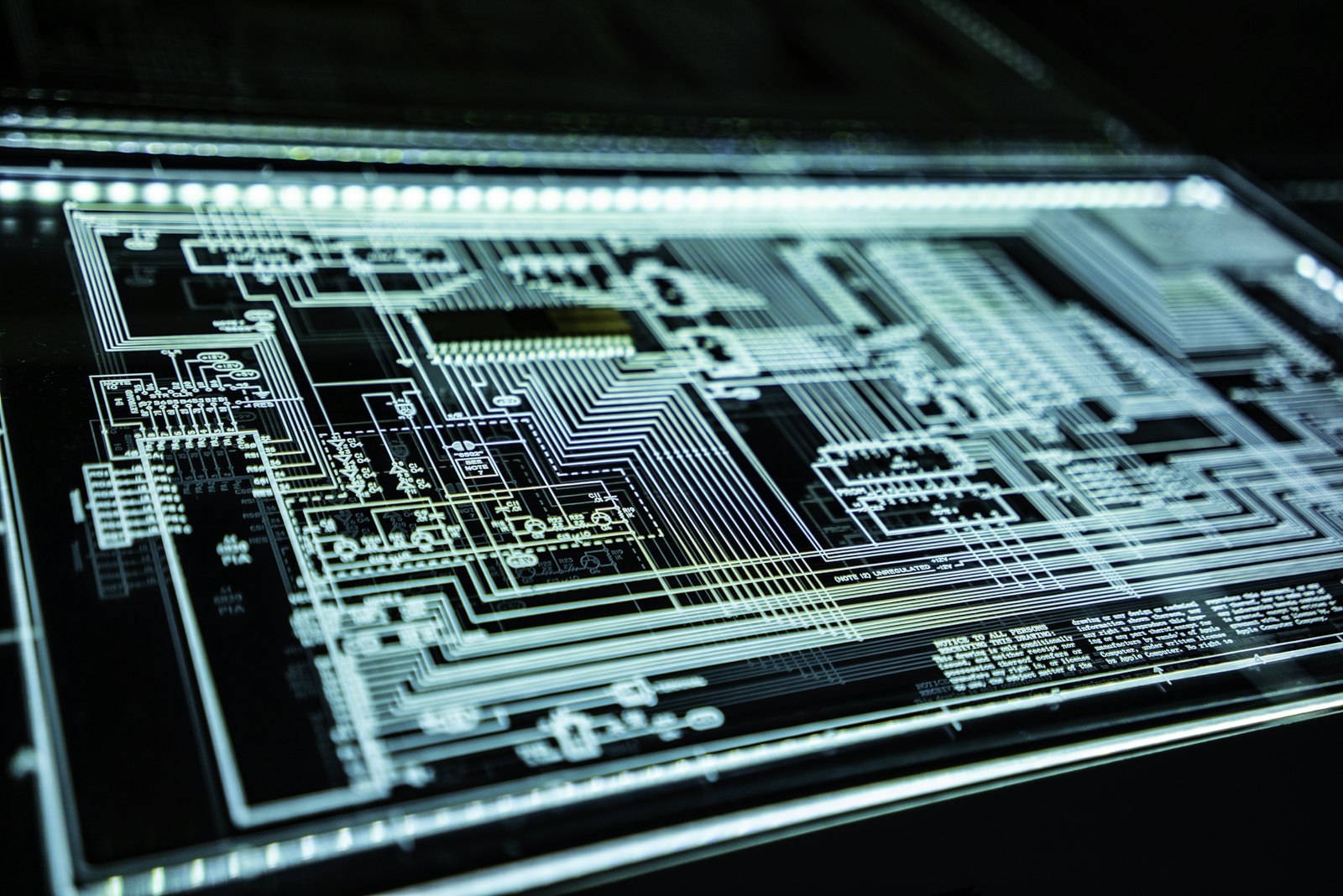
For many years now, we’ve been seeing a gradual, but important shift in the way that people are educated. Gone are the days of notepads, pens and paper notes. Today, students are creating the content on their tablets, they are sending it across intranets, and they are engaging with the class, 24/7 through social media. This is referred to as asynchronous learning.
Far from being the distraction they were originally intended to be, though, digital devices are helping to re-shape the traditional dynamics of education as we know it — they are actually amplifying it.
So, what latest trends and changes can we expect to make a compelling difference to the market in the years to come?
Smart Tech
One of the most obvious innovations we have seen in recent years comes from the rather wonderful Smart technology industry. For example, one tool we might see used in academic study soon is IBM’s Watson device. Watson offers a high-end education tool that addresses and improves the way that people study. This is going to be very important for the long-term growth of the industry, as Watson is known to change the way that people collate data from masses of unmanaged data using artificial intelligence and sophisticated means of analysis.
This is very useful for making sure that the next generations can use technology to find answers that they would have otherwise never received. Even in more limited education functions, new AI toys could be used to manage the growth of younger children and make them more aware of certain interactions.
From making children more aware of their actions and the way they portray themselves, to full on educational aids, smart tech will ensure that the next generation always has a helping hand waiting for them.
The IoT and IoE
A significant element of the web is going to be the Internet of Things. We’re already changing the way we all link together and operate as one today, and the IoT will ensure that this continues. For example, the IoT will enable the rapid growth of virtual classroom learning. IoT will ultimately be a defining factor in shaping the future of the industry. Device interaction will improve and before long it will be easy to take the information garnered in the classroom right to our PCs back at home. The future of learning will involve possessing the means to transmit data as freely and as accurately as possible across the whole group.
Education will benefit from an added layer of depth to the IoT, in which people will be able to make the most of a learning system that brings together various aspects of their day-to-day lives.
More recently, another somewhat synonymous to IoT concept, introduced by CISCO is the Internet of Everything, defined as "the intelligent connection of people, process, data and things." This philosophy can inform a globalized, expanded notion of internet connections beyond machines. The latter can be meaningful for developing tools such as Educational Management Systems (EMS), which refer to managing the massive data of school records and other administrative functions across the globe, perhaps in a unified way.
VR and AR
Virtual reality and Augmented Reality took a very important step in 2018, with the mainstream release of many headsets by the likes of Sony and HTC leading the way, as well as more research-driven industry applications. Indeed, another option — the Google Cardboard— is expected to deliver exciting new ways of learning. It’s going to change the way that students investigate future careers, which is vital to shaping dreams.
For instance, a profession might sound amazing, but the reality could be very different. VR will re-shape how we evaluate the suitability of a student to take up such a profession. with simulations to estimate the performance of the person under a specific role. It will also help students to determine how suitable they are just by trying it out. Was it everything they thought it was going to be?
Such possibilities are explored in pilot studies and research experiments across the world. This type of VR and AR applications, will help students to avoid making the wrong choice early in life and failing to come back from it. Many students wind up in major debt, just trying to get into a career path that, when they “make it” resembles the opposite of what they had intended in the first place.
3D Printing
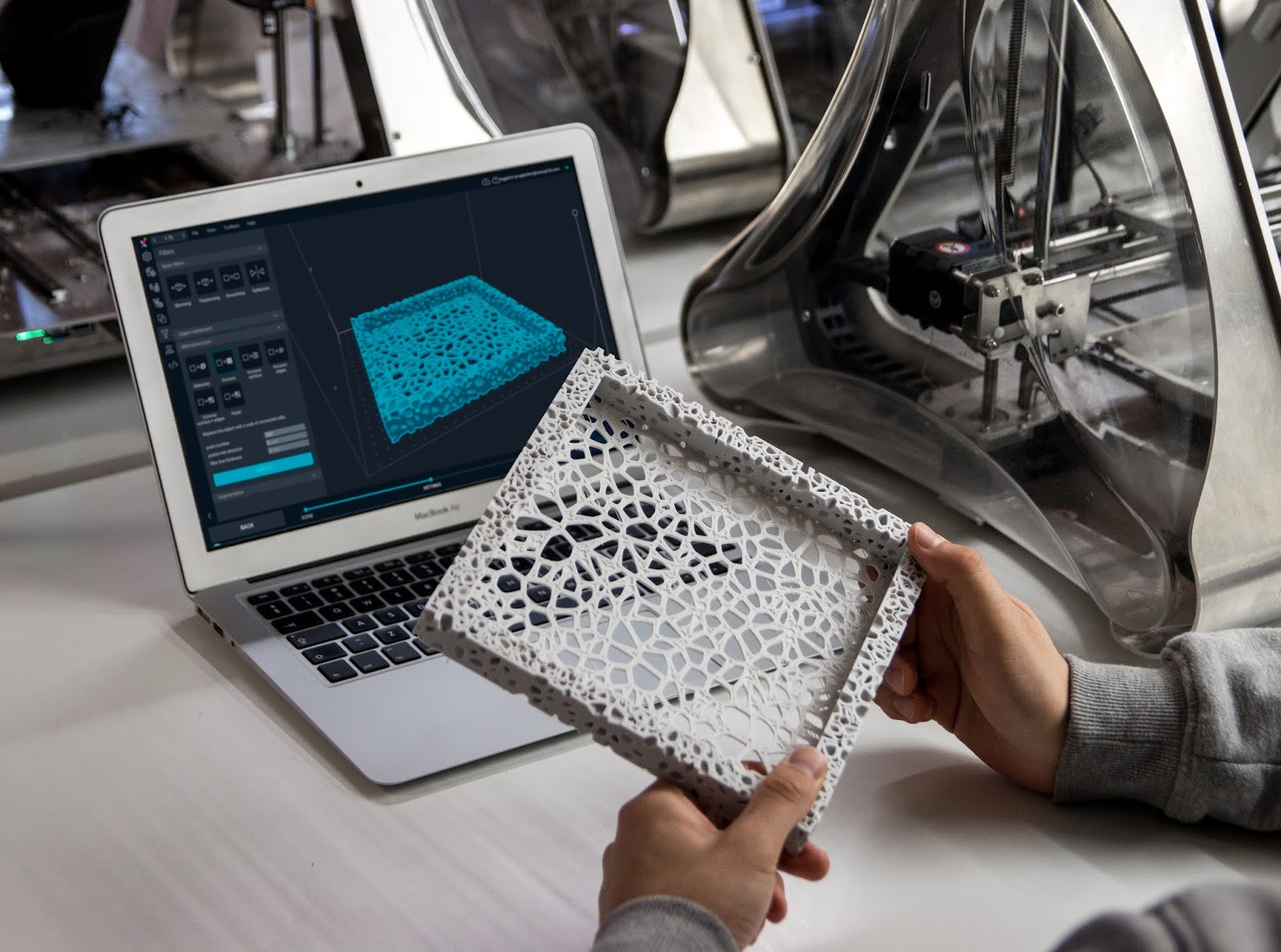
Another major element of education that is likely to change heavily in the near future is the power of 3D Printing. As one of the most powerful industries out there at the moment, it’s beginning to become a very popular way to learn for kids. Nowadays, children can get their hands on the kind of objects and instruments that previously they could only look at in books and dream of holding for real.
From the crown of a king, to the layout of a medieval weapon (blunted, obviously!) children could get a much more authentic appreciation of the world that they read about on the pages of book. This is dangerous, though, as it prevents children from appreciating the true gravity of what they are reading about. The day that 3D printing stops being so prohibitively expensive, will be a good day as it should help people to finally become involved in the industry, thus empowering and educating the next generation.
In Summary...
Whilst understanding the various challenges that the Internet and similar devices present to the education industry, the trends are already here. People are becoming more appreciative of the integration of technology into various forms of education, as most believe it will quickly help to make people more comfortable with technology, as well as working and living in a multimodal and digitally mediated society.
All of the above technological outputs, have been working their way into education for some time — it’s just a matter of time before they are more systematically implemented in classrooms worldwide. Each will play their part in determining a new dawn for education, which can only be a good thing, ensuring that future generations, receive the best and most relevant learning possible.
One of the most poignant discussions in the museum world, has been on issues of inclusion and access. Prolific museum figures like Nina Simon presenting in the recent Museum Next Conference in London, shared the vision behind OFBYFOR ALL, a new global initiative to help civic and cultural organisations become OF, BY, and FOR their communities. However, what is it that can help take the next step in terms of inclusion and learning within and out of museum grounds?
This article draws on a doctoral research study to investigate museum’s democratic potential, through transformative approaches to pedagogy aimed at meaningful cultural participation.
The ‘meaningful’, stands for a degree of competence in reading, interpreting and constructing meaning from the existing multiple forms of language (Stapp, 1984: 112; Mitchell, 2007: 3). ‘Participation’ involves an ability to negotiate the complex dialogic relationship that exists between the written word, the spoken word, images, objects, time and space (Mathewson-Mitchell, 2007: 3).
Consideration of issues of access in relation to the significant literacy requirements of museums, suggests that increasing focus on the explicit teaching of museum-based literacies, could be the way through which to expand museum visiting opportunities for the less 'conventional' audience.
It is actually proposed that museum-based literacies could act as the means to the development of cultural competence in museum environments. This evolution in theory and practice of, and about museums, has been notably part of radical changes in the museum world since the 1970s, mostly known as new museology.
Museums as Agents of Change
The development of a “new museology” (Mayrand, 1985: 201), is a concept used to describe the focus on the potential of museums as a positive social force. Golding (2009) suggests the museums should act as frontiers, places where learning and identity are produced and developed for all, while new ‘bridges’ are raised between non-dominant communities and their own histories (Philip, 1992 in Golding 2009).
It became profound that if museums accept their educational role, “they must also accept their social responsibility to work towards supporting a participatory democratic society” (Hein, 2005: 50). We need to “take advantage of the current context, as ‘opening new educational and social possibilities’ (Cope and Kalantzis, 2000: 18), to promote democratic education and human needs...” (Early, 2007: 67).
Changing Times, Changing Literacy
Ever since the 1960s, the nature of literacy practice and needs is changing; Hall (1989) suggests this is thought of as a consequence of New Times. New Times is an era of internalization, characterised by the breaking down of borders between local and global contexts resulting from rapid change in communicative practices (Gee, 2000: 183; Luke and Elkins, 1998).
One common element that has changed is that literacy has become inherently plural; thus researchers have problematized the very notion of literacy as a discrete set of skills. Luke and Freebody (2000) provide one of the more recent and useful definitions of literacy:
"Literacy is the flexible and sustainable mastery of a repertoire of practices with the texts of traditional and new communications technologies via spoken, print, and multimedia".
(Luke and Freebody, 2000: 9)
In such a perspective of literacy, the literate person is one who develops capacity to respond to emerging and communicative needs, a literate person who is a sophisticated user of texts. The individual engages with literacy practices as a decoder of text, as a maker of meanings, as a purposeful user of information and as a text analyst who employs critical thinking skills in the literate work (Luke and Freebody, 2000; Liddicoat, 2007: 20).
Figure 1: Evolution of the concept of literacy over fifty decades
Although acknowledging contemporary, 21st century demands of ‘literacy’ and education, this definition does not incorporate the social context of literacy. Literacy is, as Gee (1996: 22) has aptly described, “a socially contested term”. To this respect, literacy is a social practice rather than merely a means to an end.
Such a consideration draws on the paradigm of New Literacy Studies (NLS) and recognises literacy as a set of socially and culturally constituted practices enacted across and within social and institutional spaces. It acknowledges literacy as a social and historical construction that evolves dynamically (Giampapa, 2010: 4; Potvin, 2009; Garcia, Bartlett and Kleifgen, 2006).
Literacy is seen as a social responsibility including a critical or transformative emphasis in which literacy is a tool to understanding social structure in which we live so we can transform it in meaningful ways (Gee, 1996: 58; Street, 1995). The social perspective of literacy, implies more than superficial contacts with print; it icorporates an understanding of how to manipulate words and concepts through complex daily social interactions in an accepted manner (Giampapa, 2010; Potvin, 2009; Reid, 1998; Kern, 2000) through cultural apprenticeship (Rogoff, 1990).
The ‘New’ in Literacies: Multiliteracies
Following the NLS paradigm, ‘multiliteracies’ have emerged. The term “Multiliteracies” immediately shifts us from the dominant written print text to acknowledge the complexities of practices, modes, technologies and languages with which literate people need to engage in the contemporary world.
The “New London Group” (a team of ten academics including James Gee and Allan Luke) came together in 1996 concerned about how literacy pedagogy might address the rapid change in literacy due to globalisation, technology and increasing cultural and social diversity. They employed the term ‘multiliteracies’ to address these issues (The New London Group, 1996).
Since then, The Ontario Ministry of Education has come up with a number of literacy initiatives, some of which are characterized by a critical and social view of literacy, where literacy is conceived of as "the ability to use language and images in rich and varied forms to read, write, listen, speak, view, represent, and think critically about ideas" (Expert Panel on Literacy Report, 2004: 5).
Figure 2: Multiliteracies and their design elements (Adapted from The New London Group, 2000)
Luke and Luke (2001: 92-94) echo this idea, and argue that new technologies have facilitated the emergence of new kinds of artefacts, such as digital storytelling, requiring new levels of engagement and development of higher and different mental faculties (i.e. new multiliteracies). Luke (2000) also talks about the critical multiliteracies - being able to understand, debate, and act upon the material, political, and social consequences of technological change.
An alternative view of literacy calls for a reconceptualization of literacy as reading and writing the world (Freire, 1970). This conceptualization foregrounds critical thinking in both teachers and students, and looks beyond functional literacy (reading and writing skills), to the knowledge and power relations in literacy discourses.
Agnello (2001) refers to this approach as postmodern literacy, and argues that through this approach “reading and writing become enhanced methods for exploring the democratic self and its formation through ideological exposure to knowledge and power relations formulated by educational policy texts. Through such exploration, literacy becomes a tool for self-, student, and social advocacy rather than commodity to determine whether one measures up satisfactorily on test scores” (Agnello, 2001: 24-25).
Museum Learning as a Multiliteracy Practice
Museum-based literacies or museum literacy, refers to the competence in drawing upon the museum, its space and collections using certain skills and practices. In 1984, Carol B. Stapp observed that “museum literacy” was then a newly emerging phrase that articulated the older idea of a philosophy of museum accessibility.
Museum literacy goes beyond ‘reading’ objects; which may be understood as visual literacy; it requires a deeper level of process and understanding of the multiple and interacting languages and modes of communication found in the museum.
By broadening the view of museum literacy, it is acknowledged that the language that is involved in the museum is diverse and incorporates multimodal literacies including: linguistic, visual, audio, gestural, spatial patterns, technological and print-based (see for instance, Cope and Kalantzis, 2000: 160,203; Giroux, 1992; Hooper-Greenhill, 1999).
Figure 3: The multimodal literacies in museum-based pedagogy (Savva, 2016)
This view of museum learning redefines the goals and strategies of educators and the museum curricula. The idea of education in museums is seen as exploratory, broad, experiential, complex and multi-layered; museum strategies are now audience driven (Russo et al., 2007, Hein, 1998; Falk and Dierking, 2000).
To this discussion fits the incorporation of museum learning into the multiliteracies concept; this is facilitated by the realization that a display of material culture conveys messages about the people who created them and the times in which they were used (Pearce, 2003).
The act of creating an exhibit is parallel to the act of producing knowledge. Exhibits are not simply displays, but systems of signs that express messages about culture. Museums and their exhibits reflect the ideology of those who create them.
In the same vein that “There is no such thing as ‘reading’ or ‘writing,’ only reading or writing something . . .” (Gee, 1999: 93), the same would hold true for creating exhibits. There is no such thing as displaying an artifact without displaying something about that artefact. Also, the interpretation of messages is similar to the deciphering of text, using the signs, symbols, objects, etc., of a museum exhibit as part of the process of creating meaning (Roberts, 1997).
Griffin (1999: 8) identifies the unique learning opportunities offered by museums as: opportunities to closely examine objects or specimens; opportunities for comparison that allow trends and patterns to be deciphered; natural learning processes that incorporate the sharing and communication of ideas and the raising of questions; and opportunities to develop perceptual skills that teach how to gather information from objects and experiences.
Because museum exhibits make meaning through multiple media, multiple modes, and multiple symbol systems, the literacy practice of museum visiting is a multiliteracy.
An interesting project exploring the latter, is the ‘Museum Literacy Project’ in 2008-2010, involving nine different museums, administrations and training institutions based in five European countries, supported by the EU programme Lifelong Learning - Grundtvig Learning Partnerships, 2008. The project focus was on museums and audiences with low schooling level, and how museum literacy can be reached and maximize the museum experience for these audience.
Dimensions of a Pedagogy of Multiliteracies for Museum Learning - The Research Framework
Taking into consideration the unique characteristics of the museum environment, I undertook an empirically-based doctoral study involving the design, enactment and evaluation of the Living Museum Partnership (LMP), a museum-school partnership that unfolded in 13 weeks for the construction of a student-generated virtual museum to support environmental education curriculum (Savva, 2016).
Specific focus was on developing virtual learning environments and applying augmented reality to enhance culturally and linguistically diverse students' repertoires of literacy practices. This design-based research, draws from the field of New Literacy Studies, the proposed Museum Multiliteracies Practice (MMP) framework derived from the multiliteracies pedagogy of the New London Group, the Learning by Design Model adapted from Cope and Kalantzis and Schwartz’s museum based pedagogy.
Figure 4: The pedagogies interacting in the Museum Multiliteracies Practice framework (Savva, 2016)
It is proposed that museum educators and learning professionals undertake an approach for teaching and learning in the museum setting which incorporates multiliteracies pedagogy. Identification of museum literacies requires thorough examination into the interaction of modes that are evident, the incorporation of multiliteracies implicated, the various sign systems that are employed, and the unique nature of the museum learning environment (Mathewson-Mitchell, 2007: 7-8).
The focus should be not only on literacies as communication (meaning for others, as supports for social interaction). My doctoral research for instance also emphasized on literacies as a form of representation (or meanings for ourselves, as supports for thinking).
Cope and Kalatzis (1996, refined 2000, 2009) elaborate on the potentials of a ‘Pedagogy of Multiliteracies’ in fulfilling these aspirations. Two important ideas brought in a multiliteracies pedagogy are Learning by Design and Multimodality.
Learning by Design, is building into curriculum the idea that not every learner will bring the same lifeworld experiences and interests to learning, as well as acknowledging that every learner is not on the same page at the same time; pedagogies of learning are re-configured to construct learning as “a dialogue of difference” (Cope and Kalantzis, 2005: 31). The idea of Multimodality discusses learners’ movement between written, oral, visual, audio, tactile, gestural and spatial modes of meaning-making (Cope and Kalantzis 2005, 2009).
On this basis, the New London Group (1996) has proposed a multiliteracies pedagogy consisting of situated practice, overt instruction, critical framing, and transformed practice.
•Situated practice includes learners’ prior and present experiences in a community of learners (composed of experts and novices).
•Overt instruction involves the teacher’s or expert’s interventions to scaffold (Bruner, 1983) or support learning and increase the learner’s consciousness about learning. Scaffolding is a metaphorical concept that refers to the visible or audible assistance that a more expert member of a culture can give to an apprentice (Bruner, 1983, 1986). You might also note Vygotsky’s Zone of Proximal Development (ZPD), that relates to Bruner’s notion of the scaffold here.
•Critical framing refers to learners interpreting the historical, cultural, political and ideological contexts of learning.
•Transformed practice includes implementing new understandings through reflective practice in other contexts.
Figure 5: The Multiliteracies Model and Learning by Design (Adapted from Kalantzis and Cope, 2000)
Also identified within the Learning by Design Model are four knowledge processes (See Figure 5 above). The knowledge processes identified are:
(a) Experiencing the known and the new
(b) Conceptualising by naming concepts and theorising
(c) Analysing functions and interests
(d) Applying appropriately and creatively.
Findings and Implications for Museum Learning Practice
Stapp (1984) had argued that schools do not address the knowledge, skills and attitudes for museum literacy. Recent observations of the characteristic use of museums by school-based teachers suggest that a relatively passive, idealist approach to museum experiences, as identified by Stapp, has continued, with teachers lacking confidence and competence in the museum setting (Mathewson-Mitchell, 2006).
Based on the findings of my doctoral research, it is suggested that addressing museum-based multiliteracies leads to effective museum-school partnerships and meaningful museum learning practice. Research data suggested that students’ repertoires of literacy were enhanced as they engaged in the learning process as active designers and multimodal learners (Savva, 2016). It was found that students gained opportunities to:
Figure 6: Findings of Museum Multiliteracies Practice research (Savva, 2016)
It is proposed that any museum education programme or museum-school partnership or collaboration pays attention to the following key principles:
1. Teaching children, especially digital natives of our time, to be literate in any setting is not just a set of skills that can be transferred. Rather, education needs to enable them to participate in social situations using the required literacy practices.
2. Museum visiting is seen as multiliteracy practice; as such it requires specific museum-based literacies that are rarely identified or explicitly taught by museums or schools.
Conclusion
Ultimately, this brief review and presentation of the proposed empirically based, research framework for museum learning practice, forms a pathway to follow for inclusive cultural participation at any level and age. The London New Group’s (1996) ideas further developed by Cope and Kalatzis (2000; 2005; 2006) for a Pedagogy of Multiliteracies, could inform the development of the specific literacy requirements of museums, in a way that could lead to full museum literacy and a transformative cultural engagement and participation for diverse audiences.
For many people, the term ‘digital native’ might sound a little strange. It’s not literally someone who lives on the internet, as that might be a little bit impossible. What it does offer, though, is a term which has become increasingly popular in the last decade and a half. Coined by the excellent Marc Prensky in 2001, this term – the digital native – describes the inability to help the next generation, namely the digital natives who were born in the millenia learn in and through technology. Teachers and educators are increasingly finding it more difficult to relate and understand the needs of the generations that preceded them.
Today, as the infographic below shows, people like digital natives tend to get their information through the web and have a different means of learning and then processing information. Therefore, academics are often confronted with the challenges that traditional methods of education that they once employed with such success no longer hold the same ideals.
So, what are some other ways can ‘digital natives’ be taught?
1. Multiliteracies and Multimodal Learning
Supporting meaningful teaching and learning for the 21st century requires to adhere to an expanded view of literacy, which reflects the multimodal meaning making of digital natives and not alone. It has been proposed to promote a pedagogy of multiliteracies involving learning using not only spoken and written words, but also images and symbols of all kinds, sounds and music, bodily gestures and movement, and physical and virtual objects. Educators therefore have a new charge in the new era, to teach these competencies and multimodal literacy practices that students need to acquire and utilize in various contexts in order to succeed in the postmodern world.
2. Collaborative Learning
Probably the most striking way in which we can help the next generation learn to change and grow academically is through collaborative learning. Instead of expecting everyone to dig their noses into academic books and read from the same select sources, we should prepare for digital natives to have more diverse sources and opinions on certain subjects.
It’s important that it is realized how collaborative learning is probably the major secret to making the digital natives out there more comfortable to learn. There are lots to consider about the value of learning as a member of a group and by actually taking part in the learning process through up taking different roles. No longer do people get the same enjoyment from just reading from a book and taking cues from there. To add another bow to the way that the next generation will be learning, we have to appreciate that their means of education differs.
3. Avoid Pretension
One of the major flaws in digital native learning is when a ‘digital immigrant’ (those of an older generation without the same comfort and thought process in digital learning) tries to pretend they are from a more modernized background. It comes across as false and cannot be a valid source of helping to stimulate and improve the level of learning that students can do in general.
This is a major issue and one that has to be addressed. A teacher must find a way of working as the core organizer of the subject, and the person who helps the students to learn. What they no longer have to be, though, is the font of all knowledge and fact. Teaching has moved beyond the head of the classroom being the holder of all the facts. Digital natives find it easy to topple the academics and the experts, so it’s important that schools take this into account as it will majorly determine the next steps in the industry.
A teacher must find a way of using the knowledge they do have to offer the information in a way that can be used a supplement, not as the only fact available.
4. Keep Teaching Human
However, whilst it’s important that teachers avoid going down the route of trying to become false in their educational style, they also need to find a way of making sure that they can keep the human interaction side of things burning as bright as it possibly can.
The human element of learning from a teacher is never going to be going away anytime soon. Teachers have to accept that now students can learn from them even if they are not face-to-face. The rapid growth of distance education means that the education process has to be respected as having changed so dramatically.
Keeping the human element – acting as the person to throw logic into arguments and debates – is a key of being good at teaching the digital natives. They need to know they can learn from multiple sources, but also that their teacher does hold information that they can learn from.
5. Provide a Purpose
Nobody wants to learn from you, no matter how humanized you can be and how far away from the authoritarian image of a teacher you can be, if you do not have a purpose to the learning. Students struggle to just listen to you talking on for an hour and a half – if they want to read a massive wall of text or listen to an interview they do not participate in; they will find it.
The days of memorization (thankfully) are gone in the classroom – it’s now madness to expect that students will just put up and let you make your point these days. Students now read into topics that engage them and interest them, rather than always constantly looking to the power of the teacher to help them learn in the first place.
Give a native control, though, in other words encouraging self-directed learning and they will make the most of that. Let them dictate the learning path in the room and they can find their own way there. Students want to know what they are doing, and why they want to know that in the first place. Act as a facilitator, make your ideas interesting, and students are more likely to want to listen and make that a lesson worth hearing.
Try and just narrate from a book and expect them to learn though? You’ll be shocked.
6. Square Pegs, Square Holes
Many teachers fear that learning through hybrid – typical teaching and eLearning – is the wrong way to go. However, this comes from experience personally as they never had this extra side to their education. As such it’s probably something worth avoiding. That’s the train of thought that many teachers go with – and it’s also why many teachers fail to excite or adapt.
Provide a research-based approach to your learning together. In class, use supplementary content from the web that backs up your point but is put in a more “interesting” tone. Digital natives care not for just your take on things, but back it up with some cool content online they can review themselves? They’ll be far more likely to actually listen. In this sense, different approaches have been employed, for instance, using WebQuests to excite and motivate students through extensive use of online resources.
With so many of the digital native generation in need of technology to feel stimulated now, it’s important that teaching does not fall behind long-term. Sticking with the old ideas and refusing to adapt the way that students are asked to learn, though, will create a chasm that cannot be bridged.
Within a field of fast changing nature of technological progress and the emergence of new pedagogical theories such as design thinking, maker-spaces, flipped learning and blended learning among others, it is extremely important for learning spaces to evolve along with time. Here we sum up ways in which to re-design your school or classroom in a way that is meaningful to nurture 21st century learning.
At the moment, millions of dollars are being invested on constructing new school buildings. Are they really worth the investment? These schools can be considered as monuments to obsolescence. It is common practice that a lot of money are spent to build a 21st century school without really going deep into how and why the school should look like. Instead, people go ahead with the construction that they always wanted to have.
Nevertheless, it is necessary that a substantial theoretical background exists before providing the learning environment that kids need. In fact, it is considered that an appropriate learning space is one of the most convenient practical methods available to enhance the effectiveness of the education system. This redesigned space has the potential to create a better environment that meets the needs and requirements of 21st century learners.
The following paragraphs address some of the critical elements which are essential when taking up the re-design of a learning space:
1. Instruction Should Be the Driving Force of Design
It has been a common belief until recently that it is important to have classrooms that are separated into subject-area departments. This was an old fashioned trend and it has changed during the past couple of years with reference to the benefits of cross-disciplinary work. Usually designers of modern world schools are not aware about the instructional and learning models of the 21st Century or the actual curriculum. However, it is appropriate to create awareness among designers, architects and practitioners in order to design the learning spaces in an appropriate manner to cater the requirements of 21st century learning. Otherwise, we would be trying to fit the learning of 21st century into the industrial age learning spaces that existed in 20th century.
2. Learn to Question Everything
None of the preconceived notions about learning spaces and instructions are sacred. Just question yourself some important questions:
- Is it important to have a classroom where the teachers are in front or in the center? Can learning take place only within classrooms?
- Is it essential for a learning space to have a capacity of about 30 students?
- Can there be smaller or larger groups or can we have both?
- Is it essential to stick to a 9 month school calendar?
You need to question everything when designing 21st century learning spaces. Questioning all of our preconceived notions would help us to get a better understanding on how 21st century learning spaces should look like. It will also help to organize these learning spaces in a proper manner.
3. Incorporate Technology to the Learning Spaces
Technology has gone through rapid development over the last two decades which have not left the educational world untouched. The use of educational technology and technology enhanced learning in general has been associated with a variety of benefits. These benefits maximize significantly by redesigning the learning spaces in order to meet 21st century needs.
Trying to incorporate the use of technology to existing learning spaces will not be effective since it will prevent from gaining the maximum benefits out of the investment. The entire learning space needs to be redesigned in order to capitalize the strengths of the technology. The school, classroom or library, should be re-designed from scratch in a way that will fit the use of advanced technology.
Towards this end, it could be meaningful to design a conference room within the school, which would be equipped with the latest video-conferencing capabilities. Such a facility would potentially allow international collaborations and global networking projects for the students to be engaged in. Therefore, redesigning the learning spaces by incorporating technology can simply be defined as rethinking the spaces to meaningfully capitalize on technology.
4. Design Collaborative Learning Spaces to Suit the Needs of 21st Century Learners
Redesigning learning spaces for the 21st century is all about accommodating the specific needs and requirements of the 21st century learners, both students and teachers. It is evident through empirical research that digital natives learn through use of technology within carefully designed learning instruction. To do so, they must be engaged in modern world school designs that facilitate collaborative learning, and in this sense it is useless to build classrooms or lecture halls row after row.
Instead, the conceptualization when constructing contemporary learning spaces should focus on how to enable room for students to engage with each other in collaborative projects. The learning spaces should assist students to learn things independently from teachers, with facilities to explore new things on their own in groups and conduct research without much guidance. Hence, special attention should be given towards making room for research work and brainstorming when re-designing learning spaces. We don’t need to be designers in order to engage with this process. All that is needed is to have the capability to conduct a preliminary research and figure out the essential changes that need to be introduced to the classroom, school or library. For example, as a teacher, you can retrieve different information on tips to create a more collaborative space within the classroom. The teacher could then use the space as a resource through which to facilitate an effective learning experience for the students.
It is imperative also to consider ways in which the learning space designed will facilitate classroom flow. Towards this direction, it would be meaningful to ask the students' feedback in order to get some useful inputs about how the classroom should look like. In fact, you can ask how the student will intend to move around in the classroom. To make things simple for this sort of discussion, you can print a diagram of the classroom and ask the student or students to sketch where they will move. It would be better if you can trace the movements of the teacher in the same diagram with a different color. This sheet of paper can be useful when determining the heavily used areas of the classroom. Then the inputs can be used to support fluid movement within the classroom.
It becomes obvious that there are a lot of factors which should be considered when redesigning a learning space to suit 21st century education standards. If you have a proper plan and a solid theoretical framework in mind, you will not find it difficult to deal with the entire process of redesigning classrooms in order to respond to the needs of 21st century learning environments. Once you are done, the next step would be to obtain required support and supplies so as to make your space rise to the occasion!
It is apparent that delivering a re-designed learning space requires a lot of money to be invested on. However, the investment is totally worth the money because it has the potential to deliver excellent student learning and aesthetic outcomes in the long run.
21st century education is experiencing significant turbulence as a response to the call for more meaningful and relevant learning experiences that comply with students’ literacy needs and competencies required to succeed in their lives.
Towards this end, deeper learning has emerged as a theory which could be the means to transform 21st century education when truly integrated in the classroom.
Deep Learning Quote by: Kelsey Sheehy. Image by: THE OFFICIAL ANDREASCY
Does this hold true? This article will attempt to provide some insights on the matter drawing from research findings from the last two decades.
What is Deeper Learning?
Deeper Learning is a broad term coined by the Hewlett Foundation and refers to the range of skills and knowledge required for students to acquire and master "in order to succeed in 21st century jobs and civic life” (Hewlett Foundation, 2013). The essence of the concept entails a set of competencies incremental to students exposed in academic content. The intention is that through the instructional principles proposed by the deeper learning theory, students gain an in-depth level of knowledge and understanding on different subjects rather than superficial learning, and are in a position to achieve problem solving in and out of a school context, both in their school-word and their lifeworlds to be able to successfully cope with challenges in their college, career and life.
Can Deeper Learning Contribute to Succeeding 21st Century Education?
In response to the dilemma for school leaders on what this transformation should entail for 21st century learning, educational researchers cohort that we should intend to cultivate deeper understandings and higher order thinking in a holistic manner by pursuing changes in terms of students, teachers, school culture, school systems and leadership (Figure 1).
Figure 1: Schools Tranformational Model by Lenz et al. (2015, p. 149)
In order to re-imagine schools in such a transformational and holistic way, deeper learning theory proposes 4 components that need to be implemented in a school setting (Infographic).
1. Policy makers and teachers should opt to create a strong school culture
2. Educational staff should be working collaboratively
3. Teachers should design instructional content that is meaningful and relevant to students' lives
4. Deeper Learning outcomes should be the ultimate intention of each learning experience
Infographic: 4 Components of Deeper Learning Outcomes (by Monica Martinez and Dennis McGrath)
One key indicator of whether learning has been improved, is student learning outcomes. The latter relates to achieving 21st century skills or the four Cs of learning as they are commonly referred to: creativity, critical thinking, communication and collaboration. In deeper learning theory, student driven outcomes are more specifically addressed and interpreted in terms of the following:
•Mastering core academic content: Students attain and master core key subjects and use a metalanguage to fulfill certain tasks
•Think critically and solve complex problems: It is imperative for students to exhibit competency in thinking critically, analytical thinking process and creativity in solving problems
•Work collaboratively: Students should be familiarized and feel confident working in groups to be better prepared to respond in a team setting later in their lives and succeed several goals.
•Communicate effectively: Students should be able to communicate effectively both orally and in writing. They must cultivate their presentation skills and developing logical and convincing arguments that are appropriate for communicating in a variety of settings.
•Self-directed learning and ability to incorporate feedback: It is imperative that students grow into mature learning, be able to set their own learning pace, determine goals and monitor their progress, as well as strive to improve.
•“Academic mindset”: The term refers to the mental state students have by feeling confident based on their skills and abilities, in a way that they are empowered to overcome obstacles.
These outcomes are incremental towards an authentic deeper learning approach.
Deeper Learning in Practice: The Strategies
Deeper Learning is far from a generic theory. In fact, it has already been utilized in a range of settings that extend beyond the scope of education, such as in training in businesses. However, the focus in this article is to examine the practical implementation and strategies pertaining to schools.
Over the last decade the spotlight is on deeper learning principles (DLP). In regards to the previous, research findings has indicated substantial benefits from the use of deeper learning principles. The National Research Council in its 2012 report Education for Life and Work suggests the following research-based methods for developing true deeper learning: to employ multiple and varied representations of concepts and tasks, encourage elaboration, questioning, and self-explanation, engage learners in challenging tasks through supportive guidance and feedback, teach with examples and cases, promote student motivation, and implement formative assessment.
Other research has showed that among the prerequisites for a successful implementation of the theory are to design instructional content that extends beyond superficial activities and relate to authentic life situations and problems. Towards this direction, learning experiences for students should stem from project based, connected approaches and inquiry based learning principles. Further to these, deeper learning activities should rely on apprenticeship-based learning, which adheres to allocating mentors with a real-world role. All the above should take place in the context of a collaborative classroom setting where groups of students work together to solve complex real life problems and apply transferable knowledge.
1. Empowering students to lead their own learning (student owned learning) through disruptive learning experiences. Students as self-learners are empowered through taking over leadership roles, managing complex projects and assignments, as well as engaging in reflective practice.
2. Emphasize meaningful learning experiences through inquiry-based learning that seeks solutions to real-world complex situations (student centered learning). Students in groups critically reflect and solve problems with teachers acting as facilitators in the learning experience.
3. Design connected experiences and subjects around central concepts and ideas that will lead to Deeper learning outcomes and content knowledge and skills (competency-based learning). In this way the instructional approach promotes a coherent picture of what in-school learning is.
4. Extend learning experiences beyond school with authentic and relevant entanglements and opportunities to learn. This can be achieved through interaction with local communities by reaching out to museums, organizations and corporations.
5. Personalized learning is incremental to cater for students’ individual needs. The latter requires substantial time and dedication to prepare a profile with insights of each student’s needs, abilities and competence in order to then design appropriate and meaningful lessons and activities.
6. Use of technology is a powerful tool in succeeding deeper learning in the schools researched by Martinez in purposeful ways promotes meaningful learning. Engagement in digital literacy by means of projects can enhance students’ analytical, creative and critical thinking skills, as well as communicative and collaborative attributes effectively regardless of the location, anytime and anywhere.
The above strategies are schematically represented in Figure 2.
Figure 2: Strategies of Implementation to foster Deeper Learning
Research Evidence of the Impact of Deeper Learning
With educators constantly bombarded with new learning theories and best practices to reach the objectives of the new millennium, there is reason to be suspicious and reluctant to adopt new approaches. Nevertheless, in the case of deeper learning, substantial evidence exists on the beneficial impact from its systematic implementation. The vast majority of this work is based in the United States where deeper learning has been embraced by schools, universities and a range of other learning settings.
The American Institutes of Research conducted a study in 2014 which illustrates that students in deeper learning schools graduated at higher rates than others from non deeper learning schools. In particular, in the San Francisco Bay Area, Envision High Schools, fostering deeper learning principles, succeeded more than 90% of their students continuing to college, in comparison to the 50% of students graduating from all California High Schools. Importantly, students from these schools managed to score highest rates in the standardized Academic Performance Index tests, when comparing to all other California schools. And in many of these cases, these students were the first in their family to attend college.
As a result of the need to assess deeper learning, influential foundations have developed different formative assessments including the Collegiate Learning Assessment, which is vastly used by more than 175 institutions across the United States. Internationally, the most reputable test is the Programme for International Student Achievement (PISA) exam, offering a reliable and widely acknowledged measure of key aspects of deeper learning. Further to these, the federal government has funded two unique consortia of states: SMARTER Balanced Assessment Consortium (SBAC) and
Partnership for the Assessment of Readiness for College and Careers (PARCC) in order to develop the next generation of assessments that comply with the principles of deeper learning and contemporary education standards.
Conclusion
The quest for deeper learning is not utopia. It is a complete theoretical approach with practical guidelines to integrate in variant school contexts. Although much research is still needed to determine its impact, the preliminary work being carried out so far illustrates that
deeper learning could be the path to re-imagining teaching and learning for 21st century education.
(DISCLOSURE: This page contains affiliate links. If you purchase a product through one of them, I will receive a commission (at no additional cost to you). I only ever endorse products that I have personally used and benefitted from personally. Thank you for your support!)
Enhances the real world by overlaying digital information onto your actual surroundings for an interactive experience across gaming, retail, education, and healthcare.
Blended Learning
Combines traditional in-person instruction with online digital resources and activities, including Flipped Classrooms, Flex Models, and Learning Management Systems (LMS).
Social Computing
Uses computational systems to facilitate social interaction, collaboration, and user-generated content creation across online communities and social networks.
✦ Prime Sidebar Placement
Buy Ad Space Here
Showcase your brand, SaaS, or product directly to readers following Tech, Business & Innovation on THE OFFICIAL ANDREASCY.