7 Reasons to Consider a Home Gym

If you think of picking up better health habits and don't like crowded gyms, consider setting a home gym catered to your needs.

5 Top Picks for Christmas Holiday Like a Fairytale

If you imagine Christmas holiday this year being like a fairytale, you should consider visiting these hidden gems!

7 Fashion Accessories To Lift Up Your Style Quotient

Get heads up on the trendiest as well as classic fashion accessories that would elevate your style to another level.

Sensibo

Showing posts with label ARM. Show all posts

Microsoft Surface Pro Tablet Comes To Australia

Description :

Microsoft announces the arrival of its Surface Pro tablet in Australia. Users can choose from one of two options - either the 64GB one for $999 or the 128GB one for $1099. More than likely people in the Land Down Under are saying that it's about time.

Microsoft Surface Pro Tablet Comes To Australia

After all, Microsoft already sells the Surface Pro in the United States, Canada, China, UK, and other countries. However, Australians probably also could say that late is usually better than never. 

The same is possibly true of what people in Korea, Malaysia, Singapore, Russian, and Thailand would say when theirs arrive in June. Word has it that Japan will also finally receive shipments in the same month as some of the other Asian countries.

A Surface Pro Overview

Unlike most tablets, this one was made for both work and play in mind. In fact, this could possibly justify charging over $1,000 for the larger hard drive space. This device comes built with Touch Cover, Type Cover, HD AV and VGA adapters. It also features the Wedge Touch Mouse Surface Edition.

Surface Pro Versus Surface RT

Sometimes computer companies offer so many choices that deciding on the right device may not be easy. In this case, some consumers will find themselves having to decide to stick with the RT or to go Pro. The following lists show some major differences between the Pro and the RT:

The main Surface Pro specs are as follows: 

•  Thickness and weight - It is 13.5 mm thick and weighs about 903g. 
•  Price range - Microsoft will charge approximately $899 to $1099 for it. 
•  Screen resolution - It is an HD screen of 1920x1080 pixels. 
•  Surface - It supports up to 10-point input. 
•  Processor - This uses a third generation Intel Ivy Bridge Core i5 processors and 4GB of  RAM. 
•  Storage capacity - Users can purchase either the 64GB or 128GB model. 
•  USB and HDMI port - This one has the 3.0 USB slot as well as the Mini DisplayPort.
Here are the main Surface RT device specs: 

•  Thickness and weight -This device is 9.5 mm thick and weighs 686g. 
•  Price range - It costs approximately $600 to $800 
•  Screen resolution - It is 1366x768-pixels. 
•  Surface - This device supports up to 5-point input. 
•  Processor - This one uses the NVidia Tegra 3 quad-core processor with 2GB of RAM 
•  Storage capacity - Users can choose either the 32GB or the 64GB model. 
•  USB and HDMI - This one has the 2.0 slot and the micro-HDMI port.
Additional Surface Pro Features

Much of the features of the Surface Pro Microsoft tablet compare to the original Surface RT. For instance, both tablets have a front and rear camera of 729p, and this picture-taking tool is angled. That way, it will be level when the device is angled.

Both the Surface Pro and the processor RT also have Bluetooth capabilities, USB slots, headphone jacks, and an SDXC card slot. They are also both Wi-fi ready, and they also both are meant for carrying around no matter where a person wants to go with it.


The only decision that Australian users have now is to decide based on the facts which one is better. In the end, the choice is easier as long as they know their priorities.

*by andreascy*

Atmel SAM4L Microcontrollers : Redefining Low Power


Description : 

How much better would your designs be if power consumption was no longer a concern? Find out today with the SAM4L family of ARM® Cortex™-M4 processor-based microcontrollers (MCUs), which consume just one-third the power of currently available solutions. 


SAM4L MCUs redefine the power benchmark, delivering the lowest power in both active (90µA/MHz) and sleep modes (1.5µA with full random access memory (RAM) retention and 700nA in back-up mode). 


They are the most efficient MCUs available today, achieving up to 28 CoreMark™/mA using the IAR Embedded Workbench, version 6.40. In SAM4L MCUs, you also get the industry's shortest wake-up time at 1.5µs from deep-sleep mode. Just what you need for portable and battery-powered consumer, industrial and medical applications.

Bringing Atmel picoPower Technology to the ARM Platform :

The SAM4L family integrates Atmel's proprietary picoPower® technology, which is used in hundreds of millions of Atmel® AVR® MCUs in the market today. This patented picoPower ultra-low power technology ensures that devices are developed from the ground up - from transistor design to clocking options - to consume as little power as possible.


Fast wakeup and innovative power-saving features such as multiple regulators reduce the overall consumption even further. In addition, Atmel's SleepWalking technology allows the peripherals to make intelligent decisions and wake up the system upon qualifying events at the peripheral level. It's all about system intelligence and conserving energy. Simply put, the SAM4L MCU is your choice if you're looking for long battery life, without sacrificing performance.


Read the SAM4L Datasheet and check also other interesting topics from Atmel.

*by andreascy*

Building Windows 8 for the ARM Processor Architecture (WOA)

Description :

Enabling Windows to run super well on the ARM architecture is a significant engineering task. Microsoft undertook this work because when you look to the future you can see that so many of the capabilities that have been added to Windows over the years are things that customers will inevitably desire or require in the types of devices supported by today's ARM-based products-changes in form factors and the desire for mobility only add to the scenarios and capabilities we all desire in our search for no-compromise PCs. 


While it is tempting to make bold statements about "starting over," we believe in the evolution of technology assets when the foundation is strong. The foundation of Windows, the core, is the most solid, scalable, and secure one around. 

A hand with a System on Chip disk sitting on the end of one finger

The video below will demo Windows 8 on an ARM Processor, as well as Office 15 and a few apps.


*by andreascy*

Apple Submits Mobile Hydrogen Fuel Cell Patent

Description :

Apple has submitted a patent request to the US Patent and Trademark Office that aim to replace lithium batteries in handheld computers with hydrogen fuel cells.

Until now we’ve only thought of hydrogen fuel cells in cars, but there is no reason why they couldn’t work in any device. The replacement cells would in fact be smaller and provide power for days or weeks! Microprocessor manufacturers like ARM are constantly battling to not only create faster chips, but also ones which use less power. A better power source could potentially allow them to drastically increase the speed of mobile devices.


Apple justifies the new technology saying that the United States is required to maintain relationships with corrupt governments which supply the chemicals in lithium batteries. They’ve obviously also sparked by the recent oil spill of which an oil rig, subcontracted by BP, caused massive damage to the US coastline. 

According to two published Apple patent applications, called "Fuel Cell System to Power a Portable Computing Device" and "Fuel Cell System Coupled to a Portable Computing Device," Apple is looking to build lighter and smaller mobile devices like MacBooks (Air, Pro) by replacing current batteries with a fuel cell system.

This may not come as a surprise to many, since Apple has filed other patent applications for lighter hydrogen fuel cells. Those patents, which were brought to light this past October, described a building process where multiple fuel cells are connected by a power bus in a parallel pattern, and a voltage-multiplying circuit is added for additional voltage to the stack. 

Now, Apple hopes to utilize these lighter, more efficient fuel cells in its mobile products in an effort to promote renewable energy sources and offer devices with the ability to run for days or even weeks without refueling, according to the patent applications. The devices will also be lighter and less bulky due to the lack of traditional batteries.

The first patent application, "Fuel Cell System to Power a Portable Computing Device," states Apple's case for wanting to use fuel cell technology in their devices. While current fuel cell technology for mobile products requires the user to carry a fuel cartridge for recharging purposes, Apple wants to integrate fuel cells right into their electronics.


The second patent application, "Fuel Cell System Coupled to a Portable Computing Device," describes how the fuel cell system would work with a rechargeable battery where one would power the other when necessary, and vice versa.

"This eliminates the need for a bulky and heavy battery within the fuel system, which can significantly reduce the size, weight, and cost of the fuel system," said the second patent application. "This fuel system includes a fuel stack cell which converts fuel into electrical power. It also includes a controller which controls operation of the fuel cell system."

One challenge will be creating a hydrogen fuel cell system that is cost-effective, according to Apple. 

Sources : CNET, Apple Insider

*by andreascy*

Windows 8 Beta Release Date Confirmed - Microsoft Windows Store

Description :

Today in San Francisco, Microsoft confirmed that the Windows 8 Beta will indeed be released in February of 2012.

Schedule

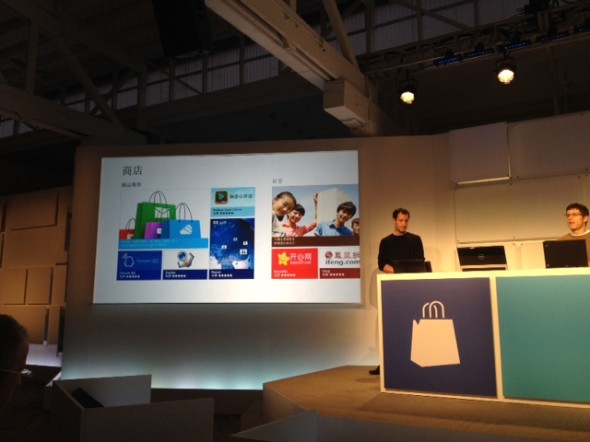
Microsoft also released a bunch of details about their application store (called the Windows Store). 

Windows 8 Beta by andreascy


They talk about the transaction models, payments, customers, how it will work etc. 

Microsoft's Event

They also reveal how much they will charge developers for releasing paid apps. For more information about the Microsoft Windows Store, head to the overview here.


References : EyeOnWindowsMicrosoft

*by andreascy*

Windows 8 ARM Notebooks Till 2013

Description :

When it comes to Windows 8 there are plenty of new features to get excited about.
Despite many features to the desktop environment, improvements on speed, and stability it seems that two new features are getting most of the attention these days : the new Metro Interface replacing the Start Menu and Windows 8 ARM processor support. 


With ARM support, Windows will now be able to tackle the ultra-mobile market in ways that it only dreamed about in the past. Up until now (with the exception of NT4 which ran on a few other architectures, actually), Windows has pretty much been stuck as an x86-only Operating System.


The biggest and most obvious reason for the switch to ARM support has to do with tablets. While x86 tablets do exist, they are bulkier, louder, and consume more power than their often cheaper, quieter ARM cousins. Microsoft understands a cash cow when they see it and weren’t willing to drop the ball to Google and Apple. Outside of tablets though, ARM has potential in ultra-mobile laptops as well or at least analysts seem to think so.


There is one bring problem with the ARM version of Windows 8, it seems behind on development when compared to the x86 version. Now it seems that sources are reporting that notebooks running Windows 8 on an ARM processor aren’t expected to hit the market until June 2013

WoA: Windows on ARM Netbook - NVIDIA Tegra 2 prototype netbook

This source doesn’t say anything about tablets and so it makes you wonder. If they DO launch the ARM/tablet version in late-2012 (alongside the x86 version), why wait until mid-2013 to bring it to notebooks? This leaves me to think that either the tablet version is behind too and Microsoft just doesn’t want that cat out of the bag yet, or perhaps Microsoft has made a deal with Intel/AMD to keep x86 exclusive for a while longer. Only Microsoft really knows the reason for sure. 


The source further claims that due to significant challenges, such as vendor reluctance and software support, it will likely be 2015 or later until ARM presents a significant market-share challenge to x86-based laptops. 

*by andreascy*

🦾 Stay Motivated

👩🏻‍🚀 Artemis II Crew: From Friends to Family

▶️ Just Press Play

We all have days like this

[image or embed]

— Chris Paxton (@cpaxton.bsky.social) April 17, 2026 at 1:51 PM

⭐ Leading ShipYard's Leaderboard

🚩 Milestone Unlocked!

🏅 Win-Win