7 Reasons to Consider a Home Gym

If you think of picking up better health habits and don't like crowded gyms, consider setting a home gym catered to your needs.

5 Top Picks for Christmas Holiday Like a Fairytale

If you imagine Christmas holiday this year being like a fairytale, you should consider visiting these hidden gems!

7 Fashion Accessories To Lift Up Your Style Quotient

Get heads up on the trendiest as well as classic fashion accessories that would elevate your style to another level.

Sensibo

Showing posts with label OLED. Show all posts

Why Curved Screens are the Next Innovative Trend

Description :

Between televisions, smartphones, tablets and laptops, most consumer electronics share one distinguishing characteristic: their flat, rectangular displays. It looks like technology is changing that though with a newer trend called curved screens. 

Why Curved Screens are the Next Innovative Trend

Unlike previous similar wavy displays that featured a contoured glass over a flat display, these new devices and electronics actually use an innovated curved display that offers a variety of benefits from being more ergonomic to improving the multimedia experience.

About Curved Screen Technology

Deemed the new flat screen, curved technology using displays based on OLED (Organic Light-Emitting Diode) technology, which has made it simpler for manufacturers to enhance or improve two-dimensional screens. Curved screens, which are flat panels that are bent after the fact are also flexible, which means they can be bent with a certain amount of pressure. 

Curved screens are made possible because of a newer flexible glass called Willow, which is manufactured by Corning. It is about as thin as a piece of paper and is chemically coated to enhance transparency and conduct electricity. The thinner the glass, the more curvature you can get. The OLED displays are placed on this type of glass. Televisions with these types of curved and flexible screens can bend on demand by using a remote control. 

Samsung was one of the first to market both televisions and smartphones with the curved screen technology. In 2013, the Samsung Galaxy Round, which is a tablet/smartphone hybrid, was released with its concave screen. The telecommunications giant also introduced a 55-inch OLED TV, which not only had a stunning picture with its 4,500mm curvature radius, but an almost $10,000 price tag to go with it. LG also came out with a 55-inch OLED television, which has a 5,000mm curvature radius.

Besides the Galaxy Round, the LG G Flex from T-Mobile also uses the curved screen technology. Because the curved screen contours to your face, the design reduces the distance between your mouth and the microphone, thus enhancing voice quality. The OLED display also provides a bright, vivid panoramic experience and reduces the glare. In addition to these two devices, it is also rumored that the Apple iPhone 6 is designed to use the same concave screen technology.

Benefits of Curved Screen Technology

Curved screen technology will take some getting used to, especially as more manufacturers create products with it. However, there are several benefits to using it:

- More ergonomic: Phones with curved screens fit more comfortably in your hand.

- Improved multimedia experience: Similar to an iMax experience, the curved screen enhances multimedia viewing by negating the distortion of the screen’s edges and create an image that is perceived as flat. 

- Increased battery life: The LG G Flex has a “tap to life” function that allows users to tap twice on the phone to wake it up instead of picking it up and turning it on. It also has a 3500mAh battery, which produced a longer life than typical smartphone batteries.

Wave of the Future or Just a Gimmick?

Curved screens may just seem like a marketing gimmick, especially when it comes to televisions, since mounting and viewing may require extra attention. However, researchers strongly believe that curved screen displays are the next innovative trend in electronics.


Smartphones with curved screens offer reduced glossiness typically found in flat displays, and improve screen privacy. That, coupled with the subtle concave of the screen, has opened up the doors to improving on this technology for other products and for future generations.

*by andreascy*

How To Build A Home Theatre At A Reasonable Price


Description :

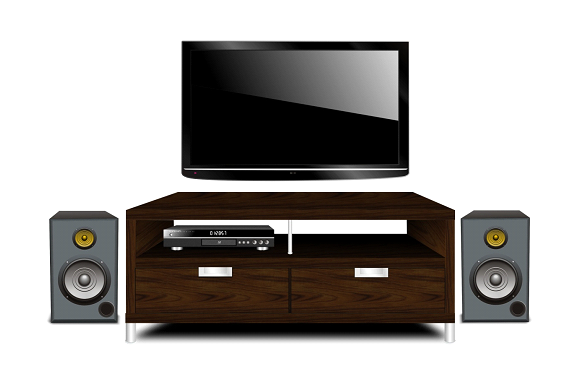
Many people these days have that magical room in their house known as the home theatre. Often referred to as a “movie room” or “media centre” the home theatre is now a highly popular place for families and friends to gather.


People inexperienced in the whole home theatre scene are often concerned at how expensive it could be to construct and how much room it may take up. But things have changed. People who have not upgraded their television in quite a while are still assuming the prices of flat screens and speakers are in excess of £3000. It is possible to spend that much, but that is only if you are looking at getting that brand new 50” OLED television that isn’t really worth it.

Make Sure Your System Fits Your Space

The first thing I did when I began looking for the speakers I needed was to size up the room that would become my home theatre. It’s easy to maximize the sound of your room if the space is smaller than average. The smaller the space, the less power needed to amplify the speakers. This means you can get a fairly medium powered receiver/amp and speakers that won’t require a lot of power. A lot of people will pack their room with huge over-sized speakers; you will definitely save a lot more money and have better sounding 5.1 using the correct speakers. 

Don’t Let That Salesman In The Shop Fool You

You can always end up spending more when you visit some of the large chain shops. Commission sales are what drives staff members to come rushing up to you as soon as you come through the door. Don’t let them try and sell you every useless item under the sun, they will definitely try. Make sure you find out EXACTLY what you are looking for before you walk into the shop. 

Speakers

Equipment can cost a lot of money; it’s in your interest to shop around before making any large decisions, I’ve found that quality is definitely worth investing in. I bought speakers from a local shop that sold speakers as separates. This means that I basically selected different front and rear speakers according to my taste, once I had decided on this I began looking for the ideal centre speaker.


The main problem with buying separate speakers is that they vary in color shape and size; it’s difficult to keep the speakers coordinated. I would however, definitely pick separates over an all in one speaker kit. All in one kits are usually great for the budget but not so great for sound quality, unless you’re spending upwards of £1000 I would not suggest it.

If you are upgrading your home theatre, always look out for shops that will allow you to trade in your previous speakers to then put towards your new ones. You may also want to use an online auction site such as eBay to get rid of your old speakers, or even buy your new ones!

Televisions

The television is one item to be careful of. There are hundreds on the market and they range from 300 to 3000+. You must first decide on what the room is primarily going to be used for, Movies? Gaming?

If gaming is a big factor for your setup and you’re looking at getting the £400 budget Samsung LCD or whichever brand, make sure you check what latency the screen has! 


This is usually referred to as “response time” and it can greatly affect how fast your control inputs feel coming through to the television. The smaller the response time the better. The minimum response time for gaming would be around 8ms, any more than that and you’ll be at a disadvantage. LCD televisions can have quite a large response time where as Plasma is known to be a lot smaller but it’s not always the case.

Projectors

Projectors are coming down in price these days so make sure you have a look at those, but don’t forget to include the cost of the pull down screen! Projectors can be a great way to maximize the size of the screen. You can get fairly decent HD projectors now at quite a good price. Projectors can be quite hard to watch in the daytime due to daylight shooting through the window. I had to put up blinds and thick curtains to be able to see the screen. One other thing about projectors is they have a lamp life, the bulb inside the projector can only be used for a certain amount of time before it effectively becomes useless. When I last had a projector its bulb could cost up to £400 for a replacement, so keep that in mind.

Although people assume it to be ridiculously expensive, building a home theatre doesn’t have to be. Just make sure you research what you’re looking for and check the specifics of all items!

If you like our article then kindly share it with your friends. If you want to support us then subscribe on our RSS feed and Daily Newsletter for future updates. Leave a comment below with your thoughts.

*by andreascy*


Microsoft Research : Interactive Displays - Applied Sciences Group (ASG) explores a see through 3D desktop


Description :

Presented at Microsoft TechForum 2012 : In the first of two demonstrations given at TechForum by the Applied Sciences Team, this is a project that is looking at what’s possible with a Samsung transparent OLED screen, Kinect sensors and some software magic. 


What you get is the ability to manipulate objects that lie behind the transparent screen - as well as objects on the screen with something called “view-dependent, depth-corrected gaze”.


After spending any time with Stevie Bathiche and his team you get used to such terminology. Much of the team's work explores the use of Kinect for tracking your eyes and delivering an image back to them that tracks your movements and gives depth and perspective.

The effect in this demo is you have a digital desktop that has depth allowing you to virtually place objects in space behind the screen, while also enabling the manipulation of objects on the screen from behind.


As with many of these types of demos, the video does a far better job of showing you what is going on than my words can. It’s another example of how the boundaries between physical and digital worlds are blurring.


We hope you liked our article. Feel free to comment below and let us know your thoughts. Discover other interesting presentations and research studies from Microsoft Research and don't forget to share it with your friends.

*by andreascy*

High Performance Organic TFT - Driven Display Paves The Way For Foldable Displays

Description :

A group at Osaka University, led by Professor Takeya, have successfully developed a high-speed organic TFT-driven display with world-class performance.
This achievement makes it possible to combine high-speed display performance with easy film fabrication, which has been an issue with organic TFT displays so far. It's hoped that this will lead to the early development of high-performance, flexible displays.

 - Photo 12

"Our new development concerns the process of printing single crystals of organic semiconductors in a simple way. By making organic semiconductor films from well-formed crystals, we've improved performance by at least an order of magnitude."

 - Photo 6
 - Photo 4

In previous organic semiconductor devices, circuits could be formed by simple methods such as printing, but high-speed components couldn't be achieved. Now, Professor Takeya's group has made it possible to fabricate one high-performance organic TFT every five minutes. This has been achieved by using a new organic semiconductor, called alkyl DNTT, with a molecular design that makes alignment easy.

 - Photo 10

"In fact, at this exhibition, we're combining LCD devices to make a display using this organic semiconductor. As several pixels need to be driven together, it's necessary to form devices together in a line. As a result of working on that, we've actually been able to display pixels effectively."

 - Photo 8
 - Photo 9

This display has 30 x 23 pixels, with a density of 17 ppi. From now on, the Group plans to combine the new process with an OLED panel, to drive a high-resolution display.

 - Photo 3
 - Photo 2

"The advantage of organic semiconductors is, they can be formed at low temperatures, close to room temperature, by simple methods like coating. For example, this material could be formed on a flexible plastic substrate to make a bendable display, or a display that folds up very thin and doesn't cost much. So we'd like to do those things. 

 - Photo 7
 - Photo 1

Another feature of this material is high performance. It has ten times the mobility of previous materials, so we think it could even be used to display images with lots of pixels, like this big poster."


*by andreascy*

Sony quits Organic-Screen (OLED) TV's Business in Japan

Description :

Saying that demand for the XEL-1 OLED TV is slowing in Japan, Sony is stopping OLED TV sales there. They say that overseas sales will continue, but having tried to order one of these, there doesn’t seem to be too much inventory available. 

Sony quits Organic-Screen (OLED) TV's Business in Japan

“Sony said it had stopped production of ultra-thin TVs using organic light-emitting diode (OLED) technology for Japan, just a little over 2 years since it launched its first set." It plans to keep selling the TVs in overseas markets, a spokesman said. 

OLED displays use organic, or carbon-containing compounds that emit light when electricity is applied. They produce crisp images and do not need backlighting, making them slimmer and more energy-efficient than LCDs, the most popular type of flat TV. 

Sony quits Organic-Screen (OLED) TV's Business in Japan

Sony has aimed to become a leader in the technology and positioned the product as crucial in its drive to regain its reputation as an innovator after losing out to Apple Inc. in portable music and Nintendo in video games

“I want this world’s first OLED TV to be the symbol of the revival of Sony’s technological process. I want this to be the flag under which we charge forwards to turn the fortunes around,” then president Ryoji Chubachi told a briefing in October 2007. 

Sony quits Organic-Screen (OLED) TV's Business in Japan

It is still technologically difficult to make large OLED panels and to produce them cheaply, limiting their potential as a mass-market product. Sony’s only model is an 11-inch set sold for 200,000 yen ($2,222) in Japan, considerably smaller and more expensive than other flat TVs. 

“As flat panel TVs are getting bigger and cheaper, hurdles for OLED models have become higher, at least in the short term,” said Hisakazu Torii, vice president of Japanese TV market research at DisplaySearch

Torii said the next big trend in the market will be 3D TVs and LCD TVs using Light Emitting Diode (LED) backlights, and that mass adoption of TVs with OLED panels is some time off. 

Sony quits Organic-Screen (OLED) TV's Business in Japan

Sony said it would end sales of OLED TV in Japan when inventory runs out. It plans to continue putting money into research and development and production for North America, Europe and other overseas markets. 

“We will continue to consider new products and applications including OLED TVs,” Sony spokesman Shigenori Yoshida said.

Like this post? Check out the latest tech news, or subscribe for updates. Need a sample? Here you go.

*by andreascy*

🦾 Stay Motivated

👩🏻‍🚀 Artemis II Crew: From Friends to Family

▶️ Just Press Play

We all have days like this

[image or embed]

— Chris Paxton (@cpaxton.bsky.social) April 17, 2026 at 1:51 PM

⭐ Leading ShipYard's Leaderboard

🚩 Milestone Unlocked!

🏅 Win-Win