7 Reasons to Consider a Home Gym

If you think of picking up better health habits and don't like crowded gyms, consider setting a home gym catered to your needs.

5 Top Picks for Christmas Holiday Like a Fairytale

If you imagine Christmas holiday this year being like a fairytale, you should consider visiting these hidden gems!

7 Fashion Accessories To Lift Up Your Style Quotient

Get heads up on the trendiest as well as classic fashion accessories that would elevate your style to another level.

Sensibo

Showing posts with label Kids. Show all posts

How Educational Technology is Reshaping Education: Latest Trends

Description : 

For many years now, we’ve been seeing a gradual, but important shift in the way that people are educated. Gone are the days of notepads, pens and paper notes. Today, students are creating the content on their tablets, they are sending it across intranets, and they are engaging with the class, 24/7 through social media. This is referred to as asynchronous learning.

How Educational Technology is Reshaping Education: Latest Trends

Far from being the distraction they were originally intended to be, though, digital devices are helping to re-shape the traditional dynamics of education as we know it — they are actually amplifying it.

So, what latest trends and changes can we expect to make a compelling difference to the market in the years to come?

Smart Tech

One of the most obvious innovations we have seen in recent years comes from the rather wonderful Smart technology industry. For example, one tool we might see used in academic study soon is IBM’s Watson device. Watson offers a high-end education tool that addresses and improves the way that people study. This is going to be very important for the long-term growth of the industry, as Watson is known to change the way that people collate data from masses of unmanaged data using artificial intelligence and sophisticated means of analysis.

How Educational Technology is Reshaping Education: Latest Trends

This is very useful for making sure that the next generations can use technology to find answers that they would have otherwise never received. Even in more limited education functions, new AI toys could be used to manage the growth of younger children and make them more aware of certain interactions.

From making children more aware of their actions and the way they portray themselves, to full on educational aids, smart tech will ensure that the next generation always has a helping hand waiting for them.

The IoT and IoE

A significant element of the web is going to be the Internet of Things. We’re already changing the way we all link together and operate as one today, and the IoT will ensure that this continues. For example, the IoT will enable the rapid growth of virtual classroom learning. IoT will ultimately be a defining factor in shaping the future of the industry. Device interaction will improve and before long it will be easy to take the information garnered in the classroom right to our PCs back at home. The future of learning will involve possessing the means to transmit data as freely and as accurately as possible across the whole group.

How Educational Technology is Reshaping Education: Latest Trends

Education will benefit from an added layer of depth to the IoT, in which people will be able to make the most of a learning system that brings together various aspects of their day-to-day lives. 

More recently, another somewhat synonymous to IoT concept, introduced by CISCO is the Internet of Everything, defined as "the intelligent connection of people, process, data and things." This philosophy can inform a globalized, expanded notion of internet connections beyond machines. The latter can be meaningful for developing tools such as Educational Management Systems (EMS), which refer to managing the massive data of school records and other administrative functions across the globe, perhaps in a unified way.

VR and AR

Virtual reality and Augmented Reality took a very important step in 2018, with the mainstream release of many headsets by the likes of Sony and HTC leading the way, as well as more research-driven industry applications. Indeed, another option — the Google Cardboard — is expected to deliver exciting new ways of learning. It’s going to change the way that students investigate future careers, which is vital to shaping dreams.

How Educational Technology is Reshaping Education: Latest Trends

For instance, a profession might sound amazing, but the reality could be very different. VR will re-shape how we evaluate the suitability of a student to take up such a profession. with simulations to estimate the performance of the person under a specific role. It will also help students to determine how suitable they are just by trying it out. Was it everything they thought it was going to be? 

Such possibilities are explored in pilot studies and research experiments across the world. This type of VR and AR applications, will help students to avoid making the wrong choice early in life and failing to come back from it. Many students wind up in major debt, just trying to get into a career path that, when they “make it” resembles the opposite of what they had intended in the first place.

3D Printing

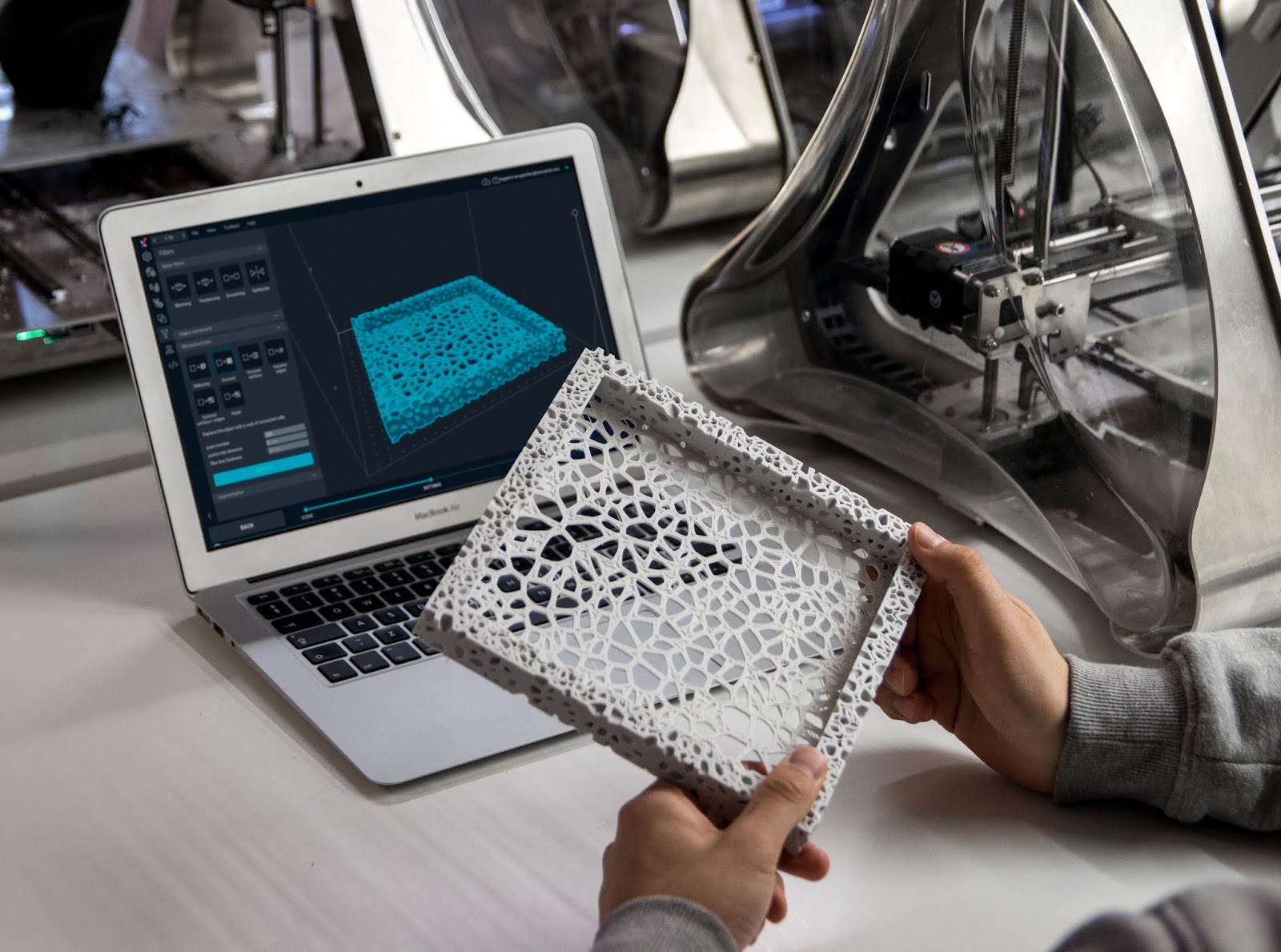
Another major element of education that is likely to change heavily in the near future is the power of 3D Printing. As one of the most powerful industries out there at the moment, it’s beginning to become a very popular way to learn for kids. Nowadays, children can get their hands on the kind of objects and instruments that previously they could only look at in books and dream of holding for real.
How Educational Technology is Reshaping Education: Latest Trends

From the crown of a king, to the layout of a medieval weapon (blunted, obviously!) children could get a much more authentic appreciation of the world that they read about on the pages of book. This is dangerous, though, as it prevents children from appreciating the true gravity of what they are reading about. The day that 3D printing stops being so prohibitively expensive, will be a good day as it should help people to finally become involved in the industry, thus empowering and educating the next generation.

In Summary...

Whilst understanding the various challenges that the Internet and similar devices present to the education industry, the trends are already here. People are becoming more appreciative of the integration of technology into various forms of education, as most believe it will quickly help to make people more comfortable with technology, as well as working and living in a multimodal and digitally mediated society.

All of the above technological outputs, have been working their way into education for some time — it’s just a matter of time before they are more systematically implemented in classrooms worldwide. Each will play their part in determining a new dawn for education, which can only be a good thing, ensuring that future generations, receive the best and most relevant learning possible.

*by andreascy*

Infusing Multiliteracies Into Museum Learning Practice for Inclusive Cultural Participation

Description :

One of the most poignant discussions in the museum world, has been on issues of inclusion and access. Prolific museum figures like Nina Simon presenting in the recent Museum Next Conference in London, shared the vision behind OFBYFOR ALL, a new global initiative to help civic and cultural organisations become OF, BY, and FOR their communities. However, what is it that can help take the next step in terms of inclusion and learning within and out of museum grounds? 

This article draws on a doctoral research study to investigate museum’s democratic potential, through transformative approaches to pedagogy aimed at meaningful cultural participation.

Infusing Multiliteracies Into Museum Learning Practice for Inclusive Cultural Participation

The ‘meaningful’, stands for a degree of competence in reading, interpreting and constructing meaning from the existing multiple forms of language (Stapp, 1984: 112; Mitchell, 2007: 3). ‘Participation’ involves an ability to negotiate the complex dialogic relationship that exists between the written word, the spoken word, images, objects, time and space (Mathewson-Mitchell, 2007: 3).

Consideration of issues of access in relation to the significant literacy requirements of museums, suggests that increasing focus on the explicit teaching of museum-based literacies, could be the way through which to expand museum visiting opportunities for the less 'conventional' audience.

It is actually proposed that museum-based literacies could act as the means to the development of cultural competence in museum environments. This evolution in theory and practice of, and about museums, has been notably part of radical changes in the museum world since the 1970s, mostly known as new museology.

Museums as Agents of Change

The development of a “new museology” (Mayrand, 1985: 201), is a concept used to describe the focus on the potential of museums as a positive social force. Golding (2009) suggests the museums should act as frontiers, places where learning and identity are produced and developed for all, while new ‘bridges’ are raised between non-dominant communities and their own histories (Philip, 1992 in Golding 2009).

Infusing Multiliteracies Into Museum Learning Practice for Inclusive Cultural Participation

It became profound that if museums accept their educational role, “they must also accept their social responsibility to work towards supporting a participatory democratic society” (Hein, 2005: 50). We need to “take advantage of the current context, as ‘opening new educational and social possibilities’ (Cope and Kalantzis, 2000: 18), to promote democratic education and human needs...” (Early, 2007: 67).

Changing Times, Changing Literacy 

Ever since the 1960s, the nature of literacy practice and needs is changing; Hall (1989) suggests this is thought of as a consequence of New Times. New Times is an era of internalization, characterised by the breaking down of borders between local and global contexts resulting from rapid change in communicative practices (Gee, 2000: 183; Luke and Elkins, 1998).

One common element that has changed is that literacy has become inherently plural; thus researchers have problematized the very notion of literacy as a discrete set of skills. Luke and Freebody (2000) provide one of the more recent and useful definitions of literacy: 

"Literacy is the flexible and sustainable mastery of a repertoire of practices with the texts of traditional and new communications technologies via spoken, print, and multimedia"

(Luke and Freebody, 2000: 9)

In such a perspective of literacy, the literate person is one who develops capacity to respond to emerging and communicative needs, a literate person who is a sophisticated user of texts. The individual engages with literacy practices as a decoder of text, as a maker of meanings, as a purposeful user of information and as a text analyst who employs critical thinking skills in the literate work (Luke and Freebody, 2000; Liddicoat, 2007: 20). 

Infusing Multiliteracies Into Museum Learning Practice for Inclusive Cultural Participation

Figure 1: Evolution of the concept of literacy over fifty decades

Although acknowledging contemporary, 21st century demands of ‘literacy’ and education, this definition does not incorporate the social context of literacy. Literacy is, as Gee (1996: 22) has aptly described, “a socially contested term”. To this respect, literacy is a social practice rather than merely a means to an end. 

Such a consideration draws on the paradigm of New Literacy Studies (NLS) and recognises literacy as a set of socially and culturally constituted practices enacted across and within social and institutional spaces. It acknowledges literacy as a social and historical construction that evolves dynamically (Giampapa, 2010: 4; Potvin, 2009; Garcia, Bartlett and Kleifgen, 2006). 

Literacy is seen as a social responsibility including a critical or transformative emphasis in which literacy is a tool to understanding social structure in which we live so we can transform it in meaningful ways (Gee, 1996: 58; Street, 1995). The social perspective of literacy, implies more than superficial contacts with print; it icorporates an understanding of how to manipulate words and concepts through complex daily social interactions in an accepted manner (Giampapa, 2010; Potvin, 2009; Reid, 1998; Kern, 2000) through cultural apprenticeship (Rogoff, 1990).

The ‘New’ in Literacies: Multiliteracies

Following the NLS paradigm, ‘multiliteracies’ have emerged. The term “Multiliteracies” immediately shifts us from the dominant written print text to acknowledge the complexities of practices, modes, technologies and languages with which literate people need to engage in the contemporary world.

The “New London Group” (a team of ten academics including James Gee and Allan Luke) came together in 1996 concerned about how literacy pedagogy might address the rapid change in literacy due to globalisation, technology and increasing cultural and social diversity. They employed the term ‘multiliteracies’ to address these issues (The New London Group, 1996).

Since then, The Ontario Ministry of Education has come up with a number of literacy initiatives, some of which are characterized by a critical and social view of literacy, where literacy is conceived of as "the ability to use language and images in rich and varied forms to read, write, listen, speak, view, represent, and think critically about ideas" (Expert Panel on Literacy Report, 2004: 5).

Infusing Multiliteracies Into Museum Learning Practice for Inclusive Cultural Participation

Figure 2: Multiliteracies and their design elements (Adapted from The New London Group, 2000)

Luke and Luke (2001: 92-94) echo this idea, and argue that new technologies have facilitated the emergence of new kinds of artefacts, such as digital storytelling, requiring new levels of engagement and development of higher and different mental faculties (i.e. new multiliteracies). Luke (2000) also talks about the critical multiliteracies - being able to understand, debate, and act upon the material, political, and social consequences of technological change.

An alternative view of literacy calls for a reconceptualization of literacy as reading and writing the world (Freire, 1970). This conceptualization foregrounds critical thinking in both teachers and students, and looks beyond functional literacy (reading and writing skills), to the knowledge and power relations in literacy discourses.

Agnello (2001) refers to this approach as postmodern literacy, and argues that through this approach “reading and writing become enhanced methods for exploring the democratic self and its formation through ideological exposure to knowledge and power relations formulated by educational policy texts. Through such exploration, literacy becomes a tool for self-, student, and social advocacy rather than commodity to determine whether one measures up satisfactorily on test scores” (Agnello, 2001: 24-25).

Museum Learning as a Multiliteracy Practice

Museum-based literacies or museum literacy, refers to the competence in drawing upon the museum, its space and collections using certain skills and practices. In 1984, Carol B. Stapp observed that “museum literacy” was then a newly emerging phrase that articulated the older idea of a philosophy of museum accessibility.

Museum literacy goes beyond ‘reading’ objects; which may be understood as visual literacy; it requires a deeper level of process and understanding of the multiple and interacting languages and modes of communication found in the museum. 


By broadening the view of museum literacy, it is acknowledged that the language that is involved in the museum is diverse and incorporates multimodal literacies including: linguistic, visual, audio, gestural, spatial patterns, technological and print-based (see for instance, Cope and Kalantzis, 2000: 160,203; Giroux, 1992; Hooper-Greenhill, 1999).

Infusing Multiliteracies Into Museum Learning Practice for Inclusive Cultural Participation

Figure 3: The multimodal literacies in museum-based pedagogy (Savva, 2016)

This view of museum learning redefines the goals and strategies of educators and the museum curricula. The idea of education in museums is seen as exploratory, broad, experiential, complex and multi-layered; museum strategies are now audience driven (Russo et al., 2007, Hein, 1998; Falk and Dierking, 2000).

To this discussion fits the incorporation of museum learning into the multiliteracies concept; this is facilitated by the realization that a display of material culture conveys messages about the people who created them and the times in which they were used (Pearce, 2003). 

Infusing Multiliteracies Into Museum Learning Practice for Inclusive Cultural Participation

The act of creating an exhibit is parallel to the act of producing knowledge. Exhibits are not simply displays, but systems of signs that express messages about culture. Museums and their exhibits reflect the ideology of those who create them.

In the same vein that “There is no such thing as ‘reading’ or ‘writing,’ only reading or writing something . . .” (Gee, 1999: 93), the same would hold true for creating exhibits. There is no such thing as displaying an artifact without displaying something about that artefact. Also, the interpretation of messages is similar to the deciphering of text, using the signs, symbols, objects, etc., of a museum exhibit as part of the process of creating meaning (Roberts, 1997).

Infusing Multiliteracies Into Museum Learning Practice for Inclusive Cultural Participation

Griffin (1999: 8) identifies the unique learning opportunities offered by museums as: opportunities to closely examine objects or specimens; opportunities for comparison that allow trends and patterns to be deciphered; natural learning processes that incorporate the sharing and communication of ideas and the raising of questions; and opportunities to develop perceptual skills that teach how to gather information from objects and experiences. 

Because museum exhibits make meaning through multiple media, multiple modes, and multiple symbol systems, the literacy practice of museum visiting is a multiliteracy. 

An interesting project exploring the latter, is the ‘Museum Literacy Project’ in 2008-2010, involving nine different museums, administrations and training institutions based in five European countries, supported by the EU programme Lifelong Learning - Grundtvig Learning Partnerships, 2008. The project focus was on museums and audiences with low schooling level, and how museum literacy can be reached and maximize the museum experience for these audience.

Dimensions of a Pedagogy of Multiliteracies for Museum Learning - The Research Framework

Taking into consideration the unique characteristics of the museum environment, I undertook an empirically-based doctoral study involving the design, enactment and evaluation of the Living Museum Partnership (LMP), a museum-school partnership that unfolded in 13 weeks for the construction of a student-generated virtual museum to support environmental education curriculum (Savva, 2016). 

Specific focus was on developing virtual learning environments and applying augmented reality to enhance culturally and linguistically diverse students' repertoires of literacy practices. This design-based research, draws from the field of New Literacy Studies, the proposed Museum Multiliteracies Practice (MMP) framework derived from the multiliteracies pedagogy of the New London Group, the Learning by Design Model adapted from Cope and Kalantzis and Schwartz’s museum based pedagogy.

Infusing Multiliteracies Into Museum Learning Practice for Inclusive Cultural Participation

Figure 4: The pedagogies interacting in the Museum Multiliteracies Practice framework (Savva, 2016)

It is proposed that museum educators and learning professionals undertake an approach for teaching and learning in the museum setting which incorporates multiliteracies pedagogy. Identification of museum literacies requires thorough examination into the interaction of modes that are evident, the incorporation of multiliteracies implicated, the various sign systems that are employed, and the unique nature of the museum learning environment (Mathewson-Mitchell, 2007: 7-8).

The focus should be not only on literacies as communication (meaning for others, as supports for social interaction). My doctoral research for instance also emphasized on literacies as a form of representation (or meanings for ourselves, as supports for thinking).

Cope and Kalatzis (1996, refined 2000, 2009) elaborate on the potentials of a ‘Pedagogy of Multiliteracies’ in fulfilling these aspirations. Two important ideas brought in a multiliteracies pedagogy are Learning by Design and Multimodality.

Learning by Design, is building into curriculum the idea that not every learner will bring the same lifeworld experiences and interests to learning, as well as acknowledging that every learner is not on the same page at the same time; pedagogies of learning are re-configured to construct learning as “a dialogue of difference” (Cope and Kalantzis, 2005: 31). The idea of Multimodality discusses learners’ movement between written, oral, visual, audio, tactile, gestural and spatial modes of meaning-making (Cope and Kalantzis 2005, 2009). 

On this basis, the New London Group (1996) has proposed a multiliteracies pedagogy consisting of situated practice, overt instruction, critical framing, and transformed practice.

 Situated practice includes learners’ prior and present experiences in a community of learners (composed of experts and novices). 

 Overt instruction involves the teacher’s or expert’s interventions to scaffold (Bruner, 1983) or support learning and increase the learner’s consciousness about learning. Scaffolding is a metaphorical concept that refers to the visible or audible assistance that a more expert member of a culture can give to an apprentice (Bruner, 1983, 1986). You might also note Vygotsky’s Zone of Proximal Development (ZPD), that relates to Bruner’s notion of the scaffold here. 

 Critical framing refers to learners interpreting the historical, cultural, political and ideological contexts of learning.

 Transformed practice includes implementing new understandings through reflective practice in other contexts.

Infusing Multiliteracies Into Museum Learning Practice for Inclusive Cultural Participation

Figure 5: The Multiliteracies Model and Learning by Design (Adapted from Kalantzis and Cope, 2000)

Also identified within the Learning by Design Model are four knowledge processes (See Figure 5 above). The knowledge processes identified are:

(a) Experiencing the known and the new

(b) Conceptualising by naming concepts and theorising 

(c) Analysing functions and interests 

(d) Applying appropriately and creatively.

Findings and Implications for Museum Learning Practice

Stapp (1984) had argued that schools do not address the knowledge, skills and attitudes for museum literacy. Recent observations of the characteristic use of museums by school-based teachers suggest that a relatively passive, idealist approach to museum experiences, as identified by Stapp, has continued, with teachers lacking confidence and competence in the museum setting (Mathewson-Mitchell, 2006). 

Based on the findings of my doctoral research, it is suggested that addressing museum-based multiliteracies leads to effective museum-school partnerships and meaningful museum learning practice. Research data suggested that students’ repertoires of literacy were enhanced as they engaged in the learning process as active designers and multimodal learners (Savva, 2016). It was found that students gained opportunities to:

Infusing Multiliteracies Into Museum Learning Practice for Inclusive Cultural Participation

Figure 6: Findings of Museum Multiliteracies Practice research (Savva, 2016)

It is proposed that any museum education programme or museum-school partnership or collaboration pays attention to the following key principles:

1. Teaching children, especially digital natives of our time, to be literate in any setting is not just a set of skills that can be transferred. Rather, education needs to enable them to participate in social situations using the required literacy practices.

2. Museum visiting is seen as multiliteracy practice; as such it requires specific museum-based literacies that are rarely identified or explicitly taught by museums or schools.

Conclusion

Ultimately, this brief review and presentation of the proposed empirically based, research framework for museum learning practice, forms a pathway to follow for inclusive cultural participation at any level and age. The London New Group’s (1996) ideas further developed by Cope and Kalatzis (2000; 2005; 2006) for a Pedagogy of Multiliteracies, could inform the development of the specific literacy requirements of museums, in a way that could lead to full museum literacy and a transformative cultural engagement and participation for diverse audiences.

7 Reasons to Consider a Home Gym

Description :

For people who work out regularly, going to the gym can be tedious. The memberships cost money and (let’s face it) sometimes other gym goers can be downright obnoxious. To make you experience at the gym more enjoyable, you may want to consider a home gym.

7 Reasons to Consider a Home Gym

Of course, it is daunting to make the space and spend the money on equipment, but it could be worth it for the complete control of your workouts. If going to a gym is getting old, you might want to consider the benefits of working out a little closer to home. Here are 7 reasons investing in a home gym will be worth it in the long run. 

1. Privacy 

If you are someone who feels awkward or uncomfortable working out in front of others, then a home gym is the perfect solution. Just imagine: you can wear whatever you want, grunt as loudly as you want, and use whatever equipment you want without waiting for it. Plus, you never have to worry about being judged by strangers so you may feel more free to try new workouts. You also won’t have to worry about getting unsolicited advice from gym staff, or people who think they’re gym staff. There will never be any worry about embarrassment in the private oasis that is your home gym. 

In your home gym, you will be able to watch your TV shows or listen to your music unencumbered by headphones. You won’t have to take anyone else into consideration when picking the volume of your tunes. So turn up the volume and let the music motivate you. You can even use all the chalk you want without being reprimanded. 


You may even find yourself working out a little harder since you have no one else looking at you and you don’t even need to think about how you look while working out. Additionally, not having to worry about someone taking your machine will help you feel more relaxed and not on edge about other people swooping in. 

Another bonus is that you will never have to think about crowds. Not everyone likes working out surrounded by people and it can be impossible to get the machines you are looking for at peak hours. You can take solace knowing that after work you can go home to a nice empty gym and relieve the stress of a long day, without interruption. 

2. Saving Time

Sometimes the prospect of driving to an over-crowded gym with lackluster equipment can be completely demotivating. However, it is much harder to convince yourself to skip your workout when your “commute” to the gym is about one minute. 

Depending on how far away your gym is, you probably add about 20-30 minutes to your workout just in travel time. That is time you could spend going a little harder on your workout, or even better, just being at home. 

Not only will working out take up less time in general, a home gym allows you to utilize your time more efficiently. In your home gym, it will be so much easier to use the time you have. Only have 20 minutes? You can squeeze in a 20-minute workout since you won’t have to worry about the hassle of traveling to the gym. 

Who wants to battle rush hour traffic just to get in a workout after work? It is so much easier to go straight home and know that you can take your time getting there. You will ultimately be able to spend more time with your family since you will be in your home for your workout. 

Plus, your workouts will be quicker since you will know that the exact equipment you want will be available when you want it. When you’re working out at a commercial gym, the time spent traveling to and from the gym, putting your stuff in lockers, waiting for equipment, and possibly showering can be equal to time actually spent on the gym floor. 

3. Customization

Of course you should always tour a gym before you sign up, but even if you think they have all the equipment you want now, that might not always be the case. As your fitness goals grow and evolve, so will your equipment needs. 

If you take training very seriously and tend to work with only extremely heavy weights, you will be hard pressed to find a gym that carries the weights you want. If you are relatively new to working out, the gym often has a lot of equipment you don’t need, but are paying for anyway. 

When you create a home gym you can customize it to include exactly the equipment that you want. Plus, you get to decide what the time limits are on the cardio equipment. When first starting your home gym you can buy only the equipment that you will use and then only add to it as needed. 

You can also focus exclusively on your interests when designing your home gym. For example, if you like to get your workouts in through dance, most gyms only have dance space available for scheduled classes. So with a home gym, you have the ability to leave some space for a dance floor.

Not only do you customize the equipment available, you also get to customize the space arrangement. You will no longer have to worry about cramped gym floors with no space to put your mats or do your stretches. 

Why would you want to fit your workouts to the gym when you can make the gym fit your workouts. You will no longer have to work with what happens to be available; you get to decide what is available to you. 

4. Maintenance

If you really think about it, sharing gym equipment has the potential to be pretty gross. Some large-scale gyms have upwards of 3,000 members. Just think about how many people are using the same machines as you in a day and then consider how many of those people aren’t wiping it down afterwards. 

A study done by the website Fitrated showed that gym equipment typically has more bacteria than a toilet seat. This study didn’t even take into account the public locker rooms and showers. When you think about how much you are sharing with other people it seems like home gym is better for your health in more ways than one. 

At your home gym you have total control over who is using the equipment and how clean it is. You can have some piece of mind knowing that you can work out during flu season without having to worry about catching something that will knock you out for two weeks.

Additionally, you don’t have to worry about strangers misusing your equipment. At the gym you often have to deal with equipment being out of order, missing weights, or just in bad shape because not everyone knows how to take care of the equipment. When it is just you, the equipment will last longer because it isn’t seeing as much use, and you know it is being used and stored properly. It might seem like a hassle to have to serve as the maintenance staff at your home gym, but it’s better than getting sick and dealing with broken equipment. 

5. Money 

Every commercial gym markets its memberships as affordable, but you still end up spending a significant amount of money on the monthly price of a membership alone. But, if all you are paying is a monthly fee you are lucky. Many gyms are notorious for hidden startup fees, annual fees, random price raising, and cancellation fees. 

Considering that the average gym membership costs between $50-$60 per month, you could be spending upwards of $700 a year on monthly membership fees alone. Even if you go to the gym every single day, this is a big expense on your plate. 

Building up a home gym requires an initial investment but it will pay itself off in the long run. When you’re building a home gym you’re ideally using a space that you already have, such as a basement or a garage. The biggest expense will be the equipment. 

Yes, equipment can get expensive, but you don’t have to go right for the top of the line stuff. You can take your time and search for the best deals you can get so that your home gym fits your budget. You may even start with just a few basic pieces of equipment and then gradually add to your collection as needed. 

If you use a personal trainer at your gym, you can even save some of that money by having someone come to your house instead of using the overpriced trainer at the gym. Having someone who comes to you will allow you to find the trainer who is the perfect fit for your budget and your personality. 

The initial start-up costs may seem daunting but just think about how nice it will be to not have to hand over your money every month to a gym you don’t want to go to. 

6. Convenience 

Clearly a home gym is convenient in terms of saving time on the commute and having more efficient workouts, but there are other surprising conveniences that you might not even think about. A great added bonus of having a home gym is that if you have kids, you can get in a workout while they are in the other room. There is no stress about finding a sitter or getting the kids in the car to take them to the kid’s club. 

This is absolutely essential for busy moms and dads who have trouble finding time for themselves. It can be hard for parents to stay on top of their health; having a home gym makes it a little bit easier. Plus, it will save money on the cost of the kid’s club or babysitters. 

If you happen to have older kids, you can let them use the equipment as well without any extra fees. Therefore, having a home gym turns into a good way to help keep the whole family healthy. If you don’t have kids, you can share your equipment with your significant other or roommates so that no one has to worry about gym memberships. 

Additionally, there is the convenience of not having to worry about weather. If you’re someone who likes to workout outside, a rainstorm can ruin your workout plans. If you have a home gym, you can just hop on your treadmill and get your workout in, no matter what the weather is. 

You also have the convenience of having your whole house at your disposal. So no need to worry about forgetting your shower shoes or weight lifting gloves. You can just run to the other room and grab them. 

7. Enjoyment

If you combine all the aforementioned reasons to consider a home gym, you get an overall more enjoyable and less stressful gym experience. You can train so much better when you don’t have to think about all the things you hate about your big commercial gym that is only interested in your money. It will be much easier to work out if you actually like the environment you are working out in. 

Once you are using your home gym all your excuses will be gone and you’ll have nothing left to focus on but your exercise. Before you know it you will start to see results, and your body and mind will thank you. 

Conclusion

It is easy to make excuses to skip your work out when you don’t like your work out environment. When you build a home gym you are creating a workout environment that is customized to your exact needs so you will really want to work out. There is nothing better than being in complete control of your fitness. 

A home gym eliminates all those extraneous factors that get in the way of your exercise routine. Of course sometimes there are limitations, but you don’t have to think of your home gym as a massive undertaking. It is perfectly okay to start small and then work your way up to the enormous home gym of your dreams. 

Overall, cancelling your gym membership and taking your workouts to your home will give you unprecedented freedom to make your fitness experience completely your own. Why try to fit your workouts to someone else’s mold, when you can control for every aspect of your experience to get exactly the right workout for you?


Delighted that THE OFFICIAL ANDREASCY is now on Linked In - you can follow our page and stay tuned for more updates.

*by andreascy*


Why Are Comply Foam Headphones So Popular?

Description :

Many gamers and music fanatics prefer the use of over-ear headsets or silicon-based inner earbuds because of the high-quality sound on offer. However, such headphones don’t always provide the ultimate experience for several reasons, one of those being the fact they are often uncomfortable during prolonged use. 

Why Are Comply Foam Headphones So Popular?

Comply foam ear-budded headphones are becoming more and more popular because they’ve been able to solve the problems other headphones haven’t had a chance to. Here are a number of reasons why consumers are now looking toward comply foam earbud headphones for their listening requirements.

1. Comply Foam Headphones Help Isolate External Noise

Many gamers and professionals who use over-ear headphones have access to quality sound, but they don’t always get that quality sound because of external noise that can often interrupt the overall listening experience. With comply foam earbuds, you don’t get that problem because they put sound straight into the ear and prevent any external noise from entering. Comply foam based headphones have been around for years now, but it’s only been within the last few years where consumers have really seen the benefits they provide. 

2. Comfortable Experience

Gamers and music listeners often use headphones for longer periods for their entertainment purposes, but they regret it soon afterward because their ears feel sore. That problem goes away with comply foam earbuds – the soft solutions help improve comfort so consumers can take advantage of them for hours upon hours without experiencing any soreness. Take a look at complyfoam.com to see the comfort benefits such headphone solutions provide. 

3. Durable & Reliable

Bulkier over-ear headphones don’t tend to last long because they’re fragile and are usually only made out of plastic. Comply foam based headphones are compact, simple, and very durable. They do come at a cost, however, but they can always be relied upon to last for years. Therefore, they are a much more cost-effective solution than some of the other headphone solutions on the market. 

4. Flexibility

One of the biggest benefits of comply foam earbuds: they’re very flexible. Everyone has different sized/shaped ears and many headphones on the market don’t provide enough flexibility. However, not only are comply foam earbuds great at isolating external noise, providing a comfortable experience, and last for a long time, but they’re very flexible and provide comfort for different ears of all shapes and sizes. So, if you can’t find a set of headphones that can cater to the needs of your ears, consider comply foam tips today for the ultimate experience that is almost guaranteed to provide comfort.

Conclusion 

Granted, many of the other headphones out there can provide excellent quality sound and comfort, which might suit gamers looking for more out of their experience. Others also provide the over-ear experience which is something music listeners often prefer. However, with comply foam making strides in producing high-quality sound, comfort, and flexibility for all consumers, it could only be a matter of time before comply foam is one of the biggest players in the headphone market.

Thank you all for checking out my articles! Can I help you in some way or another? Let me know below and I’ll be glad to give you a hand!

*by andreascy*

Thinking About Buying a Hoverboard? Read This First!

Description :

The hoverboard has grown in popularity because it's easy and fun to use. You can ride one to get to where you're going faster than you could by walking, and since it's smaller than a bike, it's convenient for those who want to try to take it out on city streets. 

Thinking About Buying a Hoverboard? Read This First!

The board gets its name because the wheels on most of the boards are slightly under the edges, giving the appearance of the person floating above the ground. Most boards have two wheels, but there are also solo wheels. You can find hoverboards online and in many retail stores. When you start searching for boards, you'll find a number of designs depending on exactly what you want to stand on while you're moving from one place to another as some do offer more space for the feet. Most boards have a small motor that is connected to each wheel. This allows you to move each foot by itself instead of traveling with both feet in place, similar to a skateboard. 

CNN has named the IO Hawk hoverboard "one of the coolest pieces of technology." Other companies have jumped on board with the craze and developed their own styles. You've probably seen the boards on awards shows and demonstrated in retail stores. They are popular in other countries besides the United States. Several musicians and actors have been seen using hoverboards. They have been used in music videos and movies in the past several years. 

Choosing the Best Board

There are a few things that you can do to discover the best board for your body and skill level. Among the best on the market are the Segway miniPRO and the Jetson V6. Taller wheels on the Segway allow for traveling over a variety of terrains, where a standard hoverboard usually has wheels that are closer to the ground that keep you on sidewalks and streets. There are sensors on the board that will slow you down if you're going over terrain that is hilly or that could cause injuries. A steering bar that comes to the knees on the miniPRO allows for easy control of the board. One of the features of the Jetson is that it's stable and has a wide base. The board also has an app that goes along with it so that you can see various details of the product and your usage. 

Shane Chen is known for patenting the design of the hoverboard. The design of the boards is essentially the same no matter what brand you get. There are pressure pads on the boards that have two wheels, activating the motor that is associated with the coordinating wheel. There are also speed sensors that activate the board as well. When you look at each board that is on the market, the thing that will set them apart is how they feel while riding and the experience of the rider. Two boards that are the exact same might not deliver the same ride for two people because one is more experienced than the other. When looking for a board, you want to find one that has the best sensitivity for your feet. You should feel comfortable while riding the board instead of feeling as though you might fall off, which does take some practice. The research group at Reviews.com recently took on the challenge to find the best boards available. Their methods used to find the best boards can also be used if you are looking for something for yourself. 

Back in 2015 there were reports of hoverboards exploding or catching on fire. One of the first things that the group did was to eliminate the boards that gave any indication of exploding or that had the potential to explode, which is something that you want to look for when selecting your own product. The board that you choose should be certified and put through a detailed electrical test to determine if it could explode. Although there is nothing that will guarantee 100 percent safety, these tests should put you at a high safety percentage while riding. 

After choosing a few boards to try, you want to ride each one inside the home or inside a building, such as your office building at work. You want to use safety gear at all times if possible, especially when first starting out. Figure out the proper way to get onto the board and how to get off. You might need some kind of secure device beside you the first few times you get on and off, but once you're able to mount and dismount with ease, it's like riding a bike. Most people will be a little off-balance while they ride for the first few times. It takes practice to get to a point where you can ride a hoverboard like a professional. It's possible that there will be a crash or two, but it's important to learn from the mistakes that you make so that you know how to ride the next time. 

One of the things that you need to look for if you plan to ride your hoverboard for long periods of time is the battery life. Some boards just don't have a battery life that lasts longer than a few hours while others will last half a day or longer. The Segway miniPRO is a board that has the longest battery life out of several that the research group tried. 

When you look at the hoverboards in front of you, you might notice that they look almost exactly the same except for the brand name. There could be differences in the pattern on the outside of the board or the type of tread on the wheels as most boards have the wheels on the outside area of the board. Some boards have the same robotic voice that tells you what to do or that offers tips on how to use the device. They will likely have the same kind of app to use. Hoverboards are similar in appearance because most of the companies that make them are in China. When the boards are made, they are picked up by outside companies, and a new name is put on each one. 

Another aspect to consider when you're getting a hoverboard is the price. Most are in the $500 to $700 range for a sufficient board that will do everything that you want and has the appearance that you desire. However, Don’t buy cheap, uncertified boards. Though many online merchants list boards that look like our top picks at dirt-cheap prices, we advise caution. These boards are often uncertified knockoffs that haven’t undergone safety tests. While the exterior of the board may appear similar, the lithium-ion (Li-ion) batteries are sometimes replaced by cheap, dangerous counterfeits that may catch fire.

Once you have mastered using the hoverboard inside, it's time to see if you can ride it outdoors. Stay on a flat surface to start with so that you're not navigating hills and slippery areas. You should also try to find a place that doesn't have many people or cars until you feel better about being on the board. A park is a good place to go or an empty parking lot. After you have mastered flat surfaces outside, you can move on to the terrain that you might encounter during the day, such as sidewalks that have rough patches or even grassy surfaces to see how well the tires would do on a surface that isn't paved. 

When you're choosing the best hoverboard, you want to find one that handles a variety of road situations. You want to get a board that can stop quickly and easily. Some boards are better suited for riding indoors, so you need to look at the features and specifications of the boards that are available to see which ones are meant for riding outside. A true off-road board will usually have larger tires with thicker tread on them and feel a bit more comfortable while you're riding compared to a board that is only meant for riding inside. 

The best board that is recommended for general commuting is the Segway miniPRO. It can be used inside or outside and is a better option if you plan to use it on a daily basis. The tires are filled with enough air to absorb the shock that you put the board through while riding. There are wide foot pads that make the board comfortable to be on for a few hours at a time. This is a hoverboard that does well with going up hills and going over surfaces that are cracked or that are littered with small pieces of debris. It does have quite a bit of speed to it as well. The Segway has a few features that other boards don't offer. You can set the lock mode in place so that an alarm will sound if anyone other than the person who operates the app is on the board. You are required to use an app with this board, but it does mean an added bit of security. There are speakers built into the board. 

The Jetson V6 offers several details that make it among the best on the market. It's lightweight and offers a smooth experience for even the novice rider. Wide fenders on the sides of the board allow for easy maneuvering whether you're inside or outside. The larger fenders also provide a bit more stability and security while you're riding. Turning while on the board seems almost automatic and is smooth. It does do best on flat surfaces instead of surfaces that are rougher. The frame is made of plastic, which makes it easy to pick up and carry with you wherever you want to go during the day. 

If you plan on being outside on the grass, then you want a board that has larger wheels so that you have more support. Read all of the description and reviews online and any information that comes with the board so that you're operating the device properly and safely. Look at the weight limits of the board as some are designed for younger or lighter riders. However, most boards will support the weight of an average man. Children shouldn't ride hoverboards if they are under 12 years old, and if they are under this age, they need to be monitored at all times and wear the proper safety equipment while riding. 

Also, be aware of where you live because hoverboards are illegal in some areas. They have been banned at college campuses, malls, airports, and certain roads in several states and countries. Know local laws before riding in public.

Safety Tips

There are a few safety tips that you want to remember while you're riding. Any device that has wheels has the potential of causing an accident of some kind. Even if you use the board properly, there's always a risk. This is why you need to wear everything from a helmet to knee pads so that the body is protected. Watch your surroundings so that you can clearly see if there is anyone walking behind you or near you or if there are any cars in the area if you're on the street or in a park. You also want to wear a shoe that has grip. 

When you mount the board for the first time, check to see that it has a self-balancing setting. This will help to keep the board still while you're putting your feet on the pads. The panels on the sides of the board should be level, and you want the wheels to gently respond to any type of pressure that they are given. Use your dominant foot to get on the board before putting the other foot in place.

Conclusion

Hoverboards can be a lot of fun, but do your research before you purchase one and exercise appropriate safety precautions when riding one.


Really appreciate your long-standing support! Big thanks! 💓


(DISCLOSURE: This page contains affiliate links. If you purchase a product through one of them, I will receive a commission (at no additional cost to you). I only ever endorse products that I have personally used and benefitted from personally. Thank you for your support!)

*by andreascy*

6 Ways to Nurture Learning for Digital Natives

Description :

For many people, the term ‘digital native’ might sound a little strange. It’s not literally someone who lives on the internet, as that might be a little bit impossible. What it does offer, though, is a term which has become increasingly popular in the last decade and a half. Coined by the excellent Marc Prensky in 2001, this term – the digital native – describes the inability to help the next generation, namely the digital natives who were born in the millenia learn in and through technology. Teachers and educators are increasingly finding it more difficult to relate and understand the needs of the generations that preceded them.

6 Ways to Nurture Learning for Digital Natives

Today, as the infographic below shows, people like digital natives tend to get their information through the web and have a different means of learning and then processing information. Therefore, academics are often confronted with the challenges that traditional methods of education that they once employed with such success no longer hold the same ideals.

6 Ways to Nurture Learning for Digital Natives

So, what are some other ways can ‘digital natives’ be taught?

1. Multiliteracies and Multimodal Learning

Supporting meaningful teaching and learning for the 21st century requires to adhere to an expanded view of literacy, which reflects the multimodal meaning making of digital natives and not alone. It has been proposed to promote a pedagogy of multiliteracies involving learning using not only spoken and written words, but also images and symbols of all kinds, sounds and music, bodily gestures and movement, and physical and virtual objects. Educators therefore have a new charge in the new era, to teach these competencies and multimodal literacy practices that students need to acquire and utilize in various contexts in order to succeed in the postmodern world.

2. Collaborative Learning

Probably the most striking way in which we can help the next generation learn to change and grow academically is through collaborative learning. Instead of expecting everyone to dig their noses into academic books and read from the same select sources, we should prepare for digital natives to have more diverse sources and opinions on certain subjects.

It’s important that it is realized how collaborative learning is probably the major secret to making the digital natives out there more comfortable to learn. There are lots to consider about the value of learning as a member of a group and by actually taking part in the learning process through up taking different roles. No longer do people get the same enjoyment from just reading from a book and taking cues from there. To add another bow to the way that the next generation will be learning, we have to appreciate that their means of education differs.

3. Avoid Pretension

One of the major flaws in digital native learning is when a ‘digital immigrant’ (those of an older generation without the same comfort and thought process in digital learning) tries to pretend they are from a more modernized background. It comes across as false and cannot be a valid source of helping to stimulate and improve the level of learning that students can do in general.

This is a major issue and one that has to be addressed. A teacher must find a way of working as the core organizer of the subject, and the person who helps the students to learn. What they no longer have to be, though, is the font of all knowledge and fact. Teaching has moved beyond the head of the classroom being the holder of all the facts. Digital natives find it easy to topple the academics and the experts, so it’s important that schools take this into account as it will majorly determine the next steps in the industry.

A teacher must find a way of using the knowledge they do have to offer the information in a way that can be used a supplement, not as the only fact available.

4. Keep Teaching Human

However, whilst it’s important that teachers avoid going down the route of trying to become false in their educational style, they also need to find a way of making sure that they can keep the human interaction side of things burning as bright as it possibly can.

The human element of learning from a teacher is never going to be going away anytime soon. Teachers have to accept that now students can learn from them even if they are not face-to-face. The rapid growth of distance education means that the education process has to be respected as having changed so dramatically.


Keeping the human element – acting as the person to throw logic into arguments and debates – is a key of being good at teaching the digital natives. They need to know they can learn from multiple sources, but also that their teacher does hold information that they can learn from.

5. Provide a Purpose

Nobody wants to learn from you, no matter how humanized you can be and how far away from the authoritarian image of a teacher you can be, if you do not have a purpose to the learning. Students struggle to just listen to you talking on for an hour and a half – if they want to read a massive wall of text or listen to an interview they do not participate in; they will find it.

The days of memorization (thankfully) are gone in the classroom – it’s now madness to expect that students will just put up and let you make your point these days. Students now read into topics that engage them and interest them, rather than always constantly looking to the power of the teacher to help them learn in the first place.

Give a native control, though, in other words encouraging self-directed learning and they will make the most of that. Let them dictate the learning path in the room and they can find their own way there. Students want to know what they are doing, and why they want to know that in the first place. Act as a facilitator, make your ideas interesting, and students are more likely to want to listen and make that a lesson worth hearing.

Try and just narrate from a book and expect them to learn though? You’ll be shocked.

6. Square Pegs, Square Holes

Many teachers fear that learning through hybrid – typical teaching and eLearning – is the wrong way to go. However, this comes from experience personally as they never had this extra side to their education. As such it’s probably something worth avoiding. That’s the train of thought that many teachers go with – and it’s also why many teachers fail to excite or adapt.

Provide a research-based approach to your learning together. In class, use supplementary content from the web that backs up your point but is put in a more “interesting” tone. Digital natives care not for just your take on things, but back it up with some cool content online they can review themselves? They’ll be far more likely to actually listen. In this sense, different approaches have been employed, for instance, using WebQuests to excite and motivate students through extensive use of online resources.

With so many of the digital native generation in need of technology to feel stimulated now, it’s important that teaching does not fall behind long-term. Sticking with the old ideas and refusing to adapt the way that students are asked to learn, though, will create a chasm that cannot be bridged.


Don't hesitate to share your thoughts and comment below if you have any questions. Happy Holidays, from all at THE OFFICIAL ANDREASCY!! 😃

5 Top Picks for Christmas Holiday Like a Fairytale

Description :

As the festive period of the year sneaks up on us in a couple of weeks from now, it might be a good idea to plan ahead if you are looking to spend the holidays somewhere special. Not sure on where to go? Then here are some hidden gems to consider if you want to enjoy an experience that resembles the most to a Christmas fairytale like the one you have dreamed about. These are about as close as it gets to the real thing! 

5 Top Picks for Christmas Holiday Like a Fairytale

Whichever idea you may have set as the perfect Christmas fairytale, it probably entails white days, warm nights, campfires, theme markets, warm drinks and cozy nights in. It’s a part of what many of us see Christmas as the favorite holiday season– the white ground laden with a magical feeling floating in the air! There are definitely quite a few places that can fit this description, yet we’ve gathered 5 top choices promising to offer majestically Christmas vacation.

Bibuby, Cotswolds, UK

This wonderful rural part of the United Kingdom can feel like a true Christmas special. If you find that you want to enjoy the beauty of Christmas in a fine festive theme, this might be the place to go. With fabulous thatched roofs to the old-school yellow-stone walls, Bibuby is a location that manages to capture that iconic Christmas look in kind.

5 Top Picks for Christmas Holiday Like a Fairytale

If you were to receive a post card of this place, you would likely believe it was a fictional location made just for the setting of a Christmas movie, such is the quaint and wonderful nature of the town.

Dinant, Belgium

Dinant, one of the most picturesque towns in Belgium’s Wallonia region is a fine place to visit if you want to experience something that is bound to have that true festive feeling to it. This is a lovely hotspot for winter travel, based just on the beauty of the Meuse River. It looks magnificent during this cold weather, with the shine of the frost coming down and landing perfectly across the ground to make that true Winter Wonderland feeling.

5 Top Picks for Christmas Holiday Like a Fairytale

Add in the fact that old ivy-clad castles and forts still stand so proudly here, and you can easily see why people might feel more than comfortable coming here for a winter break. It carries a unique and charming design that is pretty hard to forget, as well as a city that has all the appeal of a true Christmas fairytale story. 

For a picturesque Christmas this year that looks the part, Dinant is the perfect choice.

Rakotz Bridge, Kromlau Town, Germany

Don’t let the name fool you. This stunning bridge called Rakotzbrücke (Devil’s Bridge) as the locals call it can be found in Kromlau, Germany and is one of the most fantastically designed and detailed locations for a festive feeling and shine. It’s got a classy look that can be hard to forget, as well as a fine combination between the beauty of nature and the hardship of man to make that beauty stand out even more than ever before. 

This is a location that manages to fit the two perfectly together. The awesome stone bridge manages to appear almost natural, with a rather uneven look making it appear as if it was all put together without human touch!

5 Top Picks for Christmas Holiday Like a Fairytale

For a Christmas wonderland design, this is the perfect place to pick and experience winter tranquility like never before. Constructed over 150 years ago, the bridge itself has a wonderful river below it that reflects wonderfully.

This creates the impression of a circular design – especially in the winter, when the snap of the ground illuminates back up and creates the perfect look down below. Hence, it goes to show that choosing Kromlau and Rakotz Bridge as your travel destination is definitely bound to be one of the most memorable sights at Christmas!

Giethoorn Village, Netherlands

This stunning like Dutch ton in the northeastern province of Overijssel, Netherlands is the perfect place to spend Christmas if you are looking for a place away from the bigger cities and be somewhere far more natural, less bothersome and nowhere near as busy. This stunning little town is known by many as the “Venice of the North” due to the fact that it’s loaded with canals like the famous Italian city.

When the frost of the winter helps to bring this all together and create something exemplary, it does create that truly wonderful Christmas fairytale look. If you arrive before the frost sets in then you can hire a little boat and go along the canals, taking in a winter sight that is truly hard to top.

5 Top Picks for Christmas Holiday Like a Fairytale

From the shining lights from the houses and the locals to the stunning reflection of the town on the water, this manages to sell the picture of winter like few other places in this wonderful nation.

If you are going to be in the Netherlands for Christmas, then you should definitely do yourself a favor and pop down to the Giethoorn area to take in one of the most relaxing festive periods around.

Shirakawa Village, Japan

As a location well-known for making the most stunning take on winter-style designs, Japan makes its mark on this list with the pristine and wonderful Shirakawa Village, located in Ōno District, Gifu Prefecture. Easily seen by many as one of the most natural and fitting winter images around, this is a UNESCO World Heritage Site for a good reason. The small traditional village is something that can appear like it came directly from the tomes of a Christmas book, with a welcoming and engaging layout mixed with the tranquil, calm nature of the wilderness.

5 Top Picks for Christmas Holiday Like a Fairytale

From stunning farmhouses which are centuries old to the snowcapped roofs that have stood for equally as long, this is a little location that really helps to show everyone what the true heart and beauty of Christmas is.

Final Words

Feel like you want to grab your passport and take the first flight to reach one of these destinations? We know the feeling! If you want Christmas this year to be a little bit more exciting than before, these magical places are worth considering. Obviously, these are just a few locations to check out, but each offers a distinctive and rather amazing Christmas fairytale type holiday for you and your loved ones.

From the comfort and calmness of a festive period to the beauty of lights and layout, the above list can satisfy any curiosity and preference, adding some stardust to your Christmas! Enjoy!


Need more articles? No problem! Be sure to subscribe to our Daily Newsletter and YouTube channel. It's just that easy.

*by andreascy*

🦾 Stay Motivated

👩🏻‍🚀 Artemis II Crew: From Friends to Family

▶️ Just Press Play

We all have days like this

[image or embed]

— Chris Paxton (@cpaxton.bsky.social) April 17, 2026 at 1:51 PM

⭐ Leading ShipYard's Leaderboard

🚩 Milestone Unlocked!

🏅 Win-Win