7 Reasons to Consider a Home Gym

If you think of picking up better health habits and don't like crowded gyms, consider setting a home gym catered to your needs.

5 Top Picks for Christmas Holiday Like a Fairytale

If you imagine Christmas holiday this year being like a fairytale, you should consider visiting these hidden gems!

7 Fashion Accessories To Lift Up Your Style Quotient

Get heads up on the trendiest as well as classic fashion accessories that would elevate your style to another level.

Sensibo

Showing posts with label Fiber Optics. Show all posts

Record Breaking Wi-Fi

Description :

Researchers from the Fraunhofer Instiute at the Karlsruhe Institute of Technology have set a new Wi-Fi speed record of 40GB per second - by creating new hardware and using higher radio frequencies. 

Record Breaking Wi-Fi

The Dawning of a New Day

Essentially these researchers are now able to transmit 10 high-definition feature films per second, over a 0.6 mile distance. Their technology could fill a 4TB drive in under 100 seconds (1 min 40 seconds) when running at full speed (well, in theory it could, but currently no SSD or HDD could hope to keep up with it).

This development is excellent news for any gamer or movie addict as entire episodes or games could be downloaded within seconds, as opposed to hours - once it becomes commercially available. The motivation behind the project is to help Germany catch up to its neighbours as it is currently behind in terms of fibre network adoption.

In fact, the research, which was sponsored by the German Federal Ministry of Education and Research to the tune of €2 million, was conducted to find an alternative to fibre optic cable. It seems that the researchers, at least, believe that they’ve succeeded with project leader, Professor Ingmar Kallfass, reporting that; “We have managed to develop a radio link based on active electronic circuits, which enables similarly high data rates as in fiber-optic systems, therefore allowing seamless integration of the radio link”.

Why it Works

Mashable’s Jesse Emspak explains that what makes this high-speed Wi-Fi possible is a combination of ‘better hardware’ and the use of higher radio frequencies. The “better hardware” is what researchers are calling their transmitter and receiver chips which are quite compact; measuring 4 x 1.5mm2 . Kallfass and his team believe that the set of chips could be integrated into compact ICs.

The second component is the use of higher radio frequencies - 240 gigahertz in this instance. Most Wi-Fi networks operate at either 2.4 or 5GHz and higher frequencies can experience atmospheric interference. It would seem, however, that 240 GHz is not affected and, as such massive amounts of data can be sent over this wavelength. Emspak explains that; “The high frequencies are necessary for moving lots of data - the number of bits that can travel over the airwaves is inversely proportional to the wavelength. The shorter the wavelength, the more data that can go in a given time”.

The technology has already been tested over a distance of one kilometer (linking two skyscrapers) and certainly seems to be quite robust when it comes to bad weather.

Possible Applications

Apart from faster download speeds in central areas, another application for the tech could be use in rural areas where it is too difficult to lay down fibre optic cables; as these transmissions will be able to go much further than a current Wi-Fi router could manage. Should this prove to be the case it would mean a breakthrough for people working between buildings or in the countryside.

At present the technology has not been made available commercially but, once it is it looks set to change the way many people around the world use their computers. Just think of the possibilities; email hosting services could be accessed from more locations, videos could be downloaded in the blink of an eye and people in areas that were traditionally isolated could soon have internet access. It truly is the dawning of a new day. 


Keep pushing up higher! 💪

*by andreascy*

Inner Workings of High Speed Internet

Description : 

The term "Internet" has many meanings depending on what network a person uses. No one person, no one government, no one entity owns or controls the Internet. Instead, it consists of many networks cooperating and making alliances all over the world. 

Inner Workings of High Speed Internet

Each organization monitors and maintains its own network. A group known as the World Wide Web Consortium (W3C) sets standards, oversees research, and gives guidance for many areas of the network. Best of all Tim Lee Burns who oversaw the majority of work on the early Internet is part of that group.

Managing Traffic

High speed on the Internet happens from local, regional, and international networks communicating on needs and hardware. Each group contributes to the internal structure of the Internet in a variety of ways. Companies lay down the infrastructure that carries the bits and bytes cable, satellite, fiber optics, and wireless. Organizations and governments create guidelines on use, bandwidth, and standards. Of course, most of the work is finding ways to make the bits and bytes flow as quickly as possible between home and the site a person is accessing. As a human enterprise, it ranks as the first global cooperation created solely for offering a means of communication for anyone anywhere.

Internet 2

A living breathing ecosystem comes as one of the best ways to describe the Net. It has an overarching framework that everything else connects on. It has niches for specialized needs in the ecosystem. What affects one part or section of the Net has effects on the rest of the Net. It changes daily and reacts differently every day. It is all determined by human interaction and communications with others either directly or indirectly.

Not for profit research since 1996 in 200 universities and 115 companies across the globe have been testing advanced network technology daily. All require high speed networks. Many of the wonders of technology a person experiences today came out of these universities and companies. Other entities pick the technology up, adapt it, and make money with it. Online books, music, movies, and magazines started out as ideas and seeds for use at the not for profit research facilities. Presently, these places are working on high definition video, quicker ways to resolve network problems, and enhanced detection of any problems.

Connection

What high speed Internet providers give to a consumer is an access point, not the Internet itself. A provider may have their niche and personal network where they give their brand of news, weather, financial data, games and storage. It pays to determine your needs and shop around. These providers come at different levels. An ISP (internet service provider) may cover a specific geographical area and offer the initial connection to that area. National ISP exists and serves cities and towns in a nationwide network.

Another access point is OSP (online service providers). OSP is like a club where one must become a member. It functions more as a large gateway to the Internet. These entities regulate what services members have access to. It customizes a version of the web to its companies vision and needs.

More and more wireless Internet service providers are becoming the norm. Smart phones, laptops, desktops or any device with wireless capability can access a hotspot. Some wireless access points are free, and others take a monthly fee for access. In urban areas, restaurants, colleges, community areas such as airports offer free wi-fi for the public use.

Join

Internet has become one of the major means of communicating in business, in the news, in media and among many individuals. Every day across the globe it becomes a culture of its own and part of people’s lives. The astronomical amount of data streaming through it in its many forms ensures something is available for anyone in any format if they have a need.

SEE ALSO: Online Security Education Program for Your Employees

Like what you're reading? Like us on Facebook for more! TY!

*by andreascy*

Corning : At the Speed of Light

Description :

Watch the latest video presentation from Corning of how they manufacture optical fiber and what this amazing technology enables.


Check also :

Corning's Optical Fiber Manufacturing Advantage

More interesting topics by Corning at :

http://officialandreascy.blogspot.com/search/label/Corning

*by andreascy*

Corning® ClearCurve® ® ZBL Fiber Bending Demonstration

Description :

Corning® ClearCurve® ZBL Optical Fiber delivers the best macrobending performance in the industry while maintaining compatibility with current optical fibers, equipment, practices and procedures.


This full-spectrum single-mode optical fiber when subjected to smaller radii bends experiences virtually no signal loss. ClearCurve fiber exceeds the most stringent bend performance requirements of ITU-T Recommendations G.657.B3, while remaining fully compliant with ITU-T Recommendation G.652.D and the installed base of Corning® SMF-28e® and SMF-28e+® fiber.

Now network planners and designers can design optical fiber into much more challenging installations and environments, and cable designers can offer optical cables with unmatched ruggedness for easier installation and handling.


Watch below a demonstration of the Ultra-Bendable Performance of the ClearCurve® ZBL single-mode fiber solution.


ClearCurve® ZBL Spec Sheet at :

http://www.fiberoptics4sale.com/pdf/Corning-ClearCurve-ZBL-SM-Fiber-Spec-Sheet.pdf

Other interesting Corning topics at :

http://officialandreascy.blogspot.com/search/label/Corning

*by andreascy*

Corning's SMF-28e+® LL : Lower Loss Optical Fiber Tutorial for your Access Network

Description :

Expand your network reach and prepare for tomorrow’s connections with Corning SMF-28e+® LL Optical Fiber. This enhanced single-mode fiber from Corning is an ITU-T G.652.D compliant optical fiber that builds on Corning’s Low-Loss Fiber technology to enable Extended Networking distances for long-haul, metro, and access applications. SMF-28e+ LL fiber offers industry-leading specifications for attenuation and polarization mode dispersion (PMD) values, which provide a solid foundation for new network deployments as well as upgrades to existing networks.


Thanks to dramatically reduced attenuation, SMF-28e+ LL enables extended network coverage that could boost your coverage area up to 20%, connecting you to suburbs and rural areas with countless underserved subscribers. Less signal loss also means more flexibility for your network installation. With SMF-28e+ LL, your system can easily adapt to today’s changing needs and the advanced applications of the future. With 10Gb/s Ethernet speeds and 40Gb/s and 100Gb/s just around the corner, now is the time to start building a network that can handle the high-performance connections your subscribers will soon demand. Corning’s SMF-28e+ LL is an advanced fiber solution that enables you to do just that.


Explore this tutorial to see how Corning's SMF-28e+® LL fiber makes your broadband go further in subscriber coverage, future flexibility, and central office consolidation.


Check the SMF-28e+® LL Optical Fiber Product Information Sheet at :

http://www.corning.com/WorkArea/showcontent.aspx?id=41247

Check other interesting articles from Corning at :

http://officialandreascy.blogspot.com/search/label/Corning

*by andreascy*

Corning's Optical Fiber Manufacturing Advantage


Description :

Corning's proprietary optical fiber manufacturing process sets the standard for the industry


Watch this video for an overview presentation on how they make the highest quality optical fiber in the world.


You like our topic? Then kindly share it with your friends. Spread our voice and don't miss other trending tech news and other exclusives on our Blog. Subscribe also on our RSS feeds for direct updates to your email.

*by andreascy*

Bringing 100Mbps Ethernet to the Future Car

Description : 

With the ever increasing amount of electronics in vehicles, and the demanding nature of high-end and emerging applications, there is a great need for high-speed communications protocols. 

Bringing 100Mbps Ethernet to the Future Car

Emerging as front-runners for more wide-spread use are: 

- FlexRay 

- MOST 

- Ethernet

The Strategy Analytics Automotive Electronics Service (AES) report, "Automotive High Speed Networks," predicts that Ethernet will see both the fastest growth and the largest volume by 2020. The key breakthrough has been the BroadR-Reach physical layer, from Broadcom, now licensed to other semiconductor vendors, such as NXP. This allows Ethernet at 100 Mbit/s to be transmitted over low-cost, unshielded twisted pair cables.

“Ethernet has gained significant momentum because it meets the requirement for higher-bandwidth bus networks which many feel cannot be met by existing protocols, such as CAN,” stated Ian Riches, Director, Global Automotive Practice.

“FlexRay will continue to find its niche and see volumes grow, but MOST node volumes are likely to start to tail off as we head toward 2020,” added Mark Fitzgerald, Associate Director in the Strategy Analytics Global Automotive Practice.

Bringing 100Mbps Ethernet to the Future Car
100 Mbps symmetrical operation using standard Ethernet PHY components (Fig 1)

The OPEN Alliance (One-Pair Ether-Net) Special Interest Group has released their standard for in-vehicle Ethernet over a single twisted pair (Fig. 1). The OPEN Alliance includes two automotive companies, BMW and Hyundai USA, plus three semiconductor companies including Broadcom, Freescale and NXP. BMW will have the first vehicle based on BroadR-Reach technology in 2013.

OPEN fills a gap between CAN, Local Interconnect Network (LIN) and FlexRay that are using automotive control and Media Oriented Systems Transport (MOST), a high-end multimedia network. MOST uses fiber optics and runs at speeds up to 150 Mbits/s. It is a standard 10/100 Mbits/s Ethernet but it uses only a single, unshielded twisted pair cable comparable to that already used by FlexRay. Better yet, it is possible to deliver power over the same two wires like Power-over-Ethernet (POE)

Bringing 100Mbps Ethernet to the Future Car
Twister pair Ethernet (Fig 2)

This is definitely a game changing approach because it is suitable for a range of applications throughout the car (Fig. 2) from On-Board Diagnostics (OBD) to Advanced Driver Assistance (ADAS) applications (Fig. 3).

Bringing 100Mbps Ethernet to the Future Car
Lower cost of digital camera deployment for advanced driver assist (Fig 3)

The standard defines new PHYs that connect to standard Ethernet MACs. This means that existing microcontrollers with an Ethernet Media Access Controller (MAC) with a Media Independent Interface (MII) can be mated to an OPEN PHY. There are no special drivers or protocols to incorporate. The system works equally well with any standard Ethernet device including those using protocols like IEEE 1588 clock synchronization. 

The standard supports the standard Ethernet audio/video bridging (AVB), 802.1BA. It also address temperature and EMC details that are critical to automotive applications. OPEN will be suitable for use anywhere on the car from the engine compartment to doors. Hardware can be qualified for Automotive Electronics Council (AEC) AEC-Q100. 

Cable length is limited to 47m. A typical automobile would need no more than a 30m limit but this allows the technology to be used in larger vehicles. The technology can work with significantly longer cables up to about 500m.

Bringing 100Mbps Ethernet to the Future Car
Automotive Networking and Consumer Connectivity Applications (Fig 4)

OPEN Ethernet mirrors standard Ethernet that is essentially a switch-based interconnect. This is key because bandwidth is less of an issue assuming a single application can be handled by a link. It is even possible to combine multiple links to provide higher bandwidth but this would be less likely given the drive to use a single cable to reduce costs.

In theory, the new Ethernet approach can reduce connectivity costs by up to 80% and reduces cabling weight by up to 30% compared to a conventional Ethernet LVDS interconnect. OPEN Ethernet can use connectors like those approved for FlexRay. This is important because, at least initially, automotive vendors are likely to use their own approved connectors and cabling.

Still, standard cables and connectors could be useful. For example, a four camera ADAS application would be less expensive if the cameras were a standard component. There is already a standardization effort for automotive cameras. All it would need to incorporate would be a standard OPEN connector. But that is for the future.

Right now the semiconductor participants are delivering chips to handle the new standard. Broadcom's BroadR-Reach family includes a set of PHYs and switches. There are three switches with a mix of built-in PHYs. These include the 7 port BCM89500 with 4 OPEN PHYs, the 7 port BCM89501 with 5 PHYs, and the 4 port BCM89200 with 2 PHYs. The ports without PHYs can be connected to devices or external PHYs. The BCM89810 is a standalone BroadR-Reach 10/100 PHY. This is the PHY that would be used with microcontrollers. In the future, this kind of PHY might be incorporated directly into a microcontroller.

Bringing 100Mbps Ethernet to the Future Car
OBD data can be emissions-based or nonemissions-based (Fig 5)

Also part of the mix is Broadcom's BCM89610 10/100/1000 PHY. This is a conventional Ethernet PHY optimized for automotive use. A single BCM89610 could provide a link to an external diagnostic system. The chip has the same EMC resistance as the other BroadR-Reach.

The OPEN Alliance and its members are targeting automotive applications but the technology is ideal for a host of other application areas from robotics to home security systems. Ethernet is already in demand in these applications and a two-wire solution with power easily beats existing technology in cost.

Ethernet has had a long and fruitful life becoming the dominant interconnect for a very wide range of applications. It could now become the dominant interconnect for automotive applications as well.

Check also "Ethernet for Automotive Applications"  by Dr Robert Bruckmeier (General Manager Central Control Units, BMW Group), Freescale Technology Forum.

READ ALSO: Metro Ethernet - Its Uses And Benefits

Got something to say? Post it below. Have an uber-super-awesomelicious week ahead! 😃💛

*by andreascy*

Verizon FiOS : Understanding Your Internet Speed

Description :

What is Internet speed, really? What's the difference between Cable and Verizon's FiOS - Fiber Optic Technology


Broadband Internet can be confusing, but the video below can help you understand the differences.


Check also the New FiOS Quantum℠ Internet which gives speeds up to 300/65 Mbps!

*by andreascy*

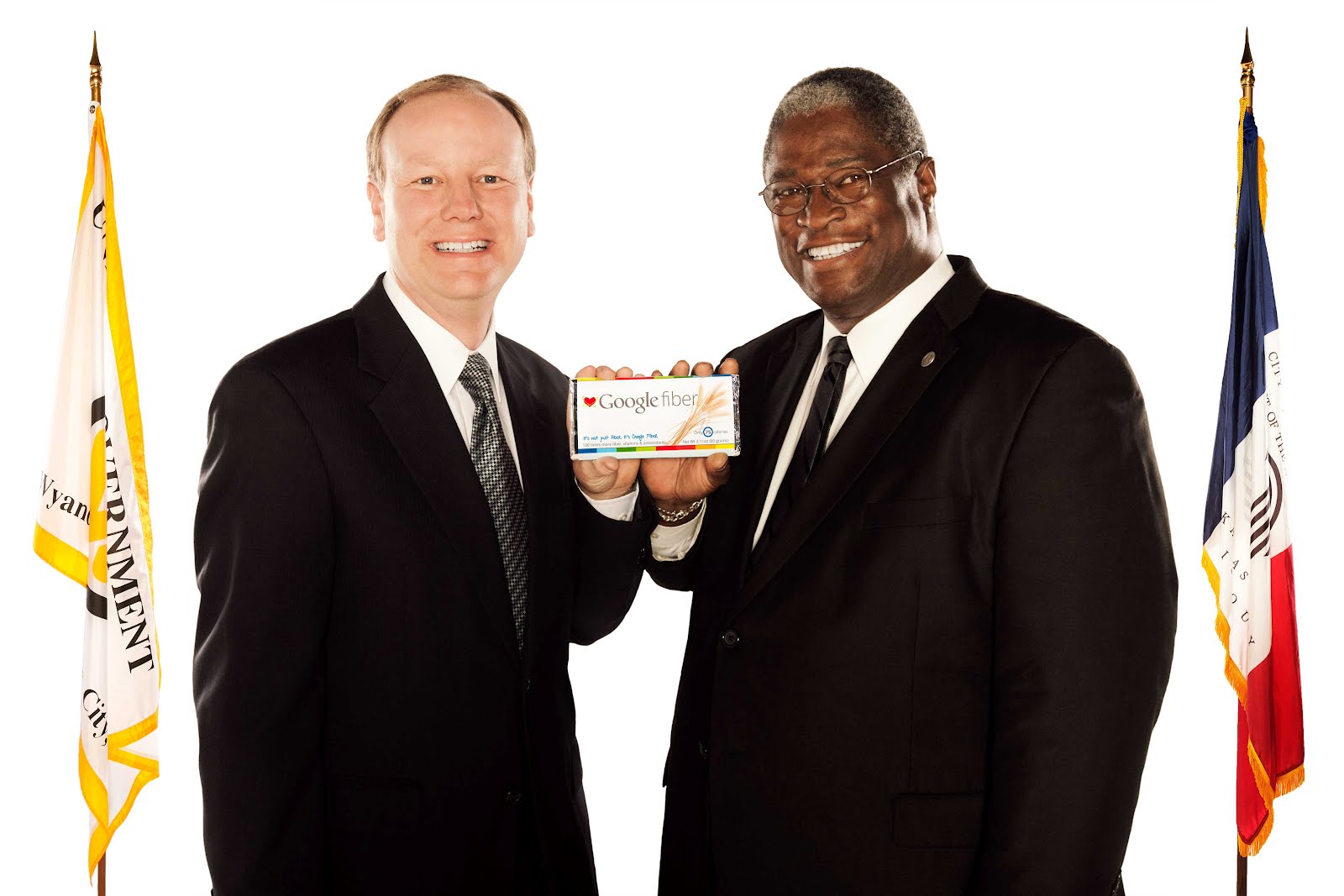
April Fools' Day : Google introduces Google Fiber Bar


Description :

Since Google announced Google Fiber, we have heard a lot of rumors that they’ve been building a fiber optic network that would deliver Internet speeds 100 times faster than what most Americans have today, and while they were humbled by these speculations, Google focused their efforts on developing a different kind of fiber, Google Fiber. 


At Google, they push the limits of technology to improve users’ lives. 


As they started thinking about fiber, they realized that there hadn’t been real innovation in the fiber world in a very long time. 


Although we push our bodies to do more and be more productive every day, we still rely on outdated sources of fiber and nutrients. 


Finally, after extensive testing, they launched Google Fiber, a nutritional bar with a smarter fiber they’ve coded as "Fiberlicious". 


In just 4 weeks, Google’s Fiber is able to take cues from the intestinal tract and the body’s metabolism to determine what nutritional elements are missing and deliver the appropriate dose to the specific organ that needs it. 


Google Fiber will first launch in Kansas City, KS and Kansas City, MO! 


Get Google Fiber here. Subscribe on our RSS feed for more. 

*by andreascy*


🦾 Stay Motivated

👩🏻‍🚀 Artemis II Crew: From Friends to Family

▶️ Just Press Play

We all have days like this

[image or embed]

— Chris Paxton (@cpaxton.bsky.social) April 17, 2026 at 1:51 PM

⭐ Leading ShipYard's Leaderboard

🚩 Milestone Unlocked!

🏅 Win-Win