7 Reasons to Consider a Home Gym

If you think of picking up better health habits and don't like crowded gyms, consider setting a home gym catered to your needs.

5 Top Picks for Christmas Holiday Like a Fairytale

If you imagine Christmas holiday this year being like a fairytale, you should consider visiting these hidden gems!

7 Fashion Accessories To Lift Up Your Style Quotient

Get heads up on the trendiest as well as classic fashion accessories that would elevate your style to another level.

Sensibo

Showing posts sorted by date for query power. Sort by relevance Show all posts

Protect Your Data Or You Will Soon Have To Deal With ‘The Rise Of The Machines’

Description :

For the well-informed, it is an undeniable fact that the future of internet privacy is bleak. We live in a time where the internet is an indispensable resource. Unfortunately, we have been conditioned by internet service providers and internet companies to believe that to access internet services, we must first give up any notion of privacy. As a result, these companies collect unlimited user information every time we use their services. Of course, on the surface, this is done for the sake of providing better services, but the reality is that they do this to protect the corporate bottom line.

Protect Your Data Or You Will Soon Have To Deal With ‘The Rise Of The Machines’

Ask yourself this; how much information is collected on a daily basis and how much of that information is used to help in improving internet services? Taking it a step further, you should question how the information is used and whether it is discarded or stored after use. More importantly, you should seek to find the reasons behind the fast-paced erosion of internet privacy. 

The answers to these questions prove that internet privacy is a fast-fading concept and with time it will be eroded to non-existence. Of course, since there is little to no support from governments as far as internet privacy is concerned, we cannot hope for a resolution in the near future. In fact, most governments are in support of the abolition of internet privacy altogether so they can have free reign in matters of surveillance. But, are we truly out of options? 

The Age of Big Data 

Big Data is one of the core reasons why there is so little internet privacy. Big Data analytics refers to the process of collecting and analyzing data then compiling it into data sets, big data, the applications of which span across numerous fields of study. For instance, the data is used by companies to analyze and predict customer shopping habits and trends and to adjust marketing and sales efforts accordingly. 

Essentially, all your online activities contribute to big data. Of course, the amount and type of data collected depend entirely on the company in question and how they collect the information. There are various ways of collecting big data, some of which are more open and others which are secret. Your daily online activities leave a trail that can be assessed to create a data set. For instance, what time do you usually log online? How many times do you visit particular websites in a day and how long do you spend on each website? How much data do you share on any particular website and which site receives the highest usage? On average, how much data do you use on a daily basis? What kind of data do you share/view the most? Nevertheless, this information is only a drop in the ocean of data that is collected on a daily basis, especially when you include GPS data, online shopping data, social media data and more. Such information when compiled on a daily basis reveals your online habits and interests, which are then exploited by companies in various ways. 

While there are various applications of big data, one of the most visible uses of big data is in machine learning or automation. Compared to before big data, there is more distinct usage of automated intelligence in many fields currently. A clear example is search engines which have grown more robust over the years thanks to big data. However, this is just a small scope of the extent to which machine learning has advanced in recent years due to big data. 

In particular, the field of predictive analytics has experienced the most significant growth. For instance, it is a feasible concept for social media and search engines to be used to diagnose diseases in the future. By correlating the information shared on social media with search engine searches, the data can be used to make a predictive analysis and determine a diagnosis. If a person persistently shares information relating to particular conditions, then proceeds to search for the same symptoms on search engines, a program can subsequently search for the corresponding symptoms on a database and formulate a possible diagnosis. Although this is a futuristic concept, there are various other applications of predictive analysis in effect at the moment, especially when it comes to the sales and marketing fields of business. Additionally, there are other futuristic concepts, such as using big data to determine an individual’s credit score. 

Although big data has its advantages and has led to the advancement of technology by at least a few decades, there are still disadvantages that cannot be overlooked. One of the greatest risks of big data is that it leaves you at the mercy of governments, corporations, and companies. With so much data at their disposal, what is to say that all the data is used in a way that is beneficial to you? Depending on how the information is used, it can be as damaging as it is beneficial. It has always been said that information is power, meaning that those who control big data have power over the masses. 

The Internet of Things (IoT) - Bridging the Online and Offline Worlds 

Aside from big data, another major detriment of internet privacy is the IoT. The IoT refers to a system of interconnected and interrelated devices that facilitate the transfer of information over networks. What sets the IoT apart from normal interconnected systems is that it does not require human-computer or human-human interaction. Instead, the IoT works to automatically bridge the online space and meatspace seamlessly. 

Of course, the IoT is one of the largest contributors of big data, with the data collected being even more comprehensive than data collected online. IoT devices rely on numerous sensors to relay information back and forth, meaning that the information collected has a direct correlation to the meatspace. For instance, a networked house could have multiple smart devices from the entertainment system to the air conditioning unit. Each of these devices collects different data and then correlates it making the data set more comprehensive, which allows for a more streamlined and sophisticated system. 

With the smart devices correlating their data, the benefits offered by the IoT are more refined, allowing you to enjoy near-perfect automation. However, since human input is required at various points in the network, we are still some years away from enjoying full automation, which in itself is a blessing in disguise. The reason why we shouldn’t aspire for full automation just yet is that there are still too many kinks in the IoT that have yet to be fixed, and even more that are yet to be discovered. Should we achieve full automation before the issues are ironed out, we would be staring down at a full machine takeover without the means to stop it. 

Of course, one of the major issues that we have to deal with is internet privacy or lack thereof. Thanks to the influence of the IoT, the erosion of internet privacy is even more apparent. Considering the amount and type of information collected thanks to IoT devices, then one can imagine the risk and consequences if such information were to fall to the wrong hands. 

Nevertheless, even with the evident risk, most smart devices lack security measures to protect the user’s data, which leaves you wide open to an attack. With companies rushing to create devices for the IoT and reap the benefits of the increasing interest in the field, they often forget to establish security measures. Perhaps this is due to the fact that there are yet to be standardized practices for the IoT, which leaves everyone free to decide how to advance. But, would device-based security measures be enough? Even though having a security system installed in every smart device would provide a layer of protection, it is still lacking. Keep in mind that the more devices you have in a network, the greater the risk of exposure to a hack, especially considering that there are different manufacturers for various devices. You should consider the IoT as a whole. Therefore, there won’t be sufficient protection until there is a centralized security system which protects every individual device in the network. 

Additionally, since the IoT is still a new field, all the data collected is still highly useful for companies, meaning that they definitely store the information instead of discarding. As the information exists somewhere, the risk is elevated, since it is always possible for the information to be sold, stolen or mismanaged, which could cause even more dire consequences. 

Another of the significant risks of the IoT lies in the fact that it bridges the gap between the online space and meatspace. Owing to this, it is now possible to commit a crime via the internet and directly affect the meatspace. Initially, internet crimes only had an indirect influence on the offline space. However, thanks to smart devices, it is now possible for an internet crime to be tangible in the offline space. For instance, it is possible to commit murder, arson, and theft directly through the internet. 

It is possible for a hacker to take control of your car while you are driving and drive you off the road or destroy your brakes and such. It is also possible for a hacker to mess with heat sensors in your devices causing them to overheat and possibly cause a fire. A hacker can also take control of your air conditioning unit and reverse the flow of air. There are hundreds of similar possibilities where hackers can wreak havoc to you, your family and your property from miles away at the mere touch of a button. That is the risk posed by the IoT and one that can only be stopped by having a robust security system in place. 

What The Future Holds 

Ever since the Snowden Leaks, there has been an increased focus on internet privacy. Although there were positive reforms soon after, it could be said that currently not only have the reforms regressed, we are even worse off than in the beginning. Without government support, internet privacy is in a constant state of erosion. Unfortunately, thanks to big data and the IoT, the erosion of internet privacy is progressing at an even faster rate with no end in sight. Therefore, it is safe to assume that there won’t be any positive changes to internet privacy in the near future. In fact, we should look forward to an even worse state of affairs. 

Since it is impractical to rely on external help from bodies such as the government and corporations, we should instead focus on what is within our grasp. While it is impossible to stop the erosion of internet privacy, it is not impossible to prevent a breach in your personal internet privacy. Of course, for that to happen, you need to have a deeper understanding of internet privacy, the threats that plague it and the measures to reinforce and protect it. 

The best way to guarantee that you have what little is left of internet privacy is to make use of privacy tools. Of course, this too requires its own deep understanding so you have to do more in-depth research of the same, particularly since there are numerous privacy tools with different functions. Just as important, you should ensure that your information is always updated because security tools and attacks directed at them are always in flux. Although a security tool may offer protection against a particular attack, it may prove ineffectual against a new type of attack. In fact, a new attack may rely on the defense of the security tools as was evidenced by the Wi-Fi KRACK attacks. 

For maximum efficiency, you should rely on multiple privacy tools simultaneously. For instance, you should couple a VPN with Tor, allowing you to maximize the benefits and eliminate the weaknesses. Even then, you should use Tor over VPN instead of VPN over Tor since the former provides the best protection so knowing how to couple multiple privacy tools is equally as important. Additionally, you should rely on anonymous search engines such as DuckDuckGo for browser security, Adblock extensions to prevent the collection of data by third parties and cryptocurrencies to guarantee your privacy and anonymity in financial transactions.


I'd love to hear what you think! 👂👇

*by andreascy*

New Able2Extract Professional 14: Sign PDFs & Convert with AI

Description :

At https://officialandreascy.blogspot.com, the editorial team likes to keep tabs on the software they review, to keep giving you the latest and the best out of the tools we showcase. It’s about helping you work digitally and more productively.

New Able2Extract Professional 14: Sign PDFs & Convert with AI

In this case, it’s all about working efficiently with PDF documents and for that, we’ve got an update on Able2Extract Professional, the PDF suite we’ve reviewed before that lets you fill and edit PDF forms, and complete a range of other PDF tasks. 

The new advanced features in this latest version, are opening users up to working better than ever with PDF files. Here’s a look at the newest major features.

Sign PDFs With Electronic And Digital Signatures

Nowadays, when your workload is completely done by computer, the hard copy tasks you normally performed physically, like signing documents, are now done digitally. The new Able2Extract Professional 14 now includes the ability to add electronic and digital signatures to PDF files with a few clicks. 

New Able2Extract Professional 14: Sign PDFs & Convert with AI

Electronic image signatures are easily inserted by typing them in, drawing them out or importing a signature image. Digital cryptographic signatures are added by signing a PDF, and then attaching a digital certificate to it. All of this is done through a convenient side panel, no other application needed.

This feature, fills the growing demand for highly secured documents. It’s a valuable addition to the file permissions, encryption, and protection passwords, Able2Extract Professional can already add to PDF documents. 

Instantly Verify Digital Signatures

To complement the ability to sign PDFs, you can now also verify digital signatures. Able2Extract Professional does this in an extremely user-friendly way, allowing you to first visually confirm the status of a digital signature, with a quick glance at a padlock icon in the tab of an opened PDF file. Secondly, you can click on the digital signature in the side panel, to view the signature’s information. This lets you know if the PDF was altered after being signed.

New Able2Extract Professional 14: Sign PDFs & Convert with AI

Needless to say, knowing that the PDF you have, hasn’t been altered is a must in this day and age of data breaches and electronic documents exchanges. If your work is based on a lot of confidential and important files, you’ll be glad to have this feature.

AI-Powered PDF to Excel: Smart and Master Templates

Known for its Custom PDF to Excel conversion, Able2Extract Professional has long since given users the ability to manually adjust rows, columns and table structure selections to produce accurate conversion results in to Excel. Believe it or not, the developers have improved upon the feature with artificial intelligence technology. 

This AI technology, lets you train custom Excel templates with a sampling of 5-10 PDF files that contain the selected table structures you want out of a PDF document. These trained Smart templates can then be used by Able2Extract, to automatically select all the similar tables in a PDF file on its own. After you load it, a click on the Convert button will convert all those same tables into a single spreadsheet. 

New Able2Extract Professional 14: Sign PDFs & Convert with AI

AI-powered Master (Batch conversion) templates are similar in that you train them on PDF samples, but the difference is that you can also harness the power of a batch conversion with them. Just train an Excel template in Batch mode and then afterwards, you can apply that Master template to the applicable PDFs you line up for a batch conversion. The result is, an automatic and customized PDF to Excel batch conversion job. 

Our Verdict

We were more than impressed with the capabilities of the software’s last version, and have to admit that this version is miles ahead of that. This tool is excellent at innovating and improving upon the PDF features it already has to offer. 

If you liked everything we covered about Able2Extract Professional before, you’ll love this latest version. Again, you can test out the above features for yourself with a 7-day free trial.

*by andreascy*

How Educational Technology is Reshaping Education: Latest Trends

Description : 

For many years now, we’ve been seeing a gradual, but important shift in the way that people are educated. Gone are the days of notepads, pens and paper notes. Today, students are creating the content on their tablets, they are sending it across intranets, and they are engaging with the class, 24/7 through social media. This is referred to as asynchronous learning.

How Educational Technology is Reshaping Education: Latest Trends

Far from being the distraction they were originally intended to be, though, digital devices are helping to re-shape the traditional dynamics of education as we know it — they are actually amplifying it.

So, what latest trends and changes can we expect to make a compelling difference to the market in the years to come?

Smart Tech

One of the most obvious innovations we have seen in recent years comes from the rather wonderful Smart technology industry. For example, one tool we might see used in academic study soon is IBM’s Watson device. Watson offers a high-end education tool that addresses and improves the way that people study. This is going to be very important for the long-term growth of the industry, as Watson is known to change the way that people collate data from masses of unmanaged data using artificial intelligence and sophisticated means of analysis.

How Educational Technology is Reshaping Education: Latest Trends

This is very useful for making sure that the next generations can use technology to find answers that they would have otherwise never received. Even in more limited education functions, new AI toys could be used to manage the growth of younger children and make them more aware of certain interactions.

From making children more aware of their actions and the way they portray themselves, to full on educational aids, smart tech will ensure that the next generation always has a helping hand waiting for them.

The IoT and IoE

A significant element of the web is going to be the Internet of Things. We’re already changing the way we all link together and operate as one today, and the IoT will ensure that this continues. For example, the IoT will enable the rapid growth of virtual classroom learning. IoT will ultimately be a defining factor in shaping the future of the industry. Device interaction will improve and before long it will be easy to take the information garnered in the classroom right to our PCs back at home. The future of learning will involve possessing the means to transmit data as freely and as accurately as possible across the whole group.

How Educational Technology is Reshaping Education: Latest Trends

Education will benefit from an added layer of depth to the IoT, in which people will be able to make the most of a learning system that brings together various aspects of their day-to-day lives. 

More recently, another somewhat synonymous to IoT concept, introduced by CISCO is the Internet of Everything, defined as "the intelligent connection of people, process, data and things." This philosophy can inform a globalized, expanded notion of internet connections beyond machines. The latter can be meaningful for developing tools such as Educational Management Systems (EMS), which refer to managing the massive data of school records and other administrative functions across the globe, perhaps in a unified way.

VR and AR

Virtual reality and Augmented Reality took a very important step in 2018, with the mainstream release of many headsets by the likes of Sony and HTC leading the way, as well as more research-driven industry applications. Indeed, another option — the Google Cardboard — is expected to deliver exciting new ways of learning. It’s going to change the way that students investigate future careers, which is vital to shaping dreams.

How Educational Technology is Reshaping Education: Latest Trends

For instance, a profession might sound amazing, but the reality could be very different. VR will re-shape how we evaluate the suitability of a student to take up such a profession. with simulations to estimate the performance of the person under a specific role. It will also help students to determine how suitable they are just by trying it out. Was it everything they thought it was going to be? 

Such possibilities are explored in pilot studies and research experiments across the world. This type of VR and AR applications, will help students to avoid making the wrong choice early in life and failing to come back from it. Many students wind up in major debt, just trying to get into a career path that, when they “make it” resembles the opposite of what they had intended in the first place.

3D Printing

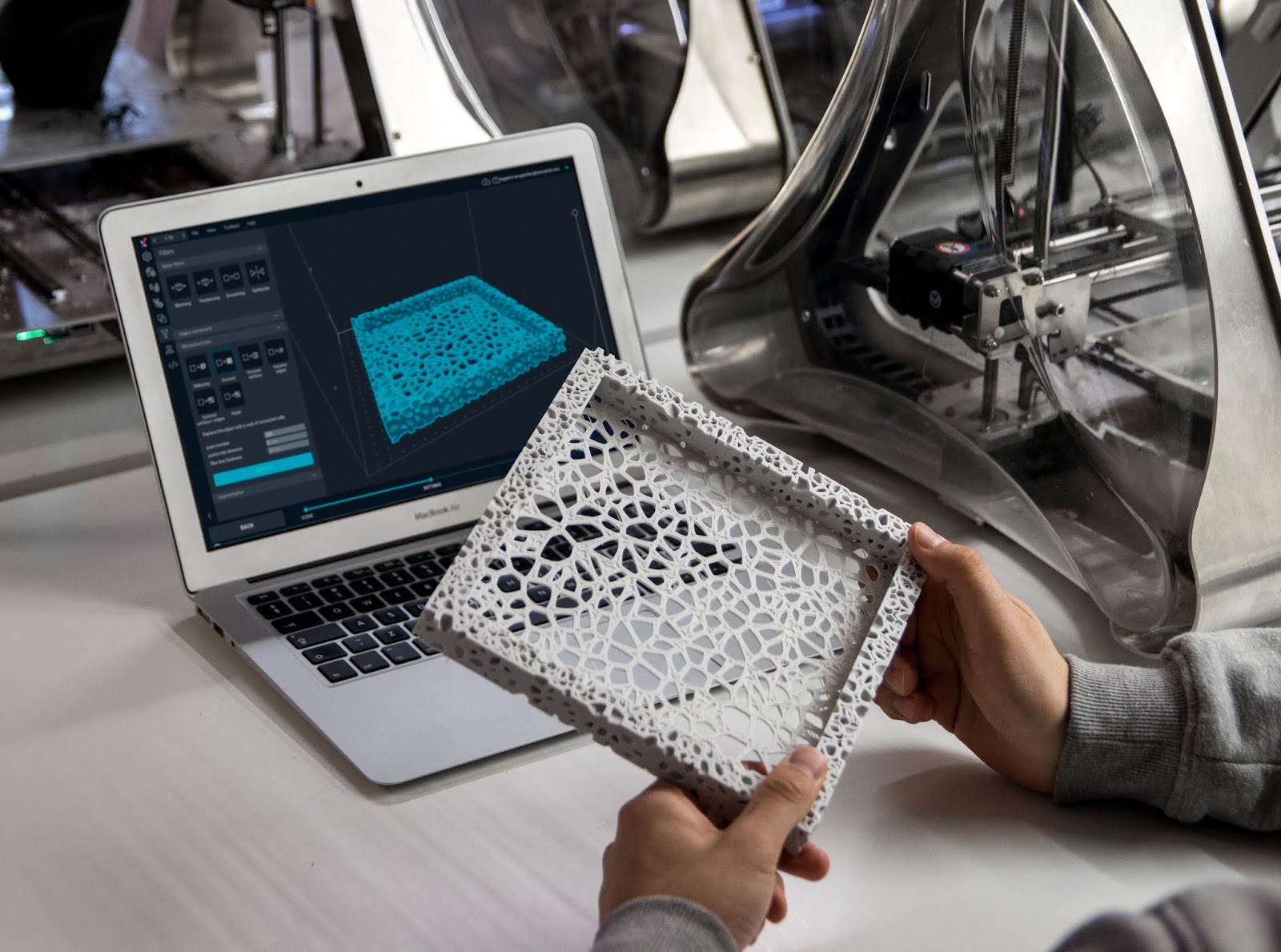
Another major element of education that is likely to change heavily in the near future is the power of 3D Printing. As one of the most powerful industries out there at the moment, it’s beginning to become a very popular way to learn for kids. Nowadays, children can get their hands on the kind of objects and instruments that previously they could only look at in books and dream of holding for real.

How Educational Technology is Reshaping Education: Latest Trends

From the crown of a king, to the layout of a medieval weapon (blunted, obviously!) children could get a much more authentic appreciation of the world that they read about on the pages of book. This is dangerous, though, as it prevents children from appreciating the true gravity of what they are reading about. The day that 3D printing stops being so prohibitively expensive, will be a good day as it should help people to finally become involved in the industry, thus empowering and educating the next generation.

In Summary...

Whilst understanding the various challenges that the Internet and similar devices present to the education industry, the trends are already here. People are becoming more appreciative of the integration of technology into various forms of education, as most believe it will quickly help to make people more comfortable with technology, as well as working and living in a multimodal and digitally mediated society.

All of the above technological outputs, have been working their way into education for some time — it’s just a matter of time before they are more systematically implemented in classrooms worldwide. Each will play their part in determining a new dawn for education, which can only be a good thing, ensuring that future generations, receive the best and most relevant learning possible.

*by andreascy*

7 Fashion Accessories To Lift Up Your Style Quotient

Description : 

Accessories will complete the look that you desire to flaunt. A dress, without matching shoes, neckpieces, and bags, looks like a painting devoid of colors. With the right fashion accessories, you can either dress up or dress down a particular outfit. 

7 Fashion Accessories To Lift Up Your Style Quotient

These trinkets will also highlight your taste and help to create a distinct style statement. In case you lack the eye to a new dress with appropriate accessories in your mind, then take the assistance of the experts. 

Watches: Keep Pace With Fashion Trends 

The advent of smartphones has eliminated the need of wearing a watch on your wrist. But how often do you see a man or woman without one? Almost never! Whether it is a casual occasion or a formal event, people love wearing expensive watches. These timepieces are no longer used to keep track of time. Instead, these act as accessories. 

7 Fashion Accessories To Lift Up Your Style Quotient

A sleek watch polishes your outfit and your personality at the same time. It shows you are capable of striking a balance between being funny and serious. If you are in a casual and relaxed mood, then ditch the boring black and brown leather straps for brightly printed and patterned straps. Some watches come with interchangeable straps. So, you can sport a new look every day. 

Scarves and Jackets for Extra OOMPH

Power suits, skirts, basic tops or jumpsuits – no matter what you are wearing, a colorful scarf can add life to the attire immediately. Monochromatic or bright scarves, will attract focus to your face, instead of the top. It will add an extra layer. They are a mark of sophistication and charm. If you are not a fan of tying something around your neck, then jackets will save you from fashion disasters. 

7 Fashion Accessories To Lift Up Your Style Quotient

For summers, you can depend on linen, cotton or silk jacket, while woolen overalls will keep you safe from the winter chills. Jackets are available in bright as well as subtle hues, to complement the dress underneath. When in doubt, throw a coat over your clothing, and you will look elegant instantly. 

Shoes for Comfort and Class

Shoes offer much more than comfort. Classy shoes are a mark of an elegant individual. People pay attention towards the clothes and accessories. But only a knowledgeable person knows that a true blue aristocrat will own shiny and well-maintained shoes. All your efforts to look like a million dollars will go down the drain if your shoes don’t go with the dress. Flats and platforms shoes offer supreme comfort. Tie-up shoes and Greek sandals look amazing with casual dresses. 

7 Fashion Accessories To Lift Up Your Style Quotient

If you want to make a style statement or look rich at a formal event, then it is imperative to ditch the flats and put on high heels. In case, someone is not comfortable walking in high heels; she can opt for smaller box or kitten heels as well. Heels offer an excellent posture to the body and make you look taller instantly. Make sure you have bright colors, blacks, browns and nude colored footwear in your shoe closet. 

Hats for Every Season

If you think that hats were a thing of the past, then you need to take a quick trip to the race course. The rich and famous like to wear hats even today. It highlights their status but also shields them from the harsh rays of the sun. The members of British royal family and aristocrats are never seen without hats on special occasions. 

7 Fashion Accessories To Lift Up Your Style Quotient

Covering the head, was a mark of sophistication in early days. Berets are famous among French women, while British ladies opt for elaborate hats. If you want an extra edge, then wearing fedora, boater, cartwheel or floppy hats will do the trick. Boater, cartwheel and floppy hats are available in different colors and patterns and look amazing with jumpsuits, rompers, shorts, skirts and other casual dresses. 

Get Some Bling on With Jewelry

There was never a shortage of trinkets in the market. Precious metals and costly rocks not only enhanced the beauty but also showcased the status of the person. Gold, silver, platinum and white gold are some popular metals, used for making trinkets. If you are looking for affordable options, then German silver and artificial metals will also do the trick. 

7 Fashion Accessories To Lift Up Your Style Quotient

There is an unending option for men and women who desire to adorn their bodies with ornaments. Multi-layered neckpieces, chunky statement necklaces, small and big earrings, beaded and charm bracelets, middle eastern headpieces, strings of pearls are some common pieces, which can help in making a smile dress look expensive. In recent fashion events, models have been seen sporting midi and layered finger rings. Cuff bracelets are also in vogue. One can incorporate these to dress up or dress down appropriate attire.

Bags! Bags! And More Bags!

Will you ever leave the house without a bag or purse? Bags are essential accessories, which bring out the beauty of any dress. Not all bags will complete all kinds of attires. A wrong pick can mar the beauty of the outfit. The market has been flooded with various kinds of bags. One can pick tote bags, shoulder bags, sling bags, bucket bags, fanny packs, transparent plastic bags, purses, and clutches. 

7 Fashion Accessories To Lift Up Your Style Quotient

Bags made of cotton and jute; with thread work are new additions to the fashion world. They are popularly seen in India and Middle Eastern nations. They suit the traditional outfits as well as solid colored dresses.

Conclusion 

If you have a plain jumpsuit, then these bags can add a dash of color and character to the outfit. Clutches made of silk or metal complement dresses, while tote bags offer a casual look if you want to step out in basic T-shirts, shorts or rompers. Smaller vanity bags will make your getup look elegant. 

*by andreascy*

Infusing Multiliteracies Into Museum Learning Practice for Inclusive Cultural Participation

Description :

One of the most poignant discussions in the museum world, has been on issues of inclusion and access. Prolific museum figures like Nina Simon presenting in the recent Museum Next Conference in London, shared the vision behind OFBYFOR ALL, a new global initiative to help civic and cultural organisations become OF, BY, and FOR their communities. However, what is it that can help take the next step in terms of inclusion and learning within and out of museum grounds? 

This article draws on a doctoral research study to investigate museum’s democratic potential, through transformative approaches to pedagogy aimed at meaningful cultural participation.

Infusing Multiliteracies Into Museum Learning Practice for Inclusive Cultural Participation

The ‘meaningful’, stands for a degree of competence in reading, interpreting and constructing meaning from the existing multiple forms of language (Stapp, 1984: 112; Mitchell, 2007: 3). ‘Participation’ involves an ability to negotiate the complex dialogic relationship that exists between the written word, the spoken word, images, objects, time and space (Mathewson-Mitchell, 2007: 3).

Consideration of issues of access in relation to the significant literacy requirements of museums, suggests that increasing focus on the explicit teaching of museum-based literacies, could be the way through which to expand museum visiting opportunities for the less 'conventional' audience.

It is actually proposed that museum-based literacies could act as the means to the development of cultural competence in museum environments. This evolution in theory and practice of, and about museums, has been notably part of radical changes in the museum world since the 1970s, mostly known as new museology.

Museums as Agents of Change

The development of a “new museology” (Mayrand, 1985: 201), is a concept used to describe the focus on the potential of museums as a positive social force. Golding (2009) suggests the museums should act as frontiers, places where learning and identity are produced and developed for all, while new ‘bridges’ are raised between non-dominant communities and their own histories (Philip, 1992 in Golding 2009).

Infusing Multiliteracies Into Museum Learning Practice for Inclusive Cultural Participation

It became profound that if museums accept their educational role, “they must also accept their social responsibility to work towards supporting a participatory democratic society” (Hein, 2005: 50). We need to “take advantage of the current context, as ‘opening new educational and social possibilities’ (Cope and Kalantzis, 2000: 18), to promote democratic education and human needs...” (Early, 2007: 67).

Changing Times, Changing Literacy 

Ever since the 1960s, the nature of literacy practice and needs is changing; Hall (1989) suggests this is thought of as a consequence of New Times. New Times is an era of internalization, characterised by the breaking down of borders between local and global contexts resulting from rapid change in communicative practices (Gee, 2000: 183; Luke and Elkins, 1998).

One common element that has changed is that literacy has become inherently plural; thus researchers have problematized the very notion of literacy as a discrete set of skills. Luke and Freebody (2000) provide one of the more recent and useful definitions of literacy: 

"Literacy is the flexible and sustainable mastery of a repertoire of practices with the texts of traditional and new communications technologies via spoken, print, and multimedia"

(Luke and Freebody, 2000: 9)

In such a perspective of literacy, the literate person is one who develops capacity to respond to emerging and communicative needs, a literate person who is a sophisticated user of texts. The individual engages with literacy practices as a decoder of text, as a maker of meanings, as a purposeful user of information and as a text analyst who employs critical thinking skills in the literate work (Luke and Freebody, 2000; Liddicoat, 2007: 20). 

Infusing Multiliteracies Into Museum Learning Practice for Inclusive Cultural Participation

Figure 1: Evolution of the concept of literacy over fifty decades

Although acknowledging contemporary, 21st century demands of ‘literacy’ and education, this definition does not incorporate the social context of literacy. Literacy is, as Gee (1996: 22) has aptly described, “a socially contested term”. To this respect, literacy is a social practice rather than merely a means to an end. 

Such a consideration draws on the paradigm of New Literacy Studies (NLS) and recognises literacy as a set of socially and culturally constituted practices enacted across and within social and institutional spaces. It acknowledges literacy as a social and historical construction that evolves dynamically (Giampapa, 2010: 4; Potvin, 2009; Garcia, Bartlett and Kleifgen, 2006). 

Literacy is seen as a social responsibility including a critical or transformative emphasis in which literacy is a tool to understanding social structure in which we live so we can transform it in meaningful ways (Gee, 1996: 58; Street, 1995). The social perspective of literacy, implies more than superficial contacts with print; it icorporates an understanding of how to manipulate words and concepts through complex daily social interactions in an accepted manner (Giampapa, 2010; Potvin, 2009; Reid, 1998; Kern, 2000) through cultural apprenticeship (Rogoff, 1990).

The ‘New’ in Literacies: Multiliteracies

Following the NLS paradigm, ‘multiliteracies’ have emerged. The term “Multiliteracies” immediately shifts us from the dominant written print text to acknowledge the complexities of practices, modes, technologies and languages with which literate people need to engage in the contemporary world.

The “New London Group” (a team of ten academics including James Gee and Allan Luke) came together in 1996 concerned about how literacy pedagogy might address the rapid change in literacy due to globalisation, technology and increasing cultural and social diversity. They employed the term ‘multiliteracies’ to address these issues (The New London Group, 1996).

Since then, The Ontario Ministry of Education has come up with a number of literacy initiatives, some of which are characterized by a critical and social view of literacy, where literacy is conceived of as "the ability to use language and images in rich and varied forms to read, write, listen, speak, view, represent, and think critically about ideas" (Expert Panel on Literacy Report, 2004: 5).

Infusing Multiliteracies Into Museum Learning Practice for Inclusive Cultural Participation

Figure 2: Multiliteracies and their design elements (Adapted from The New London Group, 2000)

Luke and Luke (2001: 92-94) echo this idea, and argue that new technologies have facilitated the emergence of new kinds of artefacts, such as digital storytelling, requiring new levels of engagement and development of higher and different mental faculties (i.e. new multiliteracies). Luke (2000) also talks about the critical multiliteracies - being able to understand, debate, and act upon the material, political, and social consequences of technological change.

An alternative view of literacy calls for a reconceptualization of literacy as reading and writing the world (Freire, 1970). This conceptualization foregrounds critical thinking in both teachers and students, and looks beyond functional literacy (reading and writing skills), to the knowledge and power relations in literacy discourses.

Agnello (2001) refers to this approach as postmodern literacy, and argues that through this approach “reading and writing become enhanced methods for exploring the democratic self and its formation through ideological exposure to knowledge and power relations formulated by educational policy texts. Through such exploration, literacy becomes a tool for self-, student, and social advocacy rather than commodity to determine whether one measures up satisfactorily on test scores” (Agnello, 2001: 24-25).

Museum Learning as a Multiliteracy Practice

Museum-based literacies or museum literacy, refers to the competence in drawing upon the museum, its space and collections using certain skills and practices. In 1984, Carol B. Stapp observed that “museum literacy” was then a newly emerging phrase that articulated the older idea of a philosophy of museum accessibility.

Museum literacy goes beyond ‘reading’ objects; which may be understood as visual literacy; it requires a deeper level of process and understanding of the multiple and interacting languages and modes of communication found in the museum. 


By broadening the view of museum literacy, it is acknowledged that the language that is involved in the museum is diverse and incorporates multimodal literacies including: linguistic, visual, audio, gestural, spatial patterns, technological and print-based (see for instance, Cope and Kalantzis, 2000: 160,203; Giroux, 1992; Hooper-Greenhill, 1999).

Infusing Multiliteracies Into Museum Learning Practice for Inclusive Cultural Participation

Figure 3: The multimodal literacies in museum-based pedagogy (Savva, 2016)

This view of museum learning redefines the goals and strategies of educators and the museum curricula. The idea of education in museums is seen as exploratory, broad, experiential, complex and multi-layered; museum strategies are now audience driven (Russo et al., 2007, Hein, 1998; Falk and Dierking, 2000).

To this discussion fits the incorporation of museum learning into the multiliteracies concept; this is facilitated by the realization that a display of material culture conveys messages about the people who created them and the times in which they were used (Pearce, 2003). 

Infusing Multiliteracies Into Museum Learning Practice for Inclusive Cultural Participation

The act of creating an exhibit is parallel to the act of producing knowledge. Exhibits are not simply displays, but systems of signs that express messages about culture. Museums and their exhibits reflect the ideology of those who create them.

In the same vein that “There is no such thing as ‘reading’ or ‘writing,’ only reading or writing something . . .” (Gee, 1999: 93), the same would hold true for creating exhibits. There is no such thing as displaying an artifact without displaying something about that artefact. Also, the interpretation of messages is similar to the deciphering of text, using the signs, symbols, objects, etc., of a museum exhibit as part of the process of creating meaning (Roberts, 1997).

Infusing Multiliteracies Into Museum Learning Practice for Inclusive Cultural Participation

Griffin (1999: 8) identifies the unique learning opportunities offered by museums as: opportunities to closely examine objects or specimens; opportunities for comparison that allow trends and patterns to be deciphered; natural learning processes that incorporate the sharing and communication of ideas and the raising of questions; and opportunities to develop perceptual skills that teach how to gather information from objects and experiences. 

Because museum exhibits make meaning through multiple media, multiple modes, and multiple symbol systems, the literacy practice of museum visiting is a multiliteracy. 

An interesting project exploring the latter, is the ‘Museum Literacy Project’ in 2008-2010, involving nine different museums, administrations and training institutions based in five European countries, supported by the EU programme Lifelong Learning - Grundtvig Learning Partnerships, 2008. The project focus was on museums and audiences with low schooling level, and how museum literacy can be reached and maximize the museum experience for these audience.

Dimensions of a Pedagogy of Multiliteracies for Museum Learning - The Research Framework

Taking into consideration the unique characteristics of the museum environment, I undertook an empirically-based doctoral study involving the design, enactment and evaluation of the Living Museum Partnership (LMP), a museum-school partnership that unfolded in 13 weeks for the construction of a student-generated virtual museum to support environmental education curriculum (Savva, 2016). 

Specific focus was on developing virtual learning environments and applying augmented reality to enhance culturally and linguistically diverse students' repertoires of literacy practices. This design-based research, draws from the field of New Literacy Studies, the proposed Museum Multiliteracies Practice (MMP) framework derived from the multiliteracies pedagogy of the New London Group, the Learning by Design Model adapted from Cope and Kalantzis and Schwartz’s museum based pedagogy.

Infusing Multiliteracies Into Museum Learning Practice for Inclusive Cultural Participation

Figure 4: The pedagogies interacting in the Museum Multiliteracies Practice framework (Savva, 2016)

It is proposed that museum educators and learning professionals undertake an approach for teaching and learning in the museum setting which incorporates multiliteracies pedagogy. Identification of museum literacies requires thorough examination into the interaction of modes that are evident, the incorporation of multiliteracies implicated, the various sign systems that are employed, and the unique nature of the museum learning environment (Mathewson-Mitchell, 2007: 7-8).

The focus should be not only on literacies as communication (meaning for others, as supports for social interaction). My doctoral research for instance also emphasized on literacies as a form of representation (or meanings for ourselves, as supports for thinking).

Cope and Kalatzis (1996, refined 2000, 2009) elaborate on the potentials of a ‘Pedagogy of Multiliteracies’ in fulfilling these aspirations. Two important ideas brought in a multiliteracies pedagogy are Learning by Design and Multimodality.

Learning by Design, is building into curriculum the idea that not every learner will bring the same lifeworld experiences and interests to learning, as well as acknowledging that every learner is not on the same page at the same time; pedagogies of learning are re-configured to construct learning as “a dialogue of difference” (Cope and Kalantzis, 2005: 31). The idea of Multimodality discusses learners’ movement between written, oral, visual, audio, tactile, gestural and spatial modes of meaning-making (Cope and Kalantzis 2005, 2009). 

On this basis, the New London Group (1996) has proposed a multiliteracies pedagogy consisting of situated practice, overt instruction, critical framing, and transformed practice.

 Situated practice includes learners’ prior and present experiences in a community of learners (composed of experts and novices). 

 Overt instruction involves the teacher’s or expert’s interventions to scaffold (Bruner, 1983) or support learning and increase the learner’s consciousness about learning. Scaffolding is a metaphorical concept that refers to the visible or audible assistance that a more expert member of a culture can give to an apprentice (Bruner, 1983, 1986). You might also note Vygotsky’s Zone of Proximal Development (ZPD), that relates to Bruner’s notion of the scaffold here. 

 Critical framing refers to learners interpreting the historical, cultural, political and ideological contexts of learning.

 Transformed practice includes implementing new understandings through reflective practice in other contexts.

Infusing Multiliteracies Into Museum Learning Practice for Inclusive Cultural Participation

Figure 5: The Multiliteracies Model and Learning by Design (Adapted from Kalantzis and Cope, 2000)

Also identified within the Learning by Design Model are four knowledge processes (See Figure 5 above). The knowledge processes identified are:

(a) Experiencing the known and the new

(b) Conceptualising by naming concepts and theorising 

(c) Analysing functions and interests 

(d) Applying appropriately and creatively.

Findings and Implications for Museum Learning Practice

Stapp (1984) had argued that schools do not address the knowledge, skills and attitudes for museum literacy. Recent observations of the characteristic use of museums by school-based teachers suggest that a relatively passive, idealist approach to museum experiences, as identified by Stapp, has continued, with teachers lacking confidence and competence in the museum setting (Mathewson-Mitchell, 2006). 

Based on the findings of my doctoral research, it is suggested that addressing museum-based multiliteracies leads to effective museum-school partnerships and meaningful museum learning practice. Research data suggested that students’ repertoires of literacy were enhanced as they engaged in the learning process as active designers and multimodal learners (Savva, 2016). It was found that students gained opportunities to:

Infusing Multiliteracies Into Museum Learning Practice for Inclusive Cultural Participation

Figure 6: Findings of Museum Multiliteracies Practice research (Savva, 2016)

It is proposed that any museum education programme or museum-school partnership or collaboration pays attention to the following key principles:

1. Teaching children, especially digital natives of our time, to be literate in any setting is not just a set of skills that can be transferred. Rather, education needs to enable them to participate in social situations using the required literacy practices.

2. Museum visiting is seen as multiliteracy practice; as such it requires specific museum-based literacies that are rarely identified or explicitly taught by museums or schools.

Conclusion

Ultimately, this brief review and presentation of the proposed empirically based, research framework for museum learning practice, forms a pathway to follow for inclusive cultural participation at any level and age. The London New Group’s (1996) ideas further developed by Cope and Kalatzis (2000; 2005; 2006) for a Pedagogy of Multiliteracies, could inform the development of the specific literacy requirements of museums, in a way that could lead to full museum literacy and a transformative cultural engagement and participation for diverse audiences.

All Systems Go: Launching a Small Business (and the Tools You'll Need)

Description :


Starting a business requires an ample selection of tools to make operations manageable. Without them, you'd spend more time with its administration than selling and customer interaction.

Where's the fun in that? Almost 1 million businesses are launched each year with most being small operations. This is an interesting trend because it shows the viable nature of starting a business where before launching was heavily determined by access to finances and resources.

All Systems Go: Launching a Small Business (and the Tools You'll Need)

Perhaps the tools make the difference? I think so. I haven't launched a brick & mortar operation but I have started several successful, online businesses. Many tools I use are same (or similar) to those found in many, other small businesses. I can reaffirm this based on my networking and business with owners.

What common ground did I find with business tools?

1. Payment Processing

All businesses need a form of payment gateway services to complete transactions. Brick and mortar stores will likely use Point-of-Sale systems whereas online businesses rely on shopping cart software.

2. Accounting

The first year in business comes as a shock when it's time to pay taxes. Business taxes depend on its organization, profits, and expenses. Average business tax rates are usually 19.8%.

Accounting software is a must to keep income and expenses in order. Both TurboTax and Quickbooks make great options for small business owners.

3. Legal or business document(s)

All businesses should have a business plan to keep efforts aligned and to improve their chances to secure funding through loans and investments. Other important documents may include a bill of lading, trademarks, seller's permits, and more.

Legal and business documents are costly if they're created by professionals. Like taxes, a small business owner may use tools to create these items in-house. 

Tools include DocuSign and Formswift.

4. Computer and mobile hardware

What's a business to do if team members don't have access to computers, mobile devices, and the Web? These two sets of tools, alone, present many opportunities -- including:

 Access to website building tools
 Mobile CRM and networking tools
 Social media marketing and always-on monitoring
 Warehouse management and logistics
 Payroll and time management software

These tools become vital for its launch as Web efforts will generally lead to high engagement, low-cost marketing campaigns to build awareness and sales.

Also, businesses may choose to bring advertising and marketing creative design in-house by making flyers, posters, brochures, and business cards for a fraction of the costs if done by a designer. 

Tools all small businesses will want to explore include Salesforce, Hootsuite, Wix, and ADP.

5. Business Intelligence

BI tools give small business owners insights into the business operations and organization. Data is uploaded to these tools to compile information and records to produce actionable reports.

Microsoft Power BI offers a free version of their tool many small business owners may want to explore if they feel it provides a benefit.

6. Helpdesk

Gathering customer (and employee) feedback is tedious if these items are stored and organized through traditional filing systems.

Helpdesk software sits on your workplace hardware. Or, it's cloud-based. These tools create a gateway for feedback and handling issues. Other benefits include:

 A central hub for FAQ's
 User roles and hierarchy for management
 Community forums to crowdsource help

There's a Tool for Everything

No matter the task or problem... there's a tool to provide a solution. Yes, each tool you introduce will produce a learning curve and time investment. But, they will greatly reduce the tedious tasks.

This frees more of your time to work on the enjoyable activities like interacting with customers, exploring new ventures, and nurturing team cohesion.

I've found most businesses all use one or all types of these tools. Though, ask your fellow entrepreneurs for extra pointers and suggestions.

*by andreascy*

How to Fill and Edit PDF Forms with Able2Extract Pro 12 [Sneak Preview]

Description :

A few years ago, THE OFFICIAL ANDREASCY editorial team featured the Able2Extract PDF Converter and presented the multiple benefits of owning a similar software program. At the time, it was the first cross-platform PDF conversion software compatible with Windows, Linux and MacOS. Since then (we tested and reviewed the version 8), Able2Extract Professional has grown into a full-blown PDF solution that not only converts PDF to other file types, but also creates, annotates and edits PDFs on the spot. 

How to Fill and Edit PDF Forms with Able2Extract Pro 12 [Sneak Preview]

PDF annotations and advanced editing files without conversion seem to be the most interesting recent additions and productivity boosters when it comes to working with PDFs. Using PDF annotations, for example, you can easily highlight your PDF content or add custom watermarks to your files. And, of course, direct editing of PDF content is the holy grail of efficient PDF file management.

Few days ago, we have learned that the developer is about to release the newest, updated version of the software with lots of new features and enhancements. These include adding customized bates numbers to PDFs, even faster conversion of multiple PDFs at once, and, most notably, PDF forms filling and editing. 

Interactive PDF forms allow us to minimize the usage of paper and save time on scanning various paper forms that we need to submit elsewhere. That is exactly why we wanted to be the first ones to actually test and demonstrate how you can complete and modify PDF forms with Able2Extract Professional 12 that is about to be released on December 6th 2017. 

So, without further ado, here is the detailed tutorial on filling and editing PDF forms.

How to Fill Out PDF Forms

To start completing a PDF form with Able2Extract, just open it in the software using the Open icon on the command toolbar, or hit Ctrl+O on your keyboard.


As soon as you have your interactive PDF form opened in Able2Extract, you are ready to interact with it. Click on the field and start entering your information. Input text into text fields, select multiple items on list boxes, specify your options in combo-boxes and checkboxes, and click on push-buttons.

How to Fill and Edit PDF Forms with Able2Extract Pro 12 [Sneak Preview]

If you make a mistake while you are completing the form, you can go back to any given field and make desired edits. 

Once you’ve completed the form, save it to your hard drive or submit. To save a form, click on the Save icon you can also find on the toolbar (or, if you prefer to use the keyboard, then CTRL+S will do the trick). Next time you open the same PDF form, it will contain the information that you entered in Able2Extract. Of course, should you prefer to save one blank copy on your hard drive, save the completed form using the Save As option on the File menu. 

How to Fill and Edit PDF Forms with Able2Extract Pro 12 [Sneak Preview]

How to Edit PDF Forms 

The latest version of Able2Extract comes with an integrated PDF form editor. Thanks to this advanced capability, you can not only fill out PDF forms but also easily modify them. For example, insert an additional text field or add a new combobox. Or, maybe just add a new item or delete the existing one from the combobox already present in the PDF form. 

It’s really easy, but here is the quick how to guide to editing PDF forms. 

Open the PDF form in Able2Extract as already described. Then click on the Edit icon also easily recognized on the main toolbar to switch to the PDF editing more. 

On the right side, you will see the Edit PDF side panel. Further to the right, you will see two small tabs. You will need to click on the PDF form tab that is just below the tab you are currently in (see the screenshot below):

How to Fill and Edit PDF Forms with Able2Extract Pro 12 [Sneak Preview]

Having done that, you will see the Edit PDF form side-panel with two main sections: Form Fields and Properties.

How to Fill and Edit PDF Forms with Able2Extract Pro 12 [Sneak Preview]

As you can see in the screen capture above, you can add six different form fields (from the top left row to the bottom right row): text box, combobox, list box, checkbox, radio button, action button. And you can also delete any form field (just select it by clicking on it). 

To add a form field, click on it and drag onto the page. 

Note that for each form field that you add, you can define properties like name, font, font size, background or border color, line width and border style. You can also specify that a certain field be Read-only or Required by checking the appropriate box in the Properties menu. 

Clicking the More button, you will have the option to define additional properties for the specified PDF field. Let’s take, for example, the text field. You can customize the default text, specify that the field be multiline, turn off the spell check for the entered text and more, as you can see on the image below.

How to Fill and Edit PDF Forms with Able2Extract Pro 12 [Sneak Preview]

Obviously, there are multiple options for customizing and editing your forms. You can create complex PDF forms with Able2Extract. 

Having created your PDF form, save it. Optionally, you can go back to the convert mode by clicking on the Convert icon found on the toolbar and complete the form you have just made. Then proceed to saving. 

Conclusion

Our verdict is the Able2Extract Professional’s form filler and editor work really well. Of course, most people will probably use it to complete PDF forms and submit it to servers. But the real power lies in its PDF form editing functionality. Users who often prepare and work with PDF forms will probably best recognize its potential and appreciate it. 

As noted at the beginning of this review and tutorial, Able2Extract Professional 12, with form filling and editing will be released on December 6th, 2017. So, if you want to try it for yourself, it will from that date be available for download here. Trying it is free for 7 days -- just about enough to play with and test all (or most) of its features. 

*by andreascy*

🦾 Stay Motivated

👩🏻‍🚀 Artemis II Crew: From Friends to Family

▶️ Just Press Play

We all have days like this

[image or embed]

— Chris Paxton (@cpaxton.bsky.social) April 17, 2026 at 1:51 PM

⭐ Leading ShipYard's Leaderboard

🚩 Milestone Unlocked!

🏅 Win-Win