If you've ever dealt with construction companies - or building management in general, you know there are a myriad of things always going on at the site. In some cases, the details can be quite important, like the ambient temperature if you are pouring and curing cement.
And, since many projects to go one 24-hours a day, it is helpful to a site manager to be able to stay connected to the site without having to live at the site.
Through the use of M2M - also known as Machine-to-Machine - entities like construction companies can stay connected more effortlessly to stay attuned to what's going on at the site. In this video, some examples of how that would work are shown.
Anyone old enough to know what the acronym Y2K means, knows about all the hype that floated around that you'd be able to browse the web on anything - you refrigerator, your microwave, your phone - no, wait, that last one came true...Regardless, while no one every promised that you'd be able to browse the web on a cow, it looks like, at the very least, the phrase "smart farm" may join the lexicon of the tech savvy - perhaps even a "smart cow". For those that don't know, the acronym M2M is short for Machine-to-Machine - which is simply a polite way of describing what happens when machines communicate with machines over the Internet, without ever bothering a human in the process.
The examples, in general, are numerous, from remote weather stations, to smart parking meters that make it easier to pay. But, in this example, we are showing how a farmer can use M2M to make their job easier.
While it won't (yet) allow for "remote milking" - it does allow the farmer to stay abreast of what is going on back at the farm, through a cell phone or any other web-enabled device, so that any "situations" (like say the temperature in the barn gets too cold) can be handled quickly & keep the animals safe.
Everyone knows that Android is wildly popular in the mobile phone market. In the course of just a few short years, it went from literally zero (it didn't exist on the market before October, 2008) to being king of the (smart phone) hill in about 3 years. But, for all of the advantages & benefits that Android has as an Operating System, it certainly is not perfect, especially for use in Automotive Platforms. That's why Wind River, an Intel Company, is hard at work to make some very noticeable improvements.
For example, while Android is the clear leader in smart phones, many people still use Apple-based iPhones and iPods. So, Wind River demonstrates the ability to plug a iOS-based device into a Android-based reference design & play the media, such as music, stored on the iOS device. Also, while Android has a relatively decent boot time (typically under a minute), it may still feel long if it is in the central console in your car. So, tweaking the system, Wind River was able to demonstrate a 7-second boot time - which is about the amount of time it would take you to turn on your car & fasten your seat belt. Lastly, Wind River also shows how they can put Android-based applications into windowed-environment like you would have on your PC so that you can quickly move from one application to another.
For more information about Android Offerings from Wind River, please see :
The "Smart Home" is not a new concept. For years, the likes of Popular Mechanics & other similar media outlets would, ever so often, highlight the latest advancement to make your home smarter. Some of it was interesting, if somewhat proprietary, and others were just too darn expensive or complex for the bulk of normal people to really consider.
Recently, Intel worked with Kontron to develop an incredibly small Digital Nexus (details here : http://j.mp/SmallestComputer) that can serve a multitude of functions, all while using very standard interfaces, like 3G, Wi-Fi, and ZigBee - and it you can see it works with a multitude of different M2M (Machine-to-Machine) devices in the home.
In this example, the Andre Duignan, a software engineer from Intel, shows how one could control the front door from a standard web browser so that say a neighbor could put a package inside your house without needing to give them a key in advance. Similar functions such as remotely controlling the thermostat if you are going to be working late or even just watching your pets through a web-cam, could be imagined with this system. For more information on what Intel is doing in the M2M space, please see : http://intel.ly/IntelM2M
But what do you think would be cool to do with a fully Connected & Intelligent Home, enabled by M2M devices? Let us know in the comments below!
We've finally managed to get some time with Fujitsu's incoming quad-core handset and it's pretty close to completion. The quad-core phone's approaching its very final model, with just a bit of finishing and tightening of what we're seeing here at Mobile World Conference 2012. It's still water-friendly, wielding a Tegra 3 chip and brandishing a 13.1-megapixel camera.
The hardware is very light -- almost uneasily so. The 4.6-inch display that dominates the phone is bright and crisp and Fujitsu has finally cemented more of the specifications; we've been told it's a full HD (1080p) display, although the spokesperson was unable to confirm the screen technology, we suspect it's a high resolution LCD display. Fujitsu's NX UI is a very lightly skinned version of Android Ice Cream Sandwich, with some addition features courtesy of the "human-centric engine."
In a bid to differentiate itself from legions of other smartphone manufacturers, it adds Fujitsu's own type of voice canceling processing, alongside dual mics, while a "slow voice" mode adds spacing in the gaps between speech. Unfortunately, we weren't able to try this functionality out -- the phone wasn't connected to networks here in Barcelona. Another feature that looks to be aimed squarely at the hearts of the older smartphone shopper is frequency adaptation.
This adjusts the output of the speaker so that it's easier to hear when audible hearing frequencies start to thin out. There's also some Sense-like functionality also included here; the phone should turn off its screen when it realizes it's not in your hand. The fingerprint sensor found on the device has been given some extra skills too, and can be used to "lock down" corporate apps and other compatible stock apps.
Fujitsu's own Milbeaut image processor adds some (post-processing) extras to the 13.1-megapixel camera, including fish-eye lens, infinity burst mode and even glare removal when the camera senses a whiteboard (which should eliminate those issues with your corporate smartphone-based espionage). The camera UI generally retains that ICS stock sensibility, meaning that it's simple and uncluttered.
There's still some things that Fujitsu is attempting to ready for its new flagship, including a possible Fujitsu-powered cloud storage provision and a fast-charging dock, a real possibility given the contacts for charging on the waterproof device. It's still no completely finalized on the software end, we found the keyboard was particularly sticky and caused a lot of problems when we attempted to type anything out.
The phone is still being pitched to phone carriers across China, Europe and the US, and hardware changes could occur depending on carrier interest. At the moment, the demo model included an 8GB microSD card, but we were told that details like this could certainly change before it arrives this summer in Japan. The phone's being readied for a Q4 release in its other target markets - hopefully with a name in tow.
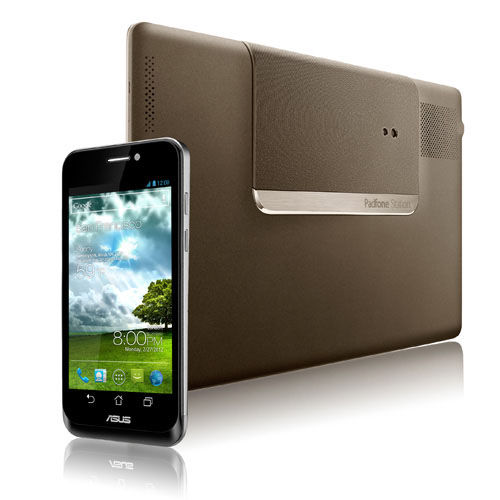
Howdy guys!ASUS lifted the veil over its long-awaited redesigned 9.2mm thin Padfone at the Mobile World Conference 2012.
The ASUS PadFone is an incredible 4.3" smartphone featuring a Super AMOLED qHD display, the latest Qualcomm Snapdragon S4 1.5Ghz dual core processor and an ultra-sharp 8 megapixel digital camera, all wrapped in an exquisite design optimized for AndroidTM 4.0.
When placed inside the optional PadFone Station, it transforms into a 10.1" tablet with five times the battery life.
The PadFone offers supreme versatility via Dynamic Display technology, which allows seamless transition between PadFone and PadFone Station screens.
In addition, the PadFone Station offers an optional keyboard dock that essentially turns the PadFone into a full notebookPC.
The PadFone also comes with the optional PadFone Stylus Headset, which is a Bluetooth stylus pen that turns into a headset for easy call pick-up.
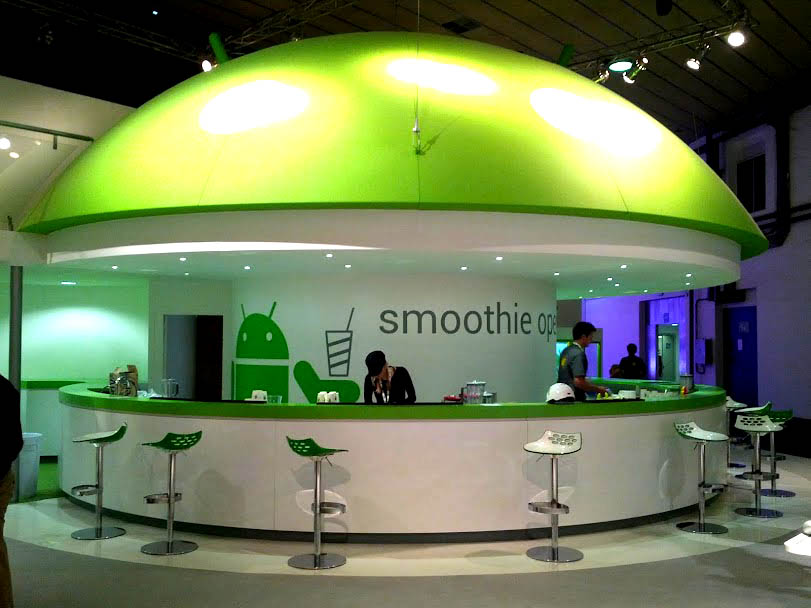
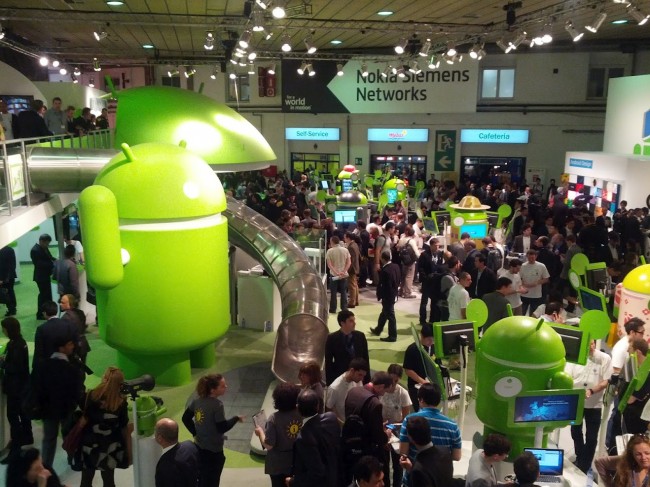
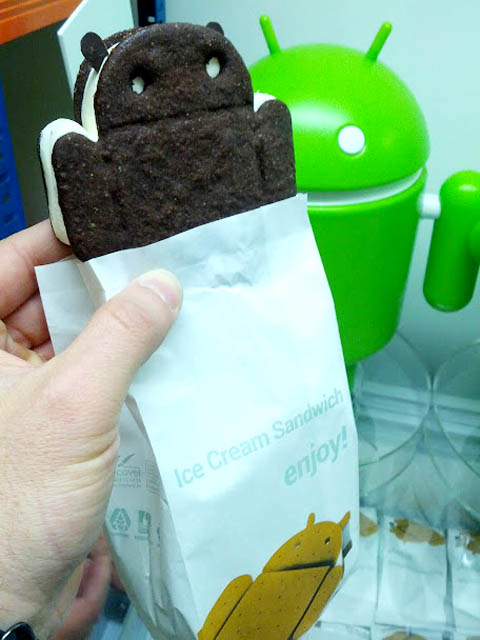
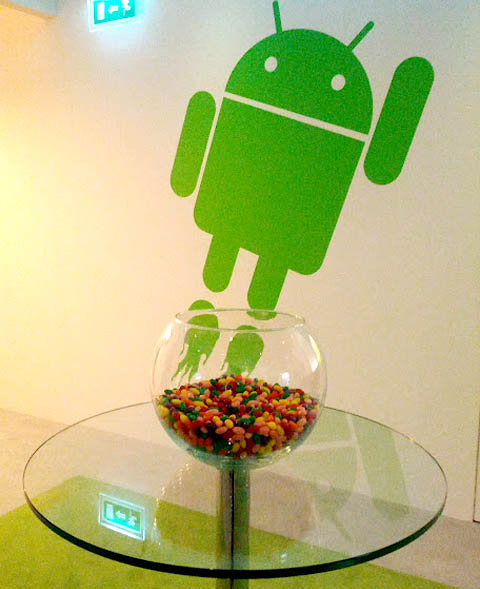
Although Android 4.0 Ice Cream Sandwich hasn’t even been deployed on all compatiblehandsets yet, the Android 5.0 Jellybean rumors and speculations seemed to immediately start churning out of the rumour mill. It seems that Google itself is now taking part, as The Verge reports that Google has stuffed a giant bowl of Jellybeans in the middle of their massive Android booth at Mobile World Conference 2012.
I highly doubt this is coincidence or some tongue-in-cheek statement. It seems that Google is giving us a little wink, foreshadowing the next Android OS iteration.
The new version of Android, Jelly Bean will be arriving in June 2012. If this is accurate then Google is planning to give a tough competition to Microsoft by releasing the operating system at the same time as the Windows Phone 8 platform.
There are not much details about the Android 5.0 but this will be the major release and will add more useful features to the tablets. The current version, ICS was launched at the end of the last year but only few handsets have the Android 4.0. The manufacturers are typing too hard to throw the ICS to their devices.
Already we know that the Jelly Bean update will focus on the computers and netbooks from the smartphones and tablets. Also it is rumored to have the dual boot facility that can make it compete with the Windows Phone 8 operating system.
This has been displayed at the MWC 2012 happening at Barcelona, Spain.
We already know that Microsoft would be releasing Windows 8 Consumer Preview on February 29 at the Mobile World Congress (MWC) in Barcelona. Various sources on the web are reporting that Microsoft has compiled the public Windows 8 Consumer Preview Build, 8250. They are saying that this will be the final build that will be released next week.
Tom Warren at the Verge already reports that the final build of Windows 8 (8250) is expected to get signed off on this coming Friday. More significant is the news of a download time: Microsoft will unveil its Windows 8 CP work during a special event at MWC in Barcelona next Wednesday. We are told that the company will release the preview to the public at the beginning of the event, which kicks off at 3PM CET (9AM ET). Build 8250 includes a number of preinstalled games and apps, as well as the new Windows 8 logo.
A reader of THE OFFICIAL ANDREASCY sent us a tip that the Bing Windows 8 start page is up again. Time to start your engines...
Once you are ready to install the Windows 8 Consumer Preview, you may need to get new hardware to install it on. Now Microsoft have said that Windows 8 will work on any hardware that can run Windows 7, so you should be able to install the Windows 8 Consumer Preview on your current PC.
Even if you're not in the software industry, your sector is also likely seeing technological disruption -- tell us what you want to read about next. You’ll be the first to hear about it!
How to Dress for Success Wondering what is the appropriate business outfit for success? Here are some tips on how to dress and look professional. Weekly Promotion






.jpg "Windows 8 Consumer Preview About Screen")
.jpg "Windows 8 Consumer Preview Media Player")