7 Reasons to Consider a Home Gym

If you think of picking up better health habits and don't like crowded gyms, consider setting a home gym catered to your needs.

5 Top Picks for Christmas Holiday Like a Fairytale

If you imagine Christmas holiday this year being like a fairytale, you should consider visiting these hidden gems!

7 Fashion Accessories To Lift Up Your Style Quotient

Get heads up on the trendiest as well as classic fashion accessories that would elevate your style to another level.

learndirect flexible online learning

Showing posts with label Machine Learning. Show all posts

Protect Your Data Or You Will Soon Have To Deal With ‘The Rise Of The Machines’

Description :

For the well-informed, it is an undeniable fact that the future of internet privacy is bleak. We live in a time where the internet is an indispensable resource. Unfortunately, we have been conditioned by internet service providers and internet companies to believe that to access internet services, we must first give up any notion of privacy. As a result, these companies collect unlimited user information every time we use their services. Of course, on the surface, this is done for the sake of providing better services, but the reality is that they do this to protect the corporate bottom line.

Protect Your Data Or You Will Soon Have To Deal With ‘The Rise Of The Machines’

Ask yourself this; how much information is collected on a daily basis and how much of that information is used to help in improving internet services? Taking it a step further, you should question how the information is used and whether it is discarded or stored after use. More importantly, you should seek to find the reasons behind the fast-paced erosion of internet privacy. 

The answers to these questions prove that internet privacy is a fast-fading concept and with time it will be eroded to non-existence. Of course, since there is little to no support from governments as far as internet privacy is concerned, we cannot hope for a resolution in the near future. In fact, most governments are in support of the abolition of internet privacy altogether so they can have free reign in matters of surveillance. But, are we truly out of options? 

The Age of Big Data 

Big Data is one of the core reasons why there is so little internet privacy. Big Data analytics refers to the process of collecting and analyzing data then compiling it into data sets, big data, the applications of which span across numerous fields of study. For instance, the data is used by companies to analyze and predict customer shopping habits and trends and to adjust marketing and sales efforts accordingly. 

Essentially, all your online activities contribute to big data. Of course, the amount and type of data collected depend entirely on the company in question and how they collect the information. There are various ways of collecting big data, some of which are more open and others which are secret. Your daily online activities leave a trail that can be assessed to create a data set. For instance, what time do you usually log online? How many times do you visit particular websites in a day and how long do you spend on each website? How much data do you share on any particular website and which site receives the highest usage? On average, how much data do you use on a daily basis? What kind of data do you share/view the most? Nevertheless, this information is only a drop in the ocean of data that is collected on a daily basis, especially when you include GPS data, online shopping data, social media data and more. Such information when compiled on a daily basis reveals your online habits and interests, which are then exploited by companies in various ways. 

While there are various applications of big data, one of the most visible uses of big data is in machine learning or automation. Compared to before big data, there is more distinct usage of automated intelligence in many fields currently. A clear example is search engines which have grown more robust over the years thanks to big data. However, this is just a small scope of the extent to which machine learning has advanced in recent years due to big data. 

In particular, the field of predictive analytics has experienced the most significant growth. For instance, it is a feasible concept for social media and search engines to be used to diagnose diseases in the future. By correlating the information shared on social media with search engine searches, the data can be used to make a predictive analysis and determine a diagnosis. If a person persistently shares information relating to particular conditions, then proceeds to search for the same symptoms on search engines, a program can subsequently search for the corresponding symptoms on a database and formulate a possible diagnosis. Although this is a futuristic concept, there are various other applications of predictive analysis in effect at the moment, especially when it comes to the sales and marketing fields of business. Additionally, there are other futuristic concepts, such as using big data to determine an individual’s credit score. 

Although big data has its advantages and has led to the advancement of technology by at least a few decades, there are still disadvantages that cannot be overlooked. One of the greatest risks of big data is that it leaves you at the mercy of governments, corporations, and companies. With so much data at their disposal, what is to say that all the data is used in a way that is beneficial to you? Depending on how the information is used, it can be as damaging as it is beneficial. It has always been said that information is power, meaning that those who control big data have power over the masses. 

The Internet of Things (IoT) - Bridging the Online and Offline Worlds 

Aside from big data, another major detriment of internet privacy is the IoT. The IoT refers to a system of interconnected and interrelated devices that facilitate the transfer of information over networks. What sets the IoT apart from normal interconnected systems is that it does not require human-computer or human-human interaction. Instead, the IoT works to automatically bridge the online space and meatspace seamlessly. 

Of course, the IoT is one of the largest contributors of big data, with the data collected being even more comprehensive than data collected online. IoT devices rely on numerous sensors to relay information back and forth, meaning that the information collected has a direct correlation to the meatspace. For instance, a networked house could have multiple smart devices from the entertainment system to the air conditioning unit. Each of these devices collects different data and then correlates it making the data set more comprehensive, which allows for a more streamlined and sophisticated system. 

With the smart devices correlating their data, the benefits offered by the IoT are more refined, allowing you to enjoy near-perfect automation. However, since human input is required at various points in the network, we are still some years away from enjoying full automation, which in itself is a blessing in disguise. The reason why we shouldn’t aspire for full automation just yet is that there are still too many kinks in the IoT that have yet to be fixed, and even more that are yet to be discovered. Should we achieve full automation before the issues are ironed out, we would be staring down at a full machine takeover without the means to stop it. 

Of course, one of the major issues that we have to deal with is internet privacy or lack thereof. Thanks to the influence of the IoT, the erosion of internet privacy is even more apparent. Considering the amount and type of information collected thanks to IoT devices, then one can imagine the risk and consequences if such information were to fall to the wrong hands. 

Nevertheless, even with the evident risk, most smart devices lack security measures to protect the user’s data, which leaves you wide open to an attack. With companies rushing to create devices for the IoT and reap the benefits of the increasing interest in the field, they often forget to establish security measures. Perhaps this is due to the fact that there are yet to be standardized practices for the IoT, which leaves everyone free to decide how to advance. But, would device-based security measures be enough? Even though having a security system installed in every smart device would provide a layer of protection, it is still lacking. Keep in mind that the more devices you have in a network, the greater the risk of exposure to a hack, especially considering that there are different manufacturers for various devices. You should consider the IoT as a whole. Therefore, there won’t be sufficient protection until there is a centralized security system which protects every individual device in the network. 

Additionally, since the IoT is still a new field, all the data collected is still highly useful for companies, meaning that they definitely store the information instead of discarding. As the information exists somewhere, the risk is elevated, since it is always possible for the information to be sold, stolen or mismanaged, which could cause even more dire consequences. 

Another of the significant risks of the IoT lies in the fact that it bridges the gap between the online space and meatspace. Owing to this, it is now possible to commit a crime via the internet and directly affect the meatspace. Initially, internet crimes only had an indirect influence on the offline space. However, thanks to smart devices, it is now possible for an internet crime to be tangible in the offline space. For instance, it is possible to commit murder, arson, and theft directly through the internet. 

It is possible for a hacker to take control of your car while you are driving and drive you off the road or destroy your brakes and such. It is also possible for a hacker to mess with heat sensors in your devices causing them to overheat and possibly cause a fire. A hacker can also take control of your air conditioning unit and reverse the flow of air. There are hundreds of similar possibilities where hackers can wreak havoc to you, your family and your property from miles away at the mere touch of a button. That is the risk posed by the IoT and one that can only be stopped by having a robust security system in place. 

What The Future Holds 

Ever since the Snowden Leaks, there has been an increased focus on internet privacy. Although there were positive reforms soon after, it could be said that currently not only have the reforms regressed, we are even worse off than in the beginning. Without government support, internet privacy is in a constant state of erosion. Unfortunately, thanks to big data and the IoT, the erosion of internet privacy is progressing at an even faster rate with no end in sight. Therefore, it is safe to assume that there won’t be any positive changes to internet privacy in the near future. In fact, we should look forward to an even worse state of affairs. 

Since it is impractical to rely on external help from bodies such as the government and corporations, we should instead focus on what is within our grasp. While it is impossible to stop the erosion of internet privacy, it is not impossible to prevent a breach in your personal internet privacy. Of course, for that to happen, you need to have a deeper understanding of internet privacy, the threats that plague it and the measures to reinforce and protect it. 

The best way to guarantee that you have what little is left of internet privacy is to make use of privacy tools. Of course, this too requires its own deep understanding so you have to do more in-depth research of the same, particularly since there are numerous privacy tools with different functions. Just as important, you should ensure that your information is always updated because security tools and attacks directed at them are always in flux. Although a security tool may offer protection against a particular attack, it may prove ineffectual against a new type of attack. In fact, a new attack may rely on the defense of the security tools as was evidenced by the Wi-Fi KRACK attacks. 

For maximum efficiency, you should rely on multiple privacy tools simultaneously. For instance, you should couple a VPN with Tor, allowing you to maximize the benefits and eliminate the weaknesses. Even then, you should use Tor over VPN instead of VPN over Tor since the former provides the best protection so knowing how to couple multiple privacy tools is equally as important. Additionally, you should rely on anonymous search engines such as DuckDuckGo for browser security, Adblock extensions to prevent the collection of data by third parties and cryptocurrencies to guarantee your privacy and anonymity in financial transactions.


I'd love to hear what you think! 👂👇

*by andreascy*

How Educational Technology is Reshaping Education: Latest Trends

Description : 

For many years now, we’ve been seeing a gradual, but important shift in the way that people are educated. Gone are the days of notepads, pens and paper notes. Today, students are creating the content on their tablets, they are sending it across intranets, and they are engaging with the class, 24/7 through social media. This is referred to as asynchronous learning.

How Educational Technology is Reshaping Education: Latest Trends

Far from being the distraction they were originally intended to be, though, digital devices are helping to re-shape the traditional dynamics of education as we know it — they are actually amplifying it.

So, what latest trends and changes can we expect to make a compelling difference to the market in the years to come?

Smart Tech

One of the most obvious innovations we have seen in recent years comes from the rather wonderful Smart technology industry. For example, one tool we might see used in academic study soon is IBM’s Watson device. Watson offers a high-end education tool that addresses and improves the way that people study. This is going to be very important for the long-term growth of the industry, as Watson is known to change the way that people collate data from masses of unmanaged data using artificial intelligence and sophisticated means of analysis.

How Educational Technology is Reshaping Education: Latest Trends

This is very useful for making sure that the next generations can use technology to find answers that they would have otherwise never received. Even in more limited education functions, new AI toys could be used to manage the growth of younger children and make them more aware of certain interactions.

From making children more aware of their actions and the way they portray themselves, to full on educational aids, smart tech will ensure that the next generation always has a helping hand waiting for them.

The IoT and IoE

A significant element of the web is going to be the Internet of Things. We’re already changing the way we all link together and operate as one today, and the IoT will ensure that this continues. For example, the IoT will enable the rapid growth of virtual classroom learning. IoT will ultimately be a defining factor in shaping the future of the industry. Device interaction will improve and before long it will be easy to take the information garnered in the classroom right to our PCs back at home. The future of learning will involve possessing the means to transmit data as freely and as accurately as possible across the whole group.

How Educational Technology is Reshaping Education: Latest Trends

Education will benefit from an added layer of depth to the IoT, in which people will be able to make the most of a learning system that brings together various aspects of their day-to-day lives. 

More recently, another somewhat synonymous to IoT concept, introduced by CISCO is the Internet of Everything, defined as "the intelligent connection of people, process, data and things." This philosophy can inform a globalized, expanded notion of internet connections beyond machines. The latter can be meaningful for developing tools such as Educational Management Systems (EMS), which refer to managing the massive data of school records and other administrative functions across the globe, perhaps in a unified way.

VR and AR

Virtual reality and Augmented Reality took a very important step in 2018, with the mainstream release of many headsets by the likes of Sony and HTC leading the way, as well as more research-driven industry applications. Indeed, another option — the Google Cardboard — is expected to deliver exciting new ways of learning. It’s going to change the way that students investigate future careers, which is vital to shaping dreams.

How Educational Technology is Reshaping Education: Latest Trends

For instance, a profession might sound amazing, but the reality could be very different. VR will re-shape how we evaluate the suitability of a student to take up such a profession. with simulations to estimate the performance of the person under a specific role. It will also help students to determine how suitable they are just by trying it out. Was it everything they thought it was going to be? 

Such possibilities are explored in pilot studies and research experiments across the world. This type of VR and AR applications, will help students to avoid making the wrong choice early in life and failing to come back from it. Many students wind up in major debt, just trying to get into a career path that, when they “make it” resembles the opposite of what they had intended in the first place.

3D Printing

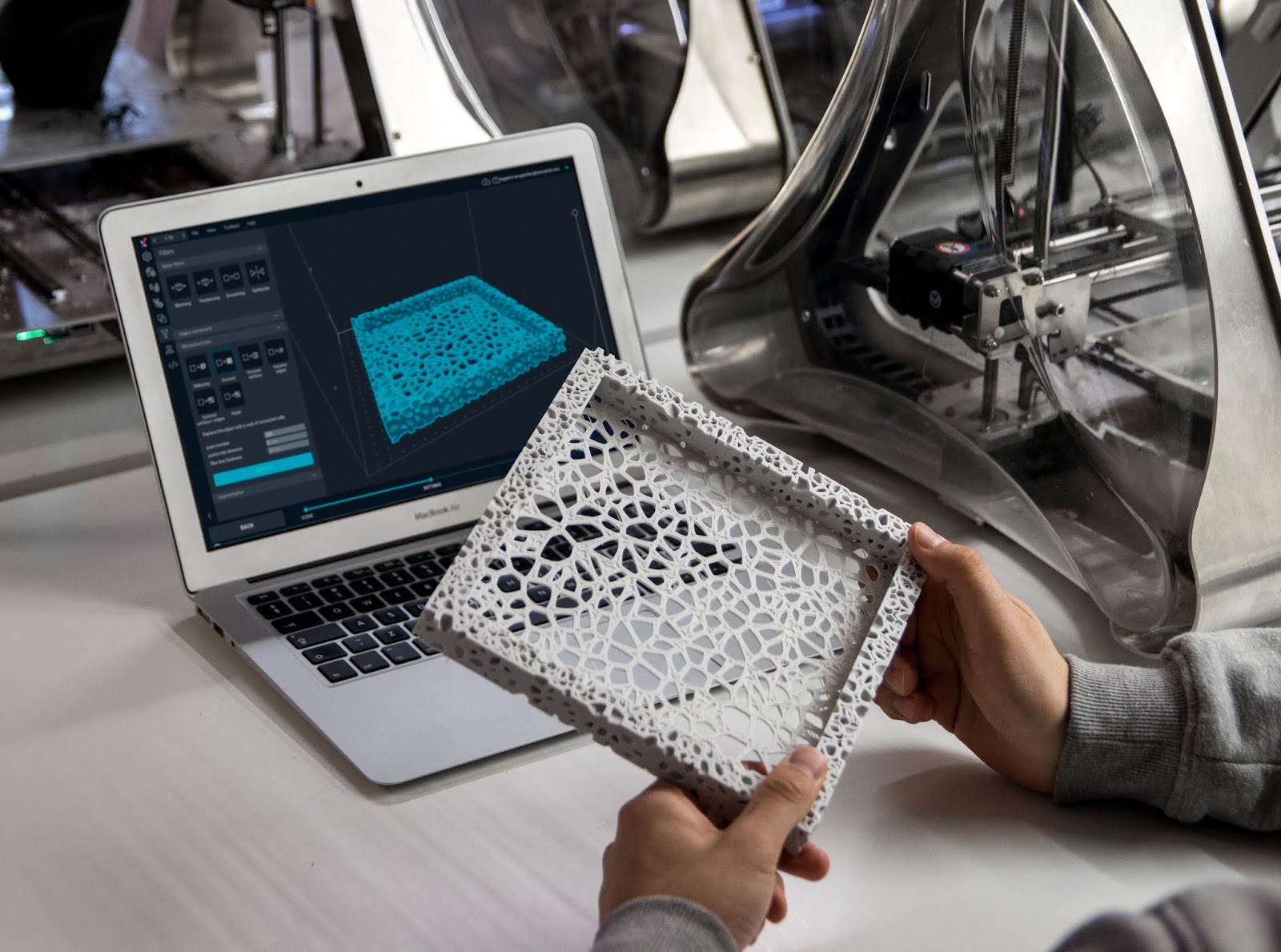
Another major element of education that is likely to change heavily in the near future is the power of 3D Printing. As one of the most powerful industries out there at the moment, it’s beginning to become a very popular way to learn for kids. Nowadays, children can get their hands on the kind of objects and instruments that previously they could only look at in books and dream of holding for real.

How Educational Technology is Reshaping Education: Latest Trends

From the crown of a king, to the layout of a medieval weapon (blunted, obviously!) children could get a much more authentic appreciation of the world that they read about on the pages of book. This is dangerous, though, as it prevents children from appreciating the true gravity of what they are reading about. The day that 3D printing stops being so prohibitively expensive, will be a good day as it should help people to finally become involved in the industry, thus empowering and educating the next generation.

In Summary...

Whilst understanding the various challenges that the Internet and similar devices present to the education industry, the trends are already here. People are becoming more appreciative of the integration of technology into various forms of education, as most believe it will quickly help to make people more comfortable with technology, as well as working and living in a multimodal and digitally mediated society.

All of the above technological outputs, have been working their way into education for some time — it’s just a matter of time before they are more systematically implemented in classrooms worldwide. Each will play their part in determining a new dawn for education, which can only be a good thing, ensuring that future generations, receive the best and most relevant learning possible.

*by andreascy*

Why It's Worth Investing in Machine Learning for Medical Diagnosis

Description :

Artificial Intelligence (AI) is proving to have a tremendous impact on people in the postmodern world. In fact, the evidence from advances in the field of Artificial Intelligence suggests it has helped improve people's lives

Why It's Worth Investing in Machine Learning for Medical Diagnosis

Machine Learning can be considered as an important subfield of Artificial Intelligence. During the last decade, Machine Learning is widely used in a variety of areas, including the complex healthcare industry. 

The healthcare landscape can be divided into three main categories. These include: 

1. Large Institutions

These could be private hospitals and universities as well as research centers specializing in medical care.

2. Solo Physicians

Physicians who are engaged with private practice belong to this category. They are working hard to resist the trend that focuses on consolidation.

3. Healthcare Professionals

This category includes administrators, physical therapists and nurses who play a major role behind successful practice.

All these practitioners have their own goals and strategies or principles which guide their practice. These goals can further be distinguished into two main categories:

(a) To assist the patients in order to live a healthier life.

(b) To do their work in an efficient way to keep the patients satisfied with treatments.

Challenges for the Healthcare Industry 

Regardless of the background and category of the healthcare industry to which someone belongs, there has been an increasing interest in taking advantage of the potential of Artificial Intelligence such as Machine Learning for medical purposes, like for example medical diagnosis. 

It is not by random that scientists and researchers invest in Machine Learning in this particular area. There are variant reasons which lead to this decision. The effectiveness of this sort of technology holds a prominent place among the reasons for deciding to take advantage of this vast field for medicine. 

Working in contemporary societies means healthcare professionals constantly have to deal with different challenges under stressful environments. Although there is an obvious inbalance between the number of staff available and patients waiting in line to be served, it is not possible to reduce the quality of treatment just because of the high volume of work. In other words, these professionals need to offer the optimum treatment to each and every patient, even under pressure. Physicians who belong to larger groups face perpetual pressure as well because they need to see more patients within the shortest possible time while maximizing their performance. Therefore, time is of essence, as well as accuracy in diagnosis.

On the other hand, Electronic Medical Records (EMRs) which were gradually introduced in most modern healthcare facilities, are constantly being upgraded and changed. As a result, the physicians spend too much time to get the required training in order to effectively use the technology. It is imperative that they follow up any upgrades in order to be able to document all their encounters in electronic medical records.

Cost reduction is another challenge that physicians nowadays are faced with on a daily basis. Both solo practices and large academic institutions have to deal with this challenge. The efficiency of treatments is extremely important on a societal level as well. That’s mainly because it can lead to resource utilization and preventative care.

Investing in Machine Learning

Machine Learning has the potential to provide a convenient solution for all these challenges. Stemming from the proliferation of Artificial Intelligence, Machine Learning has gone through a significant development throughout the last two decades. At the moment, it is powerful enough to make near perfect diagnoses. As a result, practitioners utilizing this technology will be in a position to figure out the best possible treatment for their patients. Additionally, they have the potential to figure out which patients are at a higher risk for poor outcomes and predict re-admissions.


In general, it can be claimed that Machine Learning can enhance the health and well-being of patients while keeping the costs low. The improvements in Machine Learning related to medical diagnosis are taking place at a rapid pace. However, it is still under development and a lot of resources need to be invested to enhance the efficiency of this revolutionary technology.

Machine Learning for medical diagnosis is not something new to the world. It has been there from the early stages of healthcare informatics. During this time, the term “healthcare informatics” was not even used. The Machine Learning algorithms were initially introduced at this time and they were supported by vector machines and Artificial Neural Networks. This area was highly researched at that time and that’s the main reason why you can see it in a large number of publications. Research is still being conducted in this area and it has created plenty of investment opportunities which are now renewing the interest in advancing the field.

Such an example can be found in terms of the accuracy of a diagnosis. It is true that experienced physicians can diagnose the health conditions of patients by having a look at them. However, this method is not 100% effective. That’s where Machine Learning comes into play. The chances of Machine Learning and Artificial Intelligence delivering incorrect results are extremely low. However, it is important to keep in mind that Machine Learning is not advanced enough yet to deliver 100% effective results to healthcare professionals and further research is needed. That’s the main reason why millions of dollars are being invested in this technology.

Research and Practice at a Global Scale

Findings from a recent empirical research paper indicate that Artificial Neural Networks can be used to detect prostate cancer among individuals in an effective manner. The study has a strong interdisciplinary interest in particular among computer scientists and physicians. This is just one study that was conducted in this specific and challenging field of interest; there are several more applications of Artificial Neural Networks which diagnose medical conditions.

Still, despite the different applications of Machine Learning for medical diagnosis, these are not as popular in every corner of the world. The technology is still improving and it appears that a lot of eastern countries invest their money in this technology. However, some of the physicians in Asian countries have not even heard about the concept of Machine Learning. Nevertheless, it is expected that once Machine Learning becomes more widely known there will be high demand because of its real-world applications and practicability.

Conclusions

It becomes obvious that the future of Machine Learning in medical diagnosis looks promising. Healthcare professionals and researchers specialized in different areas of medicine such as cardiovascular diseases and neurological symptoms look to incorporate Machine Learning in their work in order to cope with the aforementioned challenges as well as increase their performance and save more lives. However, it is not possible to advance their science without substantial funding. Therefore, it would be a wise idea for institutions and authorities at large to invest significant proportions of money in Machine Learning since there are numerous benefits as already mentioned in this article.

Overall, it is apparent that professionals and practitioners employing Machine Learning are particularly excited about the meaningful implementation of Artificial Intelligence in the healthcare industry. The most aspiring uses of the technology suggest it has the potential to transform the healthcare industry to a better one which can truly nurture for the longevity of humans. 

The Machine Learning algorithms are constantly being updated in order to achieve better results. Therefore, investing in this technology for medical diagnosis can be considered as an excellent idea for governments and research institutions. This sort of investment decision is a step towards a more fruitful future in terms of healthcare.


Thank you so much for your time! Comment with questions under this article and I'll respond. Subscribe for all this content and more on our Daily Newsletter!

*by andreascy*


The Enormous Rise of Artificial Neural Networks

Description :

Artificial Neural Networks, which are also known as ANNs have received a lot of attention recently. The increasing awareness of Artificial Intelligence has contributed a lot towards their popularity.

The Enormous Rise of Artificial Neural Networks

The Artificial Neural Networks can simply be defined as biologically inspired networks. In other words, these networks work similar to the human brain. As is probably well known, the human brain consists of billions of special cells named as neurons. To be precise, it has been estimated that a typical human brain consists of about 150 billion neurons. These neurons are inter-connected with each other to form a network. As a result, the human brain can be considered as a collection of neural networks.

The Concept of Neural Computing

The application of Artificial Neural Networks is known as Neural Computing. Neural computing uses a limited amount of concepts that are borrowed from biological neural systems. The main objective of Artificial Neural Networks is to simulate massively parallel processes that are associated with interconnected processing elements in network architecture. An artificial neuron would be the building block of an Artificial Neural Network.

A neuron would receive inputs from the other neurons that are connected to it. And conversely, the output of a neuron will be passed to several other connected neurons. The same mechanism takes place within the human brain as well. Likewise, the artificial signals processed by the neurons can be changed. How Artificial Neural Networks process information entirely depends on its structure. The algorithm that is being used to process information can also create an impact on it.

Application and Benefits of Artificial Neural Networks

Artificial Neural Networks can be applied to a variety of scenarios. The benefits that are associated with these applications have contributed a lot towards their proliferation over the past decade. The most popular areas where ANNs are being applied include learning, pattern recognition and interpretation of noise and incomplete inputs.

Humans follow a different approach when solving problems when compared to computers. The objective of Artificial Neural Networks is to make computers think and solve issues like human beings. This can help computers to solve complex problems, which cannot be solved with a rule based approach. In other words, Artificial Neural Networks are being used to solve complex problems that cannot be simulated using analytical or logical techniques. They have the potential to solve issues, which cannot be solved even with expert systems. Pattern recognition is a perfect example to prove the aforementioned fact.

Artificial Neural Networks are in a position to analyze large amounts of data in an effective manner. After the analysis, it can establish characteristics and patterns, where rules or logic are not known. Loan applications are a perfect example for such a situation. After going through a large number of historical cases, the questionnaire of the applicant is either accepted or rejected. Only Artificial Neural Networks have the ability to automate this process of approving loans.

Artificial Neural Networks also have the ability to create profiles or patterns of applications that need to be denied or approved. Then a new application is matched against a pattern by the computer. The computer would gain the intelligence to classify whether it is a “yes” or “no”. Otherwise, it would go for the decision of humans. That’s the main reason why neural networks are being used for a variety of financial applications such as predicting exchange rates, predicting bankruptcy and determining when to purchase and sell stock.

Artificial Neural Networks and Smart Computers

Computer systems have gone through significant development throughout the past few years. Artificial Neural Networks have contributed a lot towards this evolution. As a result, people in the 21st century prefer to use computers to accomplish most of their day to day needs.

A traditional computer has the potential to perform millions of operations within a second. However, this type of computer is not in a position to think like a human and make decisions by themselves. In other words, the traditional computers do not have the ability to perform certain tasks on their own. You will need to program those computers to make them perform certain tasks, but you will not be able to make them solve problems in the way humans do. That’s where Artificial Neural Networks come into play.

Artificial Intelligence can simply be defined as a set of techniques, which are entirely based on the behavioral patterns of the human brain. It can learn on its own and make decisions like humans do. Most of the living beings that exist on this planet are biological systems that learn on their own. They are capable of making useful decisions as well. Generally these decisions are based on the instinct of survival.

Human beings need to learn before they can make decisions. The same principle applies for machines as well. Machines differ from biological systems though in that they will have to learn new things through mathematical algorithms. However, Artificial Neural Networks have given machines the opportunity to learn new things like human beings. This has given life to a brand new aspect in computing as well.

The use of Artificial Intelligence and Artificial Neural Networks are being implemented mostly in the software industry at the moment. This has the potential to emulate the parallel nature of an Artificial Neural Network into a linear system. As mentioned earlier, Artificial Neural Networks are being used on a variety of applications such as image reconstruction, character recognition and voice recognition.

Neural networks can also be found in a variety of applications such as robotics. People however are extremely concerned about automation and the danger of robots taking over their lives as a result of advances in the field of Artificial Intelligence and Machine Learning. These fears derive from the fact that whilst Artificial Intelligence is helping the humans to achieve a better standard of living, it is also important to keep in mind that transferring the biological capabilities of humans to computers can make us more dependent on them.

In this respect, special attention has been attributed towards Artificial Neural Networks. This is because Artificial Neural Networks have the ability to make computers think like human beings and solve complex problems which in effect means that it can humanize computers. Such a prospect creates all sorts of anxiety and extreme scenarios. Nevertheless, for the time being, research is focused on different medical applications of ANNs with beneficial results for humans. What remains to be seen is how future research and practice in this exciting area will continue to grow.


Thanks for making us a part of your daily 'knowledge hunger'. For more information, please write back to us.

*by andreascy*

How Semantic Web Technology Promotes E-learning Efficiency

Description : 

Online learning is an emerging paradigm. Having gained success in the wake of social networking and video sharing tools, it is inherently dependent on an e-learning system. 

The World Wide Web or Web 2.0 can be considered as a repository of resources that can be harnessed for educational purposes. Also, tweaks can be added to enhance its efficiency in the learning pedagogy. 

How Semantic Web Technology Promotes E-learning Efficiency

Semantic web is a connotation used to describe protocols that allow machines to decipher the meaning of information present on World Wide Web. Crucial to understand is the fact that web that we use is tailored for human consumption. It is, on a principle level, machine readable but not ‘understandable’.

This represents a limitation of sorts with regards to progress that is being seen in the online education paradigm.

The Need for Semantic Web

Semantic web tools such as Resource Description Framework (RDF), Web Ontology Language and Uniform Resource Identifier (URI) can be used to build a concrete e-learning management model that presents information in a manner a machine can interpret. 

Some online educational aspects have been able to use such informatics to beneficial use. Healthcare is an ideal example of an area where semantic web has been put to good effect. Virtualization has led to heterogeneous data sources emerging, indicating the need for semantic web.

There are some successful models in the status quo that show semantic web can succeed at the data management infrastructure level. Pennsylvania is one of the states that took an early initiative in this regard. It laid down protocols for information integration within semantic web and how it can impact various stakeholders such as educational institutes and businesses. 

This can be seen with the development of electronic health records (EHRs) and how they are advancing the profession of nursing. A specific ‘Semantic Web for Health Care and Life Sciences Interest Group’ was initiated few years back to capitalize on the advancement.

The impact of EHRs and other new technologies can be seen in the accelerated nursing programs in PA, the demand for which has increased in just the last few years. Such programs also focus on decision-making and communication skills, establishing the ever-important connection between improved web integration and better online education.

Benefits of Semantic Web for E-Learning 

Semantic web represents a newer generation of world wide web use, and provides numerous advantages. First of all, it can improve the metadata that is linked with e-learning resources. Secondly, it can also expand the existing opportunities for e-learning customization.

The semantic web integration process presents an adaptive concept of composing new learning materials. From the device point of view, different specialized pedagogical information resources become accessible to all. 

This approach also equips machines with an intelligent learning model, enhanced reasoning and optimal management of learning material. The connection of online resources present on the web and its affiliation with the end user is a unique relationship, which can be enhanced using semantic web. 

Using semantic web, an ontology based e-learning method can be generated. It allows the program controller to add aspects such as student management, teacher management, security management, course management and ontology management. All of these aspects are linearized and fed unique responses based on the connection with the respective user. “Piazza” is a data management infrastructure built on the principles described above. It epitomizes the benefits of utilizing metadata and improving ‘understanding’ of machines.

Conclusion 

Based on the analysis that has been provided above, it is clear that the impact of online learning can be greatly enhanced with the help of optimal web usage. With a large segment of the population looking to virtual tools for enhanced learning, semantic web can offer significant assistance.

RECOMMENDED READ: The Potential of Blended Learning for Steering Education

Please, comment down your questions. 

*by andreascy*  


Do the Benefits of Oil Rig Jobs Outweigh the Risks?

Description :

Do the benefits of working on an oil rig outweigh the risks? That depends on the person. Those who enjoy a physically challenging job, travel, adventure, team work and a large paycheck would likely enjoy working on an oil rig. 

Oil Rig

However, those who do not wish to be away from home for long periods of time, don't want to endure extreme working conditions or live in the middle of the ocean would be miserable.

Benefits

The benefits of working in the oil industry are appealing. Jobs are plentiful since the demand for energy is increasing. One does not need a degree to begin, and there is plenty of room for advancement. Oil companies prefer to promote from within to save money on training costs. The pay for an entry level worker can be over $1,000 a week, with skilled and professional workers making two or three times as much. Food, board and travel expenses are paid for by the company. Many companies offer excellent benefits, including medical, dental and life insurance, 401(k) programs and profit sharing. Living conditions are reputed to be excellent, even comparing to 4- and 5-star hotels. Opportunities for rest and leisure are provided, and may include satellite TV and phones, updated selections of DVDs, video games, an Internet connection, gyms, saunas and more.

Oil rig employees work long, often 12-hour days but in rotating shifts. For example, in two-weeks-on, two-weeks-off increments or fourteen days on and twenty one days off, meaning employees work only half the year or less. Workers are needed in countries all over the world, including Saudi Arabia, Nigeria, Russia, Norway, Venezuela, China and Scotland. Employees eat, sleep and work with a diversity of people.

A variety of skilled laborers are needed, including welders, scaffolders, medics, radio operators, painters, electricians, maintenance supervisors, crane operators, caterers and mechanics. There are even different kinds of rigs to work on, such as semi-submersible, platform, jack up, drill ships, flotels, and floating production and storage units. 

Oil companies do their best to insure safety and provide safety boots, glasses, hard hats and coveralls. A medical staff is on board at all times. Bonuses and higher pay may be available for working in the harshest conditions.

Risks

Disasters are infrequent on oil rigs, but when they do occur they can be devastating. In the event of a disaster, the Coast Guard will respond but may take time to reach the rig. Survivors must wait in life boats or rafts for rescue. There's no denying the risk of death and serious injury while working on an oil rig. Employees are constantly working around heavy machinery and combustible materials, and gas leaks are common. Conditions can be harsh, ranging from sweltering heat to below freezing. The work is stressful and physically demanding. The sea is unpredictable, and workers may even have to weather hurricanes on the rig. Fatigue can be a problem, and the machinery is complex, it's easy to make a fatal mistake. Workers must be alert and work as a team at all times. Rules are strict; employees must follow orders to ensure safety. The oil rig is isolated, and workers may feel lonely and worry about the emotional stress put on their families. It is an environment not unlike the military.

Working on an oil rig can be an exciting and financially rewarding experience. However, it's a high-risk setting that requires strength and fortitude. If you have some years of experience working on oil refineries, we'd be glad to use your knowledge and educate people about your industry.

*by andreascy*


Microsoft Research : Automated Intelligence in Your Daily Life


Description : 

Over the last decade, technical and infrastructural developments have created a nurturing environment for developing applications of machine learning and reasoning - and for harnessing automated intelligence to assist people in the course of their daily lives.


Microsoft researchers continue to push the state of the art in applying machine intelligence to the daily lives of people through research in algorithms and technologies to discover knowledge from large-scale data. By building software that automatically learns from data, the goal is to enable applications to behave more intelligently and enable users to become more productive.


Read also other interesting stories from Microsoft Research. Share this topic with your social circles and subscribe on our RSS feed to stay updated with out latest news!

*by andreascy*

Microsoft News : A New Age of Personal Computing on TechForum 2012

Description :

Craig Mundie, Microsoft's Chief Research and Strategy Officer, describes how technologies today and in the future will enable more natural interactions, enhanced capabilities, make better decisions and help us connect with each other. 


*by andreascy*

World's Smallest V12 Engine - Built From Scratch - Power To The Handy People!

Description :

Wednesday, back at work, back into the swing of things. Morning all! If you're new here, you may want to subscribe to our RSS feeds. Thanks for visiting!

German engineering outshines every other automobile making nation simply because they are so good at it. But an enthusiastic German automotive part maker, Ralf Drendel, obsessed with V12 engines has upped the ante on the miniature scale, so to speak.

World's Smallest V12 Engine

 Made perfectly to emulate the real thing (V12 engine) the miniature V12 is designed to function perfectly with any high-end RC (Remote Controlled) vehicle; be it a RC plane, boat or car.

World's Smallest V12 Engine

Having 12 cylinders housed inside a four stroke engine runs on a mixture of high performance synthetic lubricant (10%), Methanol and Nitro methane (5-10%) and produces power of 6 to 8 horsepower with a displacement of 87-cubic centimeters.

World's Smallest V12 Engine

This functional model has twin camshaft and overhead valves and doesn’t require any radiator, to add to that the crankshaft has been made from multiple pieces.

World's Smallest V12 Engine

Frame of the engine has been made from stainless steel, bronze and aluminum and the finished engine runs on compressed air to cool down and ward off any heat produced.

According to Ralf, the maker of this engine, kits will be available anytime soon so that you can attach this German beast to your choice of miniature vehicle with minimum hassle. So hose, just sit back, hit the play button on the video given below and enjoy the thumping sound of the mini V12 in action.


For those who are interested in watching the whole making of miniature V12 engine watch the video given below, you’ll surely be awe-inspired by it if you are an automotive junkie. :)


Thank you so much for your time and for your support! We deeply appreciate that you chose to spend your valuable time on our Blog. We are The *Official AndreasCY*, home of Top Content, Daily & Unbiased Tech News and we love to serve you. Subscribe on our Newsletter for more interesting updates to your email. Stay tuned!


*by andreascy*

🧑‍🧑‍🧒‍🧒 Join our Reddit Community

🦾 Stay Motivated

🏅 Featured on Product Hunt