7 Reasons to Consider a Home Gym

If you think of picking up better health habits and don't like crowded gyms, consider setting a home gym catered to your needs.

5 Top Picks for Christmas Holiday Like a Fairytale

If you imagine Christmas holiday this year being like a fairytale, you should consider visiting these hidden gems!

7 Fashion Accessories To Lift Up Your Style Quotient

Get heads up on the trendiest as well as classic fashion accessories that would elevate your style to another level.

Sensibo

Showing posts sorted by relevance for query power. Sort by date Show all posts

MIT 3D Stacks of Solar Panels increases their power output by up to 20x

Description :
What’s better than one pancake? A whole stack of pancakes! Using the same logic, a team of MIT researchers have stacked a bunch of photovoltaic solar cells together to produce up to 20 times the power output of conventional solar power installations.


 Basically, photovoltaic cells themselves aren’t all that expensive - according to MIT, they’re only around 35% of the total cost of a solar power installation. The main issue with solar power (and its main cost) is its low energy density, and thus the sheer surface area required to generate a sizable amount of electricity. This is why you need to cover your whole roof with cells to power your light bulbs, and why solar power plants would have to occupy tens of square miles of desert to produce as much power as a nuclear power plant.


To combat this issue, MIT has built 3D stacks of photovoltaic cells. These have the same footprint of a conventional, flat solar power setup - but as you can see in the picture above, the total surface area is much, much larger. The team built a variety of 3D designs, including a cube, and in all cases they produced between two and 20 times as much power as a flat panel. The most interesting facet of this discovery, though, is that these 3D stacks produce lots of extra power whenever the sun is near the horizon, i.e. in the morning, evening, winter, or at latitudes far away from the equator. With conventional, flat cells, it’s hard to capture low-angle light, but with an accordion structure (as pictured below) the relative angle would be closer to 45 degrees.

3D solar power cells from MIT

Squeezing more power out of low-light periods is a huge, huge deal. Beyond the large footprint required, the main issue with solar power is unreliability (cloud cover) and natural fluctuations (winter, night time). Solar installations produce most of their electricity in the middle of the day, but that’s when you least need electric light or heat. As a result, you need to store the energy for later use, which usually involves a big battery of some kind. If these 3D solar cells can capture enough light that they can produce reliable electricity in the morning, evening, and winter, then this could be exactly the kick-start that solar power needs - especially when you combine it with the ion cannon that cuts photovoltaic costs in half

*by andreascy*

Sony: New Concept Envisions in 2030 With Pay As You Go Power

Description :

Sony is looking to revolutionize the inefficient way in which we consume power.

A new concept video from the electronics giant shows how we could use power more efficiently in the year 2030 by switching to smart outlets with authentication and wireless charging on a broad scale, assuming we survive the Zombie Mayan Apocalypse.

Sony: New Concept Envisions in 2030 With Pay As You Go Power

The prototype power outlet, integrated with a short-range wireless FeliCa transmitter (and a new RFID over power line technology), allows the user to swipe a pay card across the faceplate and pay for energy on the spot. What makes it truly interesting is if humankind keeps progressing towards alternative energies (such as wind, solar, and biomass), then our outlets could give us options as to what source from which we obtain our power.

The video description below notes that with this outlet, "the user can actively control and manage power consumption on a user basis as well as on a device basis."

Imagine not having to use power from the electric company for a TV-viewing session, instead drawing from a battery in your house that contains stored power from your solar- and wind-power generation sources. These outlets, if available all over a city, can offer people with electric cars the ability to charge up and pay for that energy easily.

The proposed power control center app (for tablet or smartphone) would enable consumers to observe how much power is available from various power sources in the home. With the app, one could check how much juice the electric car in the garage contains, enable or disable outlets in various areas of the house, or remotely control devices connected to a power outlet.

In a recent press conference in Tokyo, reps at Sony spoke about the developments, says AV Watch (check out their hands-on pics, too). A timetable for commercializing these smart outlets seems "ten years away," according to Taro Tadano from Sony Japan's business development department. Admittedly, he wants to speed up the process of development and integration, but reliability, safety, and patent battles present several roadblocks.

While the overall idea seems grand, one must also wonder about cost.
Regardless, he and many others at Sony are working hard to strengthen relationships with various Japanese companies related to this field with hope of moving this past the concept stage and into reality. 

One cannot help but admire the craveworthy Sony concept products (from 2030) also shown in the video, such as: a TV that you turn on by facing a wall and drawing a rectangle with your hand, a flexible tablet, and easy wireless charging.


Feel free to Like, Share & Comment! 👍

*by andreascy*

10 Reasons Why The World Should Go Solar

Description :

Guys, what's up? 7K+ people in this amazing group of News lovers and climbing! So proud to be connected with all of you. We have a better way! 

You’ve probably heard of it; Solar Power. The way to go green by using the sun for electricity and much, much more. 

10 Reasons Why The World Should Go Solar

If you take a serious look into all the possibilities that solar power has to offer, you are going to wonder why the whole world is not running on it yet. Here are the 10 reasons why the world should go solar:

1. It saves you money

One of the things that make Solar Power stand out is how on the long haul you are going to save money. Sure, getting them might be a bit expensive, but after a few years your wallet is going to thank you. Money saved can go up to $2400 a year (for homeowners) and up to $6000 a year (for business owners). You could take the family to Disney for that money. 

2. Solar energy is a way to escape the hold countries have on other countries

A lot of natural resources like oil, coal and gas are imported into our country from other countries. This means that when something happens in those countries, like lets say a war, we could potentially be cut off from supplies. Solar Power does not face that problem as it is possible in any country anywhere. 

3. It’s better for the climate 

Critics have pointed out that by making solar panels certain chemicals are released into out atmosphere that form a bigger danger than carbon dioxide. What they fail to mention is that more carbon dioxide is released into the air per day from all over the world than the chemicals used to make solar panels. For solar panels this is a one time thing, once it’s made it’s made and no chemicals are released anymore and that’s better for the climate than your car ever will be. 

4. Jobs 

If there is more solar power used there will also be more jobs for people out there. Especially in this economy those are needed, as unemployment rates are still on the rise in almost all of the countries across the globe. By creating a bigger market for solar power you will also be creating more jobs for more people. 

5. The sun isn’t going to run out of light 

Another of the pros of solar power is the fact that the sun won’t be running out of light anytime soon. However we will be through natural resources like oil and gas eventually. 

6. It has many purposes 

Solar power can be used in an infinite number of ways. The only thing that’s limiting us is our creativity. Currently there are satellites in our inner and outer atmosphere completely powered by solar power. Cars that break speed records are powered by solar power. In Africa water is being distilled by solar power.. Well, isn't that awesome?!

7. It’s easily integratable into your home or community 

Your house probably already has a roof where you can place solar panels, but even for those of us who live in apartment buildings there are great options available. By placing a field with solar panels inside a community, or outside a town when you need more space, you can easily generate enough energy for a whole neighbourhood. Which brings me onto my next point..

8. It’s usable everywhere 

Any country and any person in the world could live off of solar power. It could easily change the world and save a lot of people who are currently dying because of the lack of electricity, heating or drinkable water. 

9. Solar powered roads 

Not that long ago a huge online fundraiser for solar roadways was held. They got way more than their original goal of $1 million and no wonder. Solar Roadways are freaking awesome and here’s why; They will make driving safer for people and for animals, because they light up when anything walks over them, heat up in cold areas so the roads are not snowy and more. Plus they are very durable and take way less maintenance than those asphalt roads. Want to know more about this amazing project? 


10. Low maintenance

Solar Power is low maintenance. Did you know that solar panels only have to be cleaned a few times a year? With everything you get out of them that’s just a small price to pay. Once your installation is up, there is almost nothing to do to maintain the installation.

The Bottom Line is: Solar Power has the power to change the world and it’s all up to us whether or not we take all the opportunities it has to offer to make this world a better one. 


Have a nice week! If you liked this post please leave your good comments in the box below.

*by andreascy*

Apple Submits Mobile Hydrogen Fuel Cell Patent

Description :

Apple has submitted a patent request to the US Patent and Trademark Office that aim to replace lithium batteries in handheld computers with hydrogen fuel cells.

Until now we’ve only thought of hydrogen fuel cells in cars, but there is no reason why they couldn’t work in any device. The replacement cells would in fact be smaller and provide power for days or weeks! Microprocessor manufacturers like ARM are constantly battling to not only create faster chips, but also ones which use less power. A better power source could potentially allow them to drastically increase the speed of mobile devices.


Apple justifies the new technology saying that the United States is required to maintain relationships with corrupt governments which supply the chemicals in lithium batteries. They’ve obviously also sparked by the recent oil spill of which an oil rig, subcontracted by BP, caused massive damage to the US coastline. 

According to two published Apple patent applications, called "Fuel Cell System to Power a Portable Computing Device" and "Fuel Cell System Coupled to a Portable Computing Device," Apple is looking to build lighter and smaller mobile devices like MacBooks (Air, Pro) by replacing current batteries with a fuel cell system.

This may not come as a surprise to many, since Apple has filed other patent applications for lighter hydrogen fuel cells. Those patents, which were brought to light this past October, described a building process where multiple fuel cells are connected by a power bus in a parallel pattern, and a voltage-multiplying circuit is added for additional voltage to the stack. 

Now, Apple hopes to utilize these lighter, more efficient fuel cells in its mobile products in an effort to promote renewable energy sources and offer devices with the ability to run for days or even weeks without refueling, according to the patent applications. The devices will also be lighter and less bulky due to the lack of traditional batteries.

The first patent application, "Fuel Cell System to Power a Portable Computing Device," states Apple's case for wanting to use fuel cell technology in their devices. While current fuel cell technology for mobile products requires the user to carry a fuel cartridge for recharging purposes, Apple wants to integrate fuel cells right into their electronics.


The second patent application, "Fuel Cell System Coupled to a Portable Computing Device," describes how the fuel cell system would work with a rechargeable battery where one would power the other when necessary, and vice versa.

"This eliminates the need for a bulky and heavy battery within the fuel system, which can significantly reduce the size, weight, and cost of the fuel system," said the second patent application. "This fuel system includes a fuel stack cell which converts fuel into electrical power. It also includes a controller which controls operation of the fuel cell system."

One challenge will be creating a hydrogen fuel cell system that is cost-effective, according to Apple. 

Sources : CNET, Apple Insider

*by andreascy*

Solar Energy Panels vs. Solar Electricity Plants

Description : 

Most people think of how we will use solar energy panels to become less reliant on fossil fuels in terms of solar power homes; every house would have its own array of photovoltaic panels and be individually energy independent. An electrical grid would allow people to sell any energy their home produced beyond what they need so that others could use it, but for the most part, each unit would function autonomously. Skeptics are quick to point out that this approach suffers from being too costly, if only because power plants offer economies of scale that allow them to generate electricity at a lower average cost. Fortunately, a solar electricity company could step in to deal with this problem.

Solar Energy Panels vs. Solar Electricity Plants

The obvious benefit of a solar power electricity company over individual homes building their own is it should cost less. One company that centralizes several solar energy panels in arrays can do the entire thing for a lower average cost per watt than individuals can for a number of reasons. One of the biggest is that they can build these plants in places that have above average amounts of direct sun so that the plants maximize solar cell utilization. And this lower cost also reflects higher efficiency, which is important for a project that aims to protect the environment. Better efficiency means lower consumption and less waste. For the individual consumer, this means both nearly no upfront cost and a better electricity price.

Types of Solar Power Plants

A few different types of solar power plants have been built. One planned for Arizona would install 1900 acres of solar panels to power up to 70,000 homes. The plans are based on using solar radiation to generate steam heat that then spins turbines. Another plant planned for southern Spain would use a different technology, also to create steam energy from solar radiation. Part of the reasons plans for solar plants eschew solar energy panels based on photovoltaic technology is that these panels have a lifetime of 20 to 30 years, and can require more attention than simpler technology. This makes the steam-based solar technology more appropriate when solar power will be harnessed en masse.


The drawbacks to this approach are significant, however. The biggest is that for people who want to convert to solar energy now, waiting the years necessary to design and build these large plants is not an option. Another is that it combines all the risk on one entity. If a better technology is developed while the plant is in construction, they either have to go ahead with a less efficient option or scrap the plants, accept the financial losses, and deal with having wasted those resources. However, if homes adopt solar panels at their own pace, solar conversion risk is spread out and averaged, which makes it a more financially reasonable strategy for conservation.

Solar energy panels lend themselves to a number of different alternative energy approaches. Solar power plants would be less costly to consumers due to a number of advantages. But that comes at a cost for those who are already prepared to make the conversion now.

RECOMMENDED: Ten Reasons Why The World Should Go Solar 

I love to write about sustainable living and energy. Hope you've liked this story, and we'll catch up with you again soon. If you want more then get our best articles every day with emphasis on technology.

*by andreascy*

Atmel SAM4L Microcontrollers : Redefining Low Power


Description : 

How much better would your designs be if power consumption was no longer a concern? Find out today with the SAM4L family of ARM® Cortex™-M4 processor-based microcontrollers (MCUs), which consume just one-third the power of currently available solutions. 


SAM4L MCUs redefine the power benchmark, delivering the lowest power in both active (90µA/MHz) and sleep modes (1.5µA with full random access memory (RAM) retention and 700nA in back-up mode). 


They are the most efficient MCUs available today, achieving up to 28 CoreMark™/mA using the IAR Embedded Workbench, version 6.40. In SAM4L MCUs, you also get the industry's shortest wake-up time at 1.5µs from deep-sleep mode. Just what you need for portable and battery-powered consumer, industrial and medical applications.

Bringing Atmel picoPower Technology to the ARM Platform :

The SAM4L family integrates Atmel's proprietary picoPower® technology, which is used in hundreds of millions of Atmel® AVR® MCUs in the market today. This patented picoPower ultra-low power technology ensures that devices are developed from the ground up - from transistor design to clocking options - to consume as little power as possible.


Fast wakeup and innovative power-saving features such as multiple regulators reduce the overall consumption even further. In addition, Atmel's SleepWalking technology allows the peripherals to make intelligent decisions and wake up the system upon qualifying events at the peripheral level. It's all about system intelligence and conserving energy. Simply put, the SAM4L MCU is your choice if you're looking for long battery life, without sacrificing performance.


Read the SAM4L Datasheet and check also other interesting topics from Atmel.

*by andreascy*

High Tech Future, Science Fiction & The Machining Power of Pisa Laboratories

Description : 

Today's our topic is powered by AFP a Global News Agency delivering fast, in-depth coverage of the events shaping our world from wars and conflicts to Politics, Sports, Entertainment and the latest breakthroughs in Health, Science and Technology. 

High Tech Future, Science Fiction & The Machining Power of Pisa Laboratories

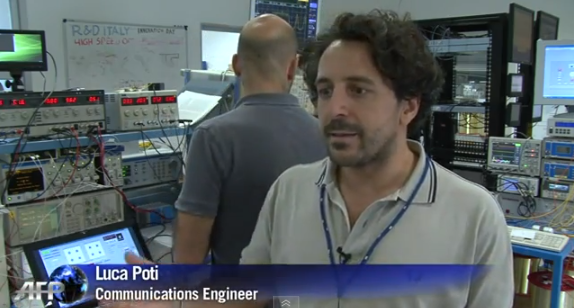
At Italy's Sant'Anna School of Advanced Studies - a special - statute public University in the Historic Town of Pisa in Tuscany (Italian: Scuola Superiore di Studi Universitari e di Perfezionamento Sant'Anna), a Bionic Arm commanded by the human brain or a limb extension that allows rescuers to lift rubble after earthquakes are just some of the futuristic innovations in the pipeline. 

High Tech Future, Science Fiction & The Machining Power of Pisa Laboratories

Marco Controzzi, who is working on the bionic arm, says it will operate by using electrodes attached to the skin or implanted in your head. 

"It will move only according to your intentions," he said, adding that powering it would be easy as it can run on just two mobile phone batteries. 

High Tech Future, Science Fiction & The Machining Power of Pisa Laboratories

The exoskeleton or "body extender", a prototype costing a million Euros, meanwhile, is a kind of armor weighing 160 kilos which multiplies the strength of its human user by 20. 

High Tech Future, Science Fiction & The Machining Power of Pisa Laboratories

"The idea is to use this type of instrument for emergency workers in disasters like an earthquake," said Engineer Marco Fontana. 

High Tech Future, Science Fiction & The Machining Power of Pisa Laboratories

"You can innovate here. Whoever has a project gets help, ideas are not blocked. We are investing in individuals," the rector of Sant'Anna, Maria Chiara Carrozza, a professor of Bio-Robotics said in an interview. 


As one of Europe's most Advanced Research Centers that designs Futuristic and Cutting edge Technology & Robotics, they are working also on projects ranging from a robot that can come to your door to collect your recycling to tomatoes that slow the effects of ageing and plants that survive underwater to help flood-prone regions of the world. It's actually a veritable Factory of ideas and badass innovations. 

High Tech Future, Science Fiction & The Machining Power of Pisa Laboratories

"The idea is to get robots out of factories where they have shown their worth and to transform them into household machines which can live together with humans," says Professor Paolo Dario, director of the college's Bio-Robotics Department. 

On the picture above the dustcart looks like the famous R2-D2 from Star Wars with it's laser scanner and location sensors. The idea is that it can work through phone bookings to come to your street at a fixed time to collect your waste.

High Tech Future, Science Fiction & The Machining Power of Pisa Laboratories

"We tested it for two months with 15 families living in one of the towns near here. Everything worked well but there are still some problems to sort out," said Pericle Salvini, a member of the team behind the project. 

"First of all it is slow for security reasons and it sometimes blocks the traffic. Also it cannot legally be on the road since there is no type of insurance for this type of robot in case of an accident," he said. 

Professor Dario also heads up a project entitled "The Robot Companions for Citizens" which is one of six contestants for a European Union prize of one billion Euros ($1.2 billion) in funding spread out over a decade.


Discover other Robotic related articles. We also have an active social media presence, to help us stay in touch with you and serve you better. Whether it's about cool stuff, gadgets or digital news, we scrape the net for the best and gather all the goodies in one place.

See you soon folks! 💖👍

*by andreascy*

AMD's Radeon HD 7970 super GPU is here

Description :

We've talked on an older post about AMD's Radeon HD 6950 & 6970 high end Video cards. Today we' ll talk about Radeon HD 7970, AMD's first high end card release in their 7000 series, which is built on the latest 28nm manufacturing process. The Radeon HD 7970 represents the fastest single - GPU video card from AMD with a new core design and architecture.


AMD’s HD6970 was a huge success for the company, so the replacement card is certainly going to get a lot of media attention over the coming weeks. AMD claim it has ‘significantly more compute power than the HD6970′ with a brand new revolutionary architecture. With new technologies such as ‘ZeroCore’ power saving, is this the discrete solution to start 2012 with a bang?


The high end graphics sector has certainly no shortage of lightning quick, expensive products. Dual GPU discrete solutions such as the HD6990 and GTX590 have been leading the performance charts since they were released. In the single GPU sector it would be fair to say that AMD have not been able to oust Nvidia’s GTX580 from the top slot, instead targeting the HD6970 at a lower price point. I have had a soft spot for the GTX580 now for a long time, it is one of my favourite video cards of all time.


AMD’s HD7970 has been designed from the ground up redress the imbalance and to ensure that AMD remain competitive when Nvidia release their GTX580 replacement, shortly. The HD7970 has 2,047 stream processors and 3GB of GDDR5 memory connected via a 384 bit memory interface, so it certainly doesn’t seem to be cutting any performance corners, but is it enough to claim the performance throne as we head into 2012?


Specifications :

MANUFACTURER : AMD

SPECS STATUS : Official

SERIES : Radeon HD 7000

GPU MODEL : Tahiti XT

RELEASE DATE : Q4 2011

INTERFACE : PCI-E 3.0 x16

CORE CLOCK : 925 MHz

MEMORY CLOCK : 1375 MHz (5.5GHz)

MEMORY BANDWIDTH : 264 GB/sec

MAX POWER DRAW : 250 W

MEMORY SIZE : 3072 MB

MEMORY TYPE : GDDR5

MEMORY BUS TYPE : 384 bit

DIRECTX : 11.1

OPENGL : 4.0

PROCESS : 28 nm

FRAGMENT PIPELINES : 2048

TEXTURE UNITS : 128

RASTER : 32

The 7970's numbers are heavy as hell on paper : 3 GB of RAM, up to 32 internal computing units, the first use of PCI - E Gen 3, Direct X 11.1 support, and a fat, CPU-style L2 cache. That adds up to a potential six monitors gaming at once. And that's just with one—you can sling together up to four of these things at once. AMD is promising enormous gains over Nvidia's top cards - billing it as the world's fastest - but we'll hold off on judgment until we have something firmer than internal, synthetic benchmarks. Still, there's no reason to think this thing will be anything less than incredibly powerful, with both games (of course) and the bevy of desktop software it's capable of accelerating.


But it's not all about power! The 7970 is power with responsibility, or something. It's capable of ramping up its power consumption when needed - and scaling it down to practically zero when your desktop has been idling for a while. And it'll be quiet, unlike many GPU powerhouses - no leaf blower, if AMD is to be believed. They claim a new fan design and smarter ventilation angles will mean softer cooling. With all that horsepower, we hope so!


Again, we'll have to wait until the 7970 drops on January 9th (for $550) to see how the card stacks up IRL. If you want to punch Battlefield 3 down into submission, be excited. [AMD]


Enjoy the video :

Why A Solar Set-Up Is A Good Idea

Description : 

It’s no surprise: In today’s world, we use a lot of excess energy and power. With so much technology, we stretch our resources to the limit to power our convenient lifestyles. We also emit a lot of pollution into the atmosphere. But who ever said that in order to have convenience, you have to forget about the Earth and what’s best for the environment? 

Why A Solar Set-Up Is A Good Idea

Fortunately, there’s an alternative – for your house, anyway. It is called a Solar Set-Up, and it can do a lot for you, as you do a lot for the environment. What are the advantages to having one for your home? Here are the positive features of a solar set-up:

Saves On Utility Costs

When you invest in a solar set-up, you actually save money overall. How? Your utility bills can decrease by as much as 20 to 30 percent each month. That is money that really adds up over time, amounting to over thousands of dollars, so you can actually end up saving a lot of money over the years.

Protects the Environment

By getting a solar set-up, you can really do your part for the environment. Using solar panels, a solar set-up converts DC power into AC power, which is then used to generate your household electricity. In addition, a solar set-up reduces the amount of CO2 emitted into the atmosphere. The average American home emits more than 16,000 pounds of CO2 annually, so switching to this set-up really does drastically reduce pollution and does its part for the environment.

No Large, Upfront Investment

If you’re thinking “That sounds great, but I just don’t know if I could afford it,” you’re in luck. While some companies make it so expensive that you have to finance your solar set-up, others work to make it more affordable. Companies like Vivint make it affordable because they don’t have these large, upfront costs. For example, Vivint uses a Power Purchase Agreement, or PPA. A PPA is an agreement where you buy the power your system produces. And it’s at a lower rate than you would otherwise pay on your utility bill.

Professionally Trained Installers and Complete In-House Management

Companies like Vivint also have professionally trained installers and complete in-house management. Basically, this means the homeowner doesn’t have to worry about whether or not the system is set up correctly. For example, Vivint’s installation staff completes rigorous training in order to provide quality service. And unlike some providers, companies like Vivint manage the entire process in-house so that good service and customer satisfaction is a guarantee.


Bottom Line? Going green really is more of a reality than a lot of people think. It is efficient and affordable. And it can really end up saving a lot of money in the long run. In addition, it does a lot for the environment without requiring you to give up anything at all. In the end, these positive features of a solar set-up really make it a win-win situation.

*by andreascy*

Scientists Turn Quadcopters Into Flying Power Stations

Description :

Computer scientists Brent Griffin and Carrick Detweiler of the Nebraska-Lincoln University developed a new use for quadcopters, by turning them into a portable power source. They created a prototype that uses a process called coupled magnetic resonance to transfer energy between two coils - one on the copter, and the other on whatever it is that needs charging.

Scientists Turn Quadcopters Into Flying Power Stations

The goal of the system is by using the quadcopter like a wireless extension cord to deliver power to devices in locations that might not be possible otherwise. The point is to provide sensors in remote locations with electricity (recharge sensors in remote) or hard to reach locations that are unable to charge using traditional approaches (for instance a sensor mounted under a bridge where solar panels are impractical). 

"As a carrier the scientists use a Hummingbird quadrotor helicopter made by Ascending Technologies. They added equipment weighing a total of 127 grams (4.5 oz). With this payload the flight time is between 15 to 20 minutes and the maximum speed 50km/h (31mph)." 

Its ironic that the quadcopter charges a station on the ground, yet receives its own power from a different ground station. I’m assuming the reverse could be done. Have the quadcopter hover over a spot for a little while and recharge. Maybe a bunch evenly spaced along a highway. You see where I’m going with this... 

Or even better, embed a load of charging points into the world’s roads, and have electric cars recharge themselves as they drive along. Or do the reverse at night to power street lights, cats’ eyes, etc. Or both.


SIMILAR TOPICS: 


*by andreascy*

Researchers reduce smart phones power consumption up to 74%


Description :

Researchers at Aalto University in Finland have designed a network proxy that can cut the power consumption of 3G smart phones up to 74 percent. This device enhances performance and significantly reduces power usage by serving as a middleman for mobile devices to connect to the Internet and handling the majority of the data transfer for the smart phone. Historically, the high energy requirements of mobile phones have slowed the adoption of mobile Internet services in developing countries. 


"This new solution is particularly valuable in developing countries because it provides significantly more effective Internet access to a much larger number of people. At the moment, only a small percent can access the Internet from a wired connection, but 90 percent of the African population lives in areas with mobile phone network coverage. Mobile phone usage is increasing rapidly, however the use of mobile Internet services is hindered by users not having access to the power grid to recharge their phones", says Professor Jukka Manner from Aalto University. 


The case study conducted at Aalto University examined Internet usage in three East African countries: Tanzania, Uganda and Kenya. Researchers developed energy-saving solutions for smart phones that could be easily deployed across a mobile network and in particular in areas without reliable sources of electricity. 

In addition to the new, optimized proxy solution, the researchers found that the power consumption of smart phones could also be significantly reduced by mobile optimized websites, HTTP compression and more efficient use of data caching. 


The study is published today at the scientific conference Africomm 2011. The research began in the Future Internet research program of TIVIT and funded by Tekes – the Finnish Funding Agency for Technology and Innovation. The work has been continued in the ECEWA project funded by Tekes, with partners from European Communications Engineering Ltd, Efore Plc, Ericsson, Aalto University and Tampere University of Technology

More information : 


If you like this article please show your support below. Kindly comment and don't forget to spread the word about our hard works.

*by andreascy*


Fuel Cell Battery and Charger Combo (Portable)

Description : 

While cars are making a shift to electricity in place of gasoline, engineers are actively looking for technologies that free consumers from the need to plug into electrical outlets when charging electronic and mobile devices.

This just in from myFC, a Swedish Fuel cell manufacturer is the new PowerTrekk fuel cell and battery combo, that provides enough power to charge a phone via usb. 


The energy is obtained from water via the fuel pack. By filling the PowerTrekk with water and connecting it to any USB mobile charger, whether a USB lamp, GPS or phone, charging begins automatically and shuts down once it has finished. The device has a lighted display on one side that indicates the level of power delivered. It also contains an internal battery


“This is a green product, because the only waste from it is water,” Westerholm points out. “When you are on the go you can always find water. It doesn’t matter if you have fresh water or salt, any type is good. It is green even in terms of construction, because we don’t need to use very much material to create sufficient power.” 

Specifications : 

Rated output : 5V, 1000 mA 

Rated input : 5V, 500 mA 

Internal buffer : Li-ion, 1600 mAh 

Fuel cell : PEM 4 cell unit 1000 mAh 

Charging input port : Micro USB 

Charging output port : USB-A


What i want to see are less expensive fuel cells. As we lower our energy consumption, the power companies just raise the rates, to protect their cash flows. Give us more "off the grid" options at reasonable cost. Actually the problem was never the availability of power. It's the abusive pricing structure imposed by the production/distribution syndicates. 

Let us know what you think.

*by andreascy*


How Engineering Helps Society

Description :

Engineering is one of those areas that most people take for granted and don’t give much thought to. 


The valuable work that these engineers undertake is all around us, in all areas of our lives. Engineering makes our lives better, helps us to enjoy life, saves lives and keeps us safe from harm.

So just how does engineering help society?

Once a person has trained as an engineer, their skills can then be used in many different ways. For instance, medical innovations need engineers to develop the necessary equipment and components in order to save lives. However, the medical world is not the only way that engineers benefit our society.

Engineers work in so many areas, they help to build roads, construct bridges and bypasses, they develop ways of producing more environmentally friendly power or ways in which we can recycle more. Electrical engineers develop safety devices and engineers help develop our cars to protect us from crash and injuries.

Put quite simply, engineers are involved in every stage of a process from the design, through the manufacture, development and implementation. There are so many different fields in which an engineer might work, but here we will just explore the role of an Energy Engineer.

Energy Engineering

Energy engineering covers a broad spectrum of areas which deal with energy efficiency, services, facility management, alternative energy and environmental compliance. Due to the Government legislation and carbon reduction targets, energy minimisation is a growing industry. To reduce our energy consumption, consideration must be given to lighting, refrigeration and eco-friendly ways of generating power such as solar panels and wind turbines.

How Engineering Helps Society

Energy technology is a term used which refers to the skills, knowledge and equipment required for the production, distribution and use of energy. By the end of this decade, 15% of all energy consumed within the UK will have to come from renewable sources and for this reason there is a growing demand for Renewable Energy Engineers.

What does a Renewable Energy Engineer Do?

A renewable energy engineer is responsible for the design, development and implementation of renewable energy sources. These include wind, marine, biomass and solar technologies and an energy engineer’s job is to solve existing problems and develop creative solutions to capture, convert, store and manage renewable energy.

There are many areas to the job and becoming an energy engineer is a very rewarding career. A renewable energy engineer will be responsible for evaluating current sources of energy before designing and developing alternative solutions. The engineer may also wish to specialise in a certain area such as heating, lighting, air conditioning or energy procurement.

Renewable Energy Engineering as a Career

Due to Government targets, unique opportunities are being created in renewable energy. As an energy engineer you will be involved in the research, development and production of energy through renewable sources. You will be responsible for solving problems and developing ways to extract usable energy from sustainable sources such as bio fuels, hydro power, wind turbines and solar power.

For more information and careers advice you will find all you need to know on the web or speak to your careers advisor for further details.

*by andreascy*

The Smallest Laser in the world is Smaller Than Dust

Description :
What is the biggest constraint in creating tiny lasers? Pump power. Yes sir, all lasers require a certain amount of pump power from an outside source to begin emitting a coherent beam of light and the smaller a laser is, the greater the pump power needed to reach this state. The laser cavity consists of a tiny metal rod enclosed by a ring of metal-coated, quantum wells of semiconductor material. 


A team of researchers from the University of California has developed a technique that uses quantum electrodynamic effects in coaxial nanocavities to lower the amount of pump power needed. This allowed them to build the world’s smallest room-temperature, continuous wave laser. The whole device is only half a micron in diameter (human hair has on average a thickness of 50 micron).


The nanolaser design appears to be scalable – meaning that they could be shrunk to even smaller sizes – an important feature that would make it possible to harvest laser light from even smaller structures. Applications for such lasers could include tiny biochemical sensors or high-resolution displays, but the researchers are still working out the theory behind how these tiny lasers operate. They would also like to find a way to pump the lasers electrically instead of optically.

*by andreascy*

Convert Air to Fuel with solar (Tested in UK)

Description :
An British Cryogenics company, Highview Power Storage, is now jumping on the air fuel bandwagon with a demonstration system that can cool air to liquid and store it in high pressure tanks. This is reminiscent of the mdi-air car which has yet to make it to mass market after many years of intense resistance from the automotive industry and associated Euro zone govt departments especially the French.


The British method is not for transportation though. Instead they see a benefit in using bio-mass from waste recycling facilities to provide the energy required to liquefy air and harnessing their cryogenics knowledge to super cool the liquid nitrogen result as an alternative to Li-Ion batteries. When the air is decompressed it expands creating force to be used to power an electric turbine. They claim to be able to get 70% of the energy back from the conversion process with the addition of a little extra heat to increase the rate of expansion of the liquid air. 
Next up they are planning to build a 3.5 MW system to provide power for the local community. It may not be the most efficient way of storing energy but if it is combined with solar and wind it could provide a very stable energy supply for many years. That is going to appeal to any long term project where stable energy is a requirement so they most likely have a decent market segment. If all else fails they can just export the energy to the grid for tax credits or sell directly to a major supplier and become part of the bassload grid supply chain.

Learn more about the company on : 


Read more about this Demostration on:


*by andreascy*

🦾 Stay Motivated

👩🏻‍🚀 Artemis II Crew: From Friends to Family

▶️ Just Press Play

We all have days like this

[image or embed]

— Chris Paxton (@cpaxton.bsky.social) April 17, 2026 at 1:51 PM

⭐ Leading ShipYard's Leaderboard

🚩 Milestone Unlocked!

🏅 Win-Win