Over the last decade or so, the evolution of social platforms has both been hard to keep up with and understand. The turn of the century had seen the internet become a mainstream platform, with the creation of online chat messengers becoming commonplace across the web. Today, though, we have the power of social media – the websites that allow us to keep in contact with friends and family, and make new friends from all across the world.
However, for many, social media is a monster – one that won’t be going back in its box anytime soon. This is a major issue; as social development is going to be majorly dictated to by the evolution of social platforms. So, how does the development of social platforms have an impact on our daily lives? Is it possible that Facebook and Twitter etc. now help to determine the day-to-day existence of many people?
We’ve moved long beyond that period. In fact, many people believe there might be a pretty strong correlation between the rise of social media and the total change in the political sphere across the world in the last decade.
A New Political Climate
One part of everyday life that has changed irrevocably due to social media is politics. Today, if you spend long enough on political debate from the United Kingdom or United States is social media, you can find a few typical terms and phrases.
- “If we had social media, Iraq and Afghanistan could have been avoided.”
- “We voted for Trump/Brexit because of social media lies.”
- “The mainstream media does not inform us anymore – social media does!”
This idea now that we are being lied to by all mainstream media sources, or that the current political climate could have been avoided if social media was faster, is an interesting one. Many people now happily accept that they were lied to by government, and that this has been a major factor in leading society to where it is today.
With so many government lies and scandals being uncovered since the development of social media, and the implication of the media in many scandals, it’s easy to see why people trust social media over mainstream media. This has helped to shape a new, post-truth political climate.
More people than ever, it would appear, are engaged and interested in politics. The only problem is that social media has created a ravenous location for half-truths and full-on fiction be pushed.
Now, people prefer to listen to trusted social media accounts or people who agree with their general view of things. This leads us to another everyday social problem.
Filling the Echo Chamber
Now that many of us are happy to pigeonhole people into certain tags and themes, we can avoid talking to them. Social media, for all its positive function, has created massive divides in many parts of society. Whereas in the past we would be forced to be around people with differing and even uncomfortable points of view if we wished to be in public, social media changes that.
Now, we can be surrounded by thousands of people and have massive amounts of human interaction all day – with only the people we choose. This is a bad thing in many ways, as it creates the ability for people to deliver themselves to dangerous echo chambers.
These limit debate and stifle the truth of what is being said. When five people all meet on social media today, they are either in full agreement and wish to discuss how right they are, or they are polar opposites and are likely going to start abusing each other for being “deluded”.
This is the modern position of social media. We ignore and revile all those who sit on the other side of the fence of us. Unlike before, in reality, whereby we are forced to interact with people who have different or even opposite views, social media allows us to only speak to people that agree with us.
This is good for self-confidence, but bad for finding the truth. How can you be sure that what you are saying or thinking is going to be right when it’s come from a group of sources who completely ignore any opposing or alternate view?
It’s due to this kind of thinking that the rise of fake quotes, ‘memes’ and partisan social media groups has become a thing. If social media has eroded one thing besides from our privacy? It’s our ability to listen to opposing views.
The Raw Human Emotion
One positive aspect of social media, though, is that it allows those without the social stability or availability to be a major part of society. Many people now have large followings and have influence in their industry due to the awareness of social media. From campaigns to raise awareness for illness to a powerful story of overcoming fear and repression, social media allows those without a voice in person to have a megaphone to use online.
From there, people who had no social mobility or potential can use their sheer emotion and determination to make a critical difference. In the past, man people were not afforded this luxury and instead would spend huge chunks of their time hiding emotions and allowing them to fester inside.
Social media has opened a new age of expressionism. Whilst it can feel suffocating when on the wrong end of it, this kind of open-minded approach (especially for those without the capability to do so themselves) makes for an interesting new take on society as a whole.
If there is one thing that we can agree upon, it's that social media has changed the way that everyone lives. From how we consume media to the kinds of media we would even listen to or trust, social media has transformed how we think, how we feel and how we act.
Even if you aren’t on social media, its overall effect on society is so profound that you cannot help but feel changed by it.
As we head into a new year, it’s vital that businesses appreciate the various challenges that may lie in wait in the weeks and months ahead. What does 2017 promise us in terms of the genuine development of technology to amplify business performance? Let’s take a look at some of the most powerful social media mobile applications for businesses.
With the increasing interest in social media, comes also the more intensive use of mobile applications, along with relevant business content. As this infographic demonstrates, businesses recognize the value of social media and therefore it makes sense to seek related mobile apps as a means of promoting more efficiently, networking productively, and appealing to clients.
As we are at the beginning of 2017, we figured on exploring some of the potentially best apps for boosting social media reach, among other benefits. Some are already here, but there could be an explosion in popularity for others in the months to come.
1. Peach
Peach is an iOS app that provides an easy way to use various social media features all in the one place. It’s like a simple version of Facebook, Snapchat, Tumblr, and Slack all put into one powerful marketing tool.
As some people look to cut down on the amount of apps they use, this all-in-one package, might be just what they need.
Peach is a very effective marketing tool, but it is expected to offer businesses much greater versatility in the weeks and months to come. It’s not there yet, but 2017 could be the year it breaks through.
2. Wanelo
One of the major problems so far with social media, has been the lack of integration with buying and selling—for the most part. Wanelo, is a social shopping app that promises to be very powerful for businesses in the long-term. It has got lots of sellers on it, including big-name brands and single product Etsy accounts.
As such, being on this app, is like being on a Yellow Pages for online businesses, which is worth paying attention to. Wanelo is expected to continue in its growth and development after what was a very good 2016 for the app. Businesses should look to get themselves on here, and make themost of what some people are referring to as a “Tinder for Buyers”.
Overall, this app is not perfect by any means, but it provides the means to promote your business in yet another way.
3. The Roll
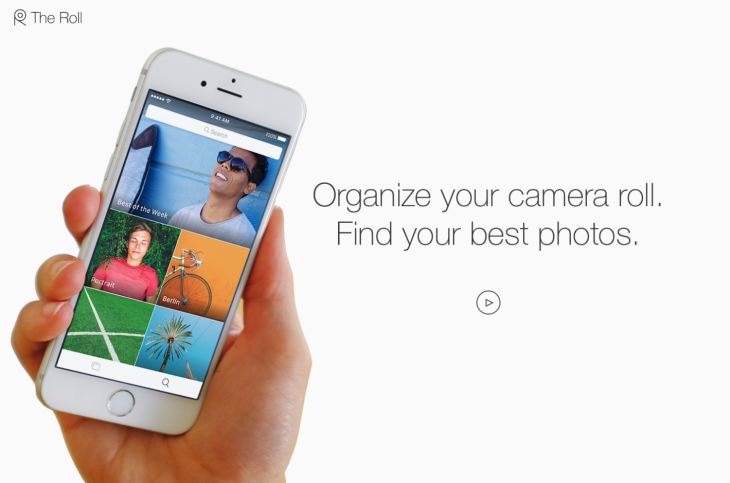
The Roll is a brilliantly named tool by EyeEm that is all about making the power of visuals even more effective for your content. You already know the vital nature of design, no doubt, but The Roll facilitates a much better quality of image overall. It uses a smart analytical program to analyze your content and rate it on a scale of 0-100. It then adds smart keyword suggestions for your images to help them rank better on Google, which is VERY important for marketing growth and visibility.
Since this is an artificial intelligence (AI) app, it’s only going to grow more with input and therefore we expect 2017 to be the year that The Roll starts to rise from above its competitors and takes control of the web.
4. Tuurnt
Tuurnt is a brilliantly named tool that you can use as both a business app and a social media tool. Some of its more disparaging reviewers, claim it’s just a Snapchat clone, but it’s nothing of the sort.
You get around 24hrs to respond to a photo or a video, and then the chance to respond is gone. This helps to turn a basic image or caption into a massive social event, helping to get people contributing and engaging with one another.
This allows people to join in using images and video to create a more hospitable feel to your marketing as a business. Although this is still quite niche, it’s showing a very impressive level of growth as the years go on, with increasingly impressive changes to the app’s interface and overall participation numbers.
For that reason, we expect Tuurnt to see a big 2017.
Yubl offers an easy way to get access to a social media and networking platform that just works. The app comes with a very impressive interface that attracts users in the first place, as well as facilitating easy interaction between business and customer.
Many believe that Yubl is not yet diverse enough to break the mold of the likes of Facebook and Twitter, but at the very least, 2017 should see it take some very interesting strides in the right direction. There is little it needs to change or improve upon, and it will gradually become more visible next year which is equally important.
You might not think that your business needs another social media profile, but that couldn’t be any further from the truth when it comes to Yubl.
6. Shake
The wonderfully named and designed Shake is a good choice to go for, when you want to start managing contracts a little better than you already do currently, by sending legally binding documents quickly and easily. With everything from NDA samples to freelancing contracts, you can make sure that your business comes across far more professionally than ever before.
Legality is a vital part of the world of business and freelancing, and smart contracts are very useful in covering yourself legally. With this tool, you can create, manage, edit and send legally binding documentation, in a process that is bound to become a staple for businesses in 2017.
In Closing...
Undoubtedly there is an array of apps to choose from when it comes to social media business apps, yet we think the aforementioned should be top of your list to embrace a more successful 2017!
Hello everyone! How is it going? We have some interesting news today. There are 3 social networks you may not know about yet, but likely will soon. Interesting? Then read on to discover more about them.
Banjo
Designed to link existing social media users, mainly those in the younger 18-24 and 24-30 demographic, Banjo is a social media service that links users of Facebook, Twitter and Foursquare, letting them know via an audible alert when they are near friends and connections on those particular sites. For example, you could be in the same large grocery store with one of your friends from Facebook, and Banjo would send you an alert to let you know. Along with this location-based service, Banjo also lets users know about activities and events happening in their area that they might be interested in based on their social media activity and provided information.
SumZero
With the recent $1-million investment from the Winklevoss brothers, the new social media site SumZero, is definitely one that is going to be receiving a lot of attention from the popular press in the near future. The Winklevoss brothers, if you don’t remember, were involved in the development of Facebook, and have waged a major legal battle against founder Mark Zuckerberg in recent years. Designed in a fashion similar to Facebook - it was actually developed by Divya Narendra and an unnamed Harvard graduate - SumZero allows users discuss financial trades and exchange information related to the financial sector.
While SumZero only has 7,500 visitors as of September 2012, the site is expected to grow fairly rapidly, despite its somewhat exclusive membership plan. SumZero actually accepts applicants, and over 75-percent are rejected according to Narendra, who actually checks the applications himself. What’s the criteria for acceptance? SumZero only accepts certain people within the financial sector, commonly referred to as “buy-side” investors that work with hedge funds, mutual funds or private equity.
Ning
A sort of meta-social media network, Ning is designed so that you can set up your own social media type website for, well, pretty much anything you do or are trying to sell. The ingenuous thing about Ning is that it works for all types of business and individuals, from rock bands to attorneys looking to branch out in order to communicate with the public and get new business or gather contacts. Ning also helps users find people in their network that could provide them with services. Sticking with the rock band example, Ning could help a band find fans or a live sound engineer in their area to work with for an upcoming gig. Unlike many social media sites,
Ning isn’t free. While you can get a free trial of Ning, monthly membership is $24.95 for basic features, $59.95 for more advanced users looking to get more out of the social networking service, and a more expensive VIP plan. VIP pricing plans vary from business to business or individual to individual, whatever the case may be, and interested users will need to speak with a representative to get a price quote. Ning also offers a limited, mini-plan for individuals or businesses that just want to try the service out. As of September 2012, Ning has over 12,500,000 active members.
Liked this post? ThenJOIN THE MOVEMENT! Gain access to exclusive articles, online tools and free strategy tips. Unsubscribe any time.
Hey there, tiger. Here's some content you should probably share. No, really -- not just because we are saying so, but because it's pretty top-quality stuff from some really incredible sources, not all of which are original.
The economic slowdown changes in the political landscape, and competition from other professions are threatening the future of human services. Did you knew that Social Work is the World`s Second Oldest Profession? Ever thought becoming a Social Worker?! Maybe you should start doing it! Why? Although the pay is not terrific :
• It’s cool to help others: Celebrities contribute to social programs!
The Social Work degree center has prepared an excellent infographic, that provides very good information and interesting history facts about this profession as well of some of the today data. Check it out!
Everyday social workers strive to make their communities positive and to inspire community members. Some social workers have gone above and beyond in order to do so.
Take Marshall Wong of Los Angeles, for instance. He worked to establish assistance for victims of hate crimes in his area. Some social workers strive to improve the quality of treatment and resources in the community. That is what Peter Delany has done in promoting behavioral health services. Cordelia Steele is an assistant professor in Richmond who has also worked to provide mental health services for victims of devastating events. Others, such as Marilyn Flynn, promote scientific research for healthcare.
It makes sense that the best social workers in the nation are focused on preserving strong social work ethic and cultural diversity. A large number of social workers intend to promote the availability of mental health treatments in their communities, and many community members have benefitted from these programs.
One of the most poignant discussions in the museum world, has been on issues of inclusion and access. Prolific museum figures like Nina Simon presenting in the recent Museum Next Conference in London, shared the vision behind OFBYFOR ALL, a new global initiative to help civic and cultural organisations become OF, BY, and FOR their communities. However, what is it that can help take the next step in terms of inclusion and learning within and out of museum grounds?
This article draws on a doctoral research study to investigate museum’s democratic potential, through transformative approaches to pedagogy aimed at meaningful cultural participation.
The ‘meaningful’, stands for a degree of competence in reading, interpreting and constructing meaning from the existing multiple forms of language (Stapp, 1984: 112; Mitchell, 2007: 3). ‘Participation’ involves an ability to negotiate the complex dialogic relationship that exists between the written word, the spoken word, images, objects, time and space (Mathewson-Mitchell, 2007: 3).
Consideration of issues of access in relation to the significant literacy requirements of museums, suggests that increasing focus on the explicit teaching of museum-based literacies, could be the way through which to expand museum visiting opportunities for the less 'conventional' audience.
It is actually proposed that museum-based literacies could act as the means to the development of cultural competence in museum environments. This evolution in theory and practice of, and about museums, has been notably part of radical changes in the museum world since the 1970s, mostly known as new museology.
Museums as Agents of Change
The development of a “new museology” (Mayrand, 1985: 201), is a concept used to describe the focus on the potential of museums as a positive social force. Golding (2009) suggests the museums should act as frontiers, places where learning and identity are produced and developed for all, while new ‘bridges’ are raised between non-dominant communities and their own histories (Philip, 1992 in Golding 2009).
It became profound that if museums accept their educational role, “they must also accept their social responsibility to work towards supporting a participatory democratic society” (Hein, 2005: 50). We need to “take advantage of the current context, as ‘opening new educational and social possibilities’ (Cope and Kalantzis, 2000: 18), to promote democratic education and human needs...” (Early, 2007: 67).
Changing Times, Changing Literacy
Ever since the 1960s, the nature of literacy practice and needs is changing; Hall (1989) suggests this is thought of as a consequence of New Times. New Times is an era of internalization, characterised by the breaking down of borders between local and global contexts resulting from rapid change in communicative practices (Gee, 2000: 183; Luke and Elkins, 1998).
One common element that has changed is that literacy has become inherently plural; thus researchers have problematized the very notion of literacy as a discrete set of skills. Luke and Freebody (2000) provide one of the more recent and useful definitions of literacy:
"Literacy is the flexible and sustainable mastery of a repertoire of practices with the texts of traditional and new communications technologies via spoken, print, and multimedia".
(Luke and Freebody, 2000: 9)
In such a perspective of literacy, the literate person is one who develops capacity to respond to emerging and communicative needs, a literate person who is a sophisticated user of texts. The individual engages with literacy practices as a decoder of text, as a maker of meanings, as a purposeful user of information and as a text analyst who employs critical thinking skills in the literate work (Luke and Freebody, 2000; Liddicoat, 2007: 20).
Figure 1: Evolution of the concept of literacy over fifty decades
Although acknowledging contemporary, 21st century demands of ‘literacy’ and education, this definition does not incorporate the social context of literacy. Literacy is, as Gee (1996: 22) has aptly described, “a socially contested term”. To this respect, literacy is a social practice rather than merely a means to an end.
Such a consideration draws on the paradigm of New Literacy Studies (NLS) and recognises literacy as a set of socially and culturally constituted practices enacted across and within social and institutional spaces. It acknowledges literacy as a social and historical construction that evolves dynamically (Giampapa, 2010: 4; Potvin, 2009; Garcia, Bartlett and Kleifgen, 2006).
Literacy is seen as a social responsibility including a critical or transformative emphasis in which literacy is a tool to understanding social structure in which we live so we can transform it in meaningful ways (Gee, 1996: 58; Street, 1995). The social perspective of literacy, implies more than superficial contacts with print; it icorporates an understanding of how to manipulate words and concepts through complex daily social interactions in an accepted manner (Giampapa, 2010; Potvin, 2009; Reid, 1998; Kern, 2000) through cultural apprenticeship (Rogoff, 1990).
The ‘New’ in Literacies: Multiliteracies
Following the NLS paradigm, ‘multiliteracies’ have emerged. The term “Multiliteracies” immediately shifts us from the dominant written print text to acknowledge the complexities of practices, modes, technologies and languages with which literate people need to engage in the contemporary world.
The “New London Group” (a team of ten academics including James Gee and Allan Luke) came together in 1996 concerned about how literacy pedagogy might address the rapid change in literacy due to globalisation, technology and increasing cultural and social diversity. They employed the term ‘multiliteracies’ to address these issues (The New London Group, 1996).
Since then, The Ontario Ministry of Education has come up with a number of literacy initiatives, some of which are characterized by a critical and social view of literacy, where literacy is conceived of as "the ability to use language and images in rich and varied forms to read, write, listen, speak, view, represent, and think critically about ideas" (Expert Panel on Literacy Report, 2004: 5).
Figure 2: Multiliteracies and their design elements (Adapted from The New London Group, 2000)
Luke and Luke (2001: 92-94) echo this idea, and argue that new technologies have facilitated the emergence of new kinds of artefacts, such as digital storytelling, requiring new levels of engagement and development of higher and different mental faculties (i.e. new multiliteracies). Luke (2000) also talks about the critical multiliteracies - being able to understand, debate, and act upon the material, political, and social consequences of technological change.
An alternative view of literacy calls for a reconceptualization of literacy as reading and writing the world (Freire, 1970). This conceptualization foregrounds critical thinking in both teachers and students, and looks beyond functional literacy (reading and writing skills), to the knowledge and power relations in literacy discourses.
Agnello (2001) refers to this approach as postmodern literacy, and argues that through this approach “reading and writing become enhanced methods for exploring the democratic self and its formation through ideological exposure to knowledge and power relations formulated by educational policy texts. Through such exploration, literacy becomes a tool for self-, student, and social advocacy rather than commodity to determine whether one measures up satisfactorily on test scores” (Agnello, 2001: 24-25).
Museum Learning as a Multiliteracy Practice
Museum-based literacies or museum literacy, refers to the competence in drawing upon the museum, its space and collections using certain skills and practices. In 1984, Carol B. Stapp observed that “museum literacy” was then a newly emerging phrase that articulated the older idea of a philosophy of museum accessibility.
Museum literacy goes beyond ‘reading’ objects; which may be understood as visual literacy; it requires a deeper level of process and understanding of the multiple and interacting languages and modes of communication found in the museum.
By broadening the view of museum literacy, it is acknowledged that the language that is involved in the museum is diverse and incorporates multimodal literacies including: linguistic, visual, audio, gestural, spatial patterns, technological and print-based (see for instance, Cope and Kalantzis, 2000: 160,203; Giroux, 1992; Hooper-Greenhill, 1999).
Figure 3: The multimodal literacies in museum-based pedagogy (Savva, 2016)
This view of museum learning redefines the goals and strategies of educators and the museum curricula. The idea of education in museums is seen as exploratory, broad, experiential, complex and multi-layered; museum strategies are now audience driven (Russo et al., 2007, Hein, 1998; Falk and Dierking, 2000).
To this discussion fits the incorporation of museum learning into the multiliteracies concept; this is facilitated by the realization that a display of material culture conveys messages about the people who created them and the times in which they were used (Pearce, 2003).
The act of creating an exhibit is parallel to the act of producing knowledge. Exhibits are not simply displays, but systems of signs that express messages about culture. Museums and their exhibits reflect the ideology of those who create them.
In the same vein that “There is no such thing as ‘reading’ or ‘writing,’ only reading or writing something . . .” (Gee, 1999: 93), the same would hold true for creating exhibits. There is no such thing as displaying an artifact without displaying something about that artefact. Also, the interpretation of messages is similar to the deciphering of text, using the signs, symbols, objects, etc., of a museum exhibit as part of the process of creating meaning (Roberts, 1997).
Griffin (1999: 8) identifies the unique learning opportunities offered by museums as: opportunities to closely examine objects or specimens; opportunities for comparison that allow trends and patterns to be deciphered; natural learning processes that incorporate the sharing and communication of ideas and the raising of questions; and opportunities to develop perceptual skills that teach how to gather information from objects and experiences.
Because museum exhibits make meaning through multiple media, multiple modes, and multiple symbol systems, the literacy practice of museum visiting is a multiliteracy.
An interesting project exploring the latter, is the ‘Museum Literacy Project’ in 2008-2010, involving nine different museums, administrations and training institutions based in five European countries, supported by the EU programme Lifelong Learning - Grundtvig Learning Partnerships, 2008. The project focus was on museums and audiences with low schooling level, and how museum literacy can be reached and maximize the museum experience for these audience.
Dimensions of a Pedagogy of Multiliteracies for Museum Learning - The Research Framework
Taking into consideration the unique characteristics of the museum environment, I undertook an empirically-based doctoral study involving the design, enactment and evaluation of the Living Museum Partnership (LMP), a museum-school partnership that unfolded in 13 weeks for the construction of a student-generated virtual museum to support environmental education curriculum (Savva, 2016).
Specific focus was on developing virtual learning environments and applying augmented reality to enhance culturally and linguistically diverse students' repertoires of literacy practices. This design-based research, draws from the field of New Literacy Studies, the proposed Museum Multiliteracies Practice (MMP) framework derived from the multiliteracies pedagogy of the New London Group, the Learning by Design Model adapted from Cope and Kalantzis and Schwartz’s museum based pedagogy.
Figure 4: The pedagogies interacting in the Museum Multiliteracies Practice framework (Savva, 2016)
It is proposed that museum educators and learning professionals undertake an approach for teaching and learning in the museum setting which incorporates multiliteracies pedagogy. Identification of museum literacies requires thorough examination into the interaction of modes that are evident, the incorporation of multiliteracies implicated, the various sign systems that are employed, and the unique nature of the museum learning environment (Mathewson-Mitchell, 2007: 7-8).
The focus should be not only on literacies as communication (meaning for others, as supports for social interaction). My doctoral research for instance also emphasized on literacies as a form of representation (or meanings for ourselves, as supports for thinking).
Cope and Kalatzis (1996, refined 2000, 2009) elaborate on the potentials of a ‘Pedagogy of Multiliteracies’ in fulfilling these aspirations. Two important ideas brought in a multiliteracies pedagogy are Learning by Design and Multimodality.
Learning by Design, is building into curriculum the idea that not every learner will bring the same lifeworld experiences and interests to learning, as well as acknowledging that every learner is not on the same page at the same time; pedagogies of learning are re-configured to construct learning as “a dialogue of difference” (Cope and Kalantzis, 2005: 31). The idea of Multimodality discusses learners’ movement between written, oral, visual, audio, tactile, gestural and spatial modes of meaning-making (Cope and Kalantzis 2005, 2009).
On this basis, the New London Group (1996) has proposed a multiliteracies pedagogy consisting of situated practice, overt instruction, critical framing, and transformed practice.
•Situated practice includes learners’ prior and present experiences in a community of learners (composed of experts and novices).
•Overt instruction involves the teacher’s or expert’s interventions to scaffold (Bruner, 1983) or support learning and increase the learner’s consciousness about learning. Scaffolding is a metaphorical concept that refers to the visible or audible assistance that a more expert member of a culture can give to an apprentice (Bruner, 1983, 1986). You might also note Vygotsky’s Zone of Proximal Development (ZPD), that relates to Bruner’s notion of the scaffold here.
•Critical framing refers to learners interpreting the historical, cultural, political and ideological contexts of learning.
•Transformed practice includes implementing new understandings through reflective practice in other contexts.
Figure 5: The Multiliteracies Model and Learning by Design (Adapted from Kalantzis and Cope, 2000)
Also identified within the Learning by Design Model are four knowledge processes (See Figure 5 above). The knowledge processes identified are:
(a) Experiencing the known and the new
(b) Conceptualising by naming concepts and theorising
(c) Analysing functions and interests
(d) Applying appropriately and creatively.
Findings and Implications for Museum Learning Practice
Stapp (1984) had argued that schools do not address the knowledge, skills and attitudes for museum literacy. Recent observations of the characteristic use of museums by school-based teachers suggest that a relatively passive, idealist approach to museum experiences, as identified by Stapp, has continued, with teachers lacking confidence and competence in the museum setting (Mathewson-Mitchell, 2006).
Based on the findings of my doctoral research, it is suggested that addressing museum-based multiliteracies leads to effective museum-school partnerships and meaningful museum learning practice. Research data suggested that students’ repertoires of literacy were enhanced as they engaged in the learning process as active designers and multimodal learners (Savva, 2016). It was found that students gained opportunities to:
Figure 6: Findings of Museum Multiliteracies Practice research (Savva, 2016)
It is proposed that any museum education programme or museum-school partnership or collaboration pays attention to the following key principles:
1. Teaching children, especially digital natives of our time, to be literate in any setting is not just a set of skills that can be transferred. Rather, education needs to enable them to participate in social situations using the required literacy practices.
2. Museum visiting is seen as multiliteracy practice; as such it requires specific museum-based literacies that are rarely identified or explicitly taught by museums or schools.
Conclusion
Ultimately, this brief review and presentation of the proposed empirically based, research framework for museum learning practice, forms a pathway to follow for inclusive cultural participation at any level and age. The London New Group’s (1996) ideas further developed by Cope and Kalatzis (2000; 2005; 2006) for a Pedagogy of Multiliteracies, could inform the development of the specific literacy requirements of museums, in a way that could lead to full museum literacy and a transformative cultural engagement and participation for diverse audiences.
Hello there my friends, hope you're gearing up for the holiday season. We want to thank you for your ongoing engagement and support around THE OFFICIAL ANDREASCY. You showed us your symbolic interest and loyalty in the technology and community. Thanks for everything! 😊
So, what is this 'Ello' everyone's talking about?
It's a new social network, being called the “anti-Facebook”, that was birthed by a small group of designers and artists. The draw of Ello is its promise to remain ad free and not sell users data to third parties.
Nearly every popular social network is run by ad revenue
There are many people whose only job is to record your every move online. These are data miners and ad salesmen. Creepy huh? Your information is being auctioned off to the highest bidder. Not only that, but they are reading your posts and keeping tabs on your social connections. All of this is made possible by the service being offered to the user for “free”. Seth Levine, one of Ello’s backers, is so serious about keeping users data private and the network ad free, that if they can’t do things that way they simply “won’t build a business”.
Despite the recent cynicism from the press and naysayers, founder and CEO Paul Budnitz is not budging on his promise to keep the platform ad free. Also the company has filed as a Public Benefit Cooperation, which legally binds them from showing ads, selling user data to a third party, or selling the company to someone that plans on doing so. The long term business plan that his company has put in place, is said to be lucrative as well as principled.
What started out as a private network, has now become public
The social network launched on Aug. 7 with only 90 users and its growth reached viral status shortly after its launch. Once people caught wind of Ello, they wanted in; so a public version was created. Within a week they had grown to where they thought they would be in 6 months (they had reached a steady 40,000 to 50,000 requests an hour). At one point they had to put sign-ups on hold, just to make sure that the site was up to the task of taking on so many users at once. Not to mention this is an invite only network. One can only assume that the everyday user is enticed by the idea of a truly ad free network, that doesn’t sell your information to third parties.
This growth is partially attributed to Facebook’s recent crackdown on fake names. Ello allows fake names. With no shortage of users or investors, the company seems to be becoming a fierce competitor, in the social network arena. In its most recent round of investing the company has generated $5.5 million in Venture Capitalist’s revenue. Budnitz’s inbox has a new VC everyday that wants to invest in Ello. So the recent claims about Ello not making enough money seems pretty laughable.
Also with the recent acquisition of $5.5 million in funds, the company plans on being profitable very soon. Ello plans on making its revenue for expansion directly from its users. It is free to join but later Ello plans on releasing some Premium features that can be accessed for a small price. Actually many apps on the market offer free versions of their app and additional features, for a small fee.
Do you Ello?
Right now this is an invite only site. If you can’t wait for an invite then you can go to their homepage and request one. The ones who get in are allotted a certain amount of invitations, usually about 5 to 10. The goal is not to sign up everybody in the world, or even to be a competitor of Facebook, but simply to build a nice community.
So far the social network has chosen to go with a very simple design and color scheme. When users log on, they see a black and white scroll down layout. This is where the user can post status updates, pictures, links and comment on other users’ posts. Their contacts are divided into 2 columns, Friends and Noise and the user can switch between the different “feeds” with the click of a button.
Conclusion
Since Ello is just in its early stages, what it is going to grow into, is anybody’s guess. Only time will tell if this is truly a niche market or just a trend. Similar platforms have seen major growth, only to be abandoned in droves, months or years later; remember MySpace? In any case if you’re not into having your every little move tracked, Ello is a perfect alternative. While the popularity may only be short-lived, Ello’s promise to uphold its credo, shall not be.
"What About Me?" is a new permission-based digital tool that captures a snapshot of your social media life and turns it into a customized, personal infographic.
Last year, Intel created a Facebook app which dipped in consumers’ data on the Social Network to create online profile exhibitions, the Museum Of Me.
This year it’s still about getting singularly personal for the tech brand, which has launched What About Me? An app which turns Facebook, Twitter, and YouTube feeds into a Me infographic comprising images, ‘likes’, social media habits, posts and sharing behaviour.
“Social media users know that discovery is half the fun,” says Intel. “With What about Me? you can capture a snapshot of your social media life and create your own colorful image, full of clues and facts about one of the most fascinating subjects in the world – you.”
Check out this video to see how the tool captures your social life.
The BlackBerry Curve 9310 is a slim and easy-to-use smartphone ready to help customers make the move from a basic phone to a smartphone. It includes all the core BlackBerry messaging and social-centric applications that let customers easily connect to the people and things that matter most to them.
Running on BlackBerry 7.1, the Curve 9310 also features the iconic BlackBerry keyboard for quick and easy typing and a dedicated BBM key for instant access to RIM's popular mobile social network.
Facebook and Twitter apps allow customers to easily interact with their social network in real time, and, with the new Social Feeds 2.0 app, they can post updates to multiple social networks simultaneously and capture updates from news sources (RSS feeds), social apps and instant messaging apps, all in one consolidated view.
Additional Features:
- 3.2-megapixel camera - easily share pictures and video with friends through text, BBM, Facebook and Twitter
- VZ Navigator capabilities for customers to receive audible turn-by-turn directions to millions of points of interest and share directions with others
- On-device Parental Controls - customers can grant as little or as much access to the Internet, social networking and messaging as they see appropriate. Create a select list of contacts for both incoming and outgoing calls
Google+ isn't as big as Facebook, but with 300 million active users it's certainly no slouch either. More importantly, Google+ can positively impact your search engine results.
While having an active presence on social networks gives you some authority, it's not the same as building link authority. Many social networks prevent a great deal of authority from being built due to a "rel=nofollow" tag that removes the impact from an outgoing link. Google+ does this with some links, but Practical Ecommerce reports that it does not do this within the text of posts. This means posts on Google+ could have more relevance to search engines.
Social Engagement
Engagement refers to the amount of times that users interact with your content on a website or social network site. On Google+, users can engage with your content by giving +1s (similar to Facebook likes), sharing the content, or posting comments. The +1s have an effect on your search engine rankings, and they also show up on search engine results if you have friends who have +1s on a page.
Indexing
You won't rank at all if your website is not indexed by the search engine. While Google is fairly quick about picking up new sites, it's easy to have the bots stop by your website when you post links to it on Google+. Google constantly looks at its social network to discover new content sources, so it could be a matter of minutes before Googlebot makes it to your site and adds it to the index, according to Social Media Today.
Local Search Rankings
When you have a brick and mortar business, getting yourself on local search rankings is important. As 4G Coverage increases throughout the country, more people turn to mobile devices for information on local businesses. Getting yourself at the top of the pile for a local search may be the difference between a thriving business and one that no one knows exists.
Google's local search features for business tie in heavily with Google+. A fully fleshed out Google Local profile allows you to engage and even directly contact your customers in some cases. It also gives you a place to get business reviews, which show up with your search results. When you focus on your local traffic, you also find that ranking for specific cities or towns is much less stressful than taking on an entire Internet that is trying to outrank you on popular search engine terms and phrases.
Thanks for stopping by, we hope you enjoy our stories and please share if you do! Now i'm looking forward to your input. Hit the comments section and let your voice be heard. I love feedback and fresh ideas!
(Update As Of April, 2019: Google+ is no longer available for consumer - personal and brand accounts.)
How to Dress for Success Wondering what is the appropriate business outfit for success? Here are some tips on how to dress and look professional. Weekly Promotion